
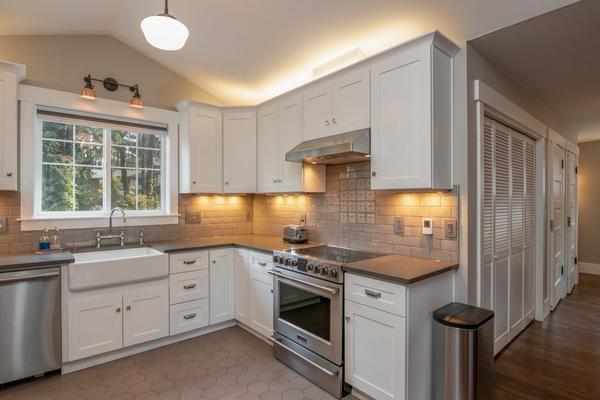
A modern farmhouse kitchen works best when rustic character and practicality share the same space. The aim is not themed décor, but warm materials, simple shapes, and hardworking features that feel collected rather than staged. These modern farmhouse kitchen ideas include major remodel choices and affordable updates for different layouts and budgets.
Foundational Modern Farmhouse Kitchen Ideas
1. Start with warm white cabinetry
Choose creamy or softly muted white instead of a stark blue-white. The warmer undertone complements timber, stone, brass, and black accents.
2. Add a contrasting farmhouse kitchen island
Paint the island charcoal, sage, navy, or a natural wood tone. A contrasting farmhouse kitchen island creates a focal point and grounds an open-plan room.
3. Choose Shaker-style cabinet doors
Shaker fronts provide clean lines without feeling overly contemporary. Select a slim profile and simple hardware for a fresher version of classic farmhouse kitchen design.
4. Install an apron-front sink
A fireclay or stainless-steel apron sink brings instant farmhouse character. Confirm cabinet dimensions and structural support before buying, as some models are particularly heavy.
5. Mix painted and natural wood finishes
Pair painted cabinets with an oak pantry, timber island, or wood shelving. The contrast prevents an all-white kitchen from appearing flat or overly polished.
6. Use quartz with subtle veining
Quartz offers a practical marble-like finish with easier maintenance. Gentle veining supports the room’s relaxed look without competing with cabinetry, flooring, or decorative details.
7. Add handmade-look backsplash tile
Slightly irregular glazed tiles reflect light and introduce texture. Stack them vertically for a modern edge or use a brick pattern for a traditional mood.
8. Consider a full-height stone backsplash
Running the worktop material up the wall creates a seamless backdrop. It works especially well behind a range, reducing visual clutter and simplifying cleaning.
9. Introduce open shelving selectively
Use open shelves for attractive daily items rather than your entire kitchen inventory. One or two timber shelves add warmth without creating constant styling work.
10. Build a practical pantry wall
Floor-to-ceiling pantry cabinets provide generous storage. Include pull-out drawers, adjustable shelves, and an appliance zone to keep the main worktops clear.
Materials, Colour, and Architectural Character
11. Add one reclaimed-wood feature
Use reclaimed timber for a shelf, hood trim, or island end panel. Limiting it to one feature adds history without making the kitchen feel heavy.
12. Frame the range with a statement hood
A plaster-look, timber-trimmed, or simple boxed hood creates architectural focus. Keep nearby cabinetry restrained so the feature feels intentional and properly balanced.
13. Use black accents as punctuation
Black handles, stools, window frames, or lights can sharpen a pale palette. Repeat the finish in a few places to create continuity without an industrial effect.
14. Soften the palette with sage green
Sage suits cabinets, an island, or a pantry door because it works naturally with wood and stone. A greyed shade usually feels calmer and more timeless.
15. Bring in warm greige
Greige cabinetry offers more depth than white while remaining neutral. Test large samples beside the flooring and worktop because changing light can reveal unexpected undertones.
16. Layer aged brass thoughtfully
Use aged brass for taps, pulls, or pendants, but avoid matching every metal. Slight variation helps the kitchen feel evolved rather than showroom-perfect.
17. Choose wide-plank flooring
Wide boards reinforce the farmhouse mood with fewer visual seams. Engineered wood or wood-look porcelain may suit households concerned about moisture, pets, or scratches.
18. Add ceiling beams with restraint
Real or decorative beams can define an open kitchen, but scale matters. Slim beams suit standard ceilings, while heavier timber needs greater height and space.
19. Use beadboard in a small dose
Apply beadboard to an island base, breakfast nook, or pantry wall. It introduces traditional texture while allowing the main cabinetry to remain clean and modern.
20. Keep window treatments simple
Linen Roman blinds, woven shades, or bare windows suit the style better than elaborate curtains. They soften hard finishes while preserving valuable natural light.
Functional Details That Make the Style Livable
21. Create a hardworking prep zone
Place knives, boards, bowls, and waste disposal near the main preparation surface. During a kitchen remodel, an efficient workflow matters more than decorative extras.
22. Add deep drawers below the worktop
Deep drawers make pans, plates, and appliances easier to reach than base cupboards. Internal dividers keep the generous storage from becoming a cluttered box.
23. Design a furniture-style island
Leg details, open ends, or a different worktop can make an island resemble a freestanding table. Keep the detailing modest for a contemporary balance.
24. Include comfortable counter seating
Provide proper knee space and supportive stools when the island doubles as a dining area. In family kitchens, wipeable materials are usually the practical choice.
25. Build a compact beverage station
Group the coffee machine, kettle, mugs, and supplies in one cabinet or alcove. This keeps morning traffic away from the main cooking area.
26. Conceal small appliances
An appliance garage keeps toasters and blenders accessible but visually quiet. Choose retracting or lifting doors that will not obstruct the worktop during use.
27. Combine pendants with task lighting
Decorative pendants add personality, while under-cabinet lighting handles detailed work. Use consistent warm light so timber and creamy paint retain their natural colour.
28. Style with useful objects
Display chopping boards, ceramic bowls, cookbooks, and wooden utensils. Functional pieces create a more believable farmhouse atmosphere than signs or heavily themed accessories.
29. Add a small breakfast nook
A built-in bench can turn an unused corner into a relaxed eating area. Storage beneath the seat makes this idea especially useful in compact kitchens.
30. Finish with one personal vintage piece
Add a vintage stool, framed still life, old breadboard, or inherited crock. One meaningful object prevents a newly remodelled room from feeling generic.
How to Combine the Ideas Without Overdesigning
A successful room does not need all 30 elements. Start with one dominant material, one supporting colour, and one character feature. For example, combine warm white Shaker cabinets, an oak island, handmade-look tile, black hardware, and one antique stool. The result feels calm and layered.
Natural internal-link opportunities include small kitchen layout ideas, kitchen island design ideas, and farmhouse living room ideas.
Frequently asked questions
What colours work best in a modern farmhouse kitchen?
Warm white, greige, sage, charcoal, and muted blue are reliable options. Balance them with natural wood and test samples in the actual room.
Can a modern farmhouse kitchen work in a small space?
Yes. Use light cabinetry, efficient drawers, selective open shelving, and one or two rustic details instead of layering several heavy finishes.
Is open shelving practical in a farmhouse kitchen?
It is practical when reserved for frequently used pieces. Keep less attractive or rarely used items behind closed doors to reduce dust and clutter.
How can I update my kitchen without a full remodel?
Replace hardware, repaint the island, add warm lighting, install a textured backsplash, or introduce timber shelves without altering the existing layout.
A Farmhouse Kitchen That Feels Current
The strongest modern farmhouse kitchens balance warmth with discipline. Plan storage first, add natural texture, and finish with personal details. The room should support cooking and gathering while retaining the style’s relaxed character.