
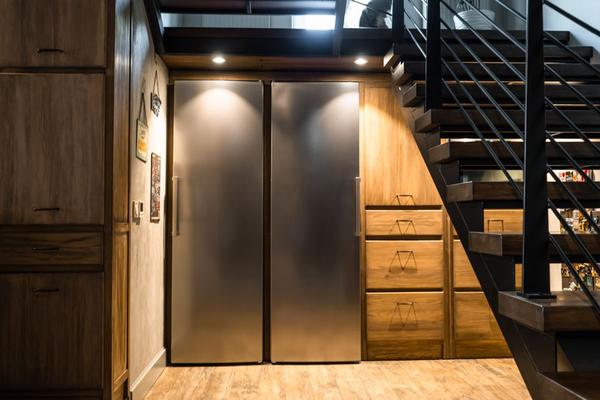
Industrial kitchens work best when they feel purposeful rather than unfinished. Their appeal comes from honest materials, visible structure, practical storage, and a restrained palette that remains comfortable for everyday cooking. These industrial kitchen design ideas include architectural changes and affordable updates, helping you create a sleek urban kitchen design without making the room feel cold or commercial.
Architectural Features That Set the Tone
1. Reveal an Original Brick Wall
Expose one brick wall for instant texture and history. Keep surrounding surfaces simple so the masonry remains the focal point, and use a suitable breathable sealer if the brick is dusty or porous.
2. Create an Exposed Pipe Kitchen
Visible plumbing, conduit, or ductwork can look intentional when routes are tidy. Paint suitable pipes matte black or leave metalwork raw, while keeping gas, electrical, and plumbing changes in qualified hands.
3. Add a Concrete-Look Floor
Polished concrete creates a seamless base, but concrete-effect porcelain tile or vinyl can offer easier installation. Add a washable runner near the sink for warmth, quieter acoustics, and comfort underfoot.
4. Use Black-Framed Glass Partitions
A steel-look glazed divider separates the kitchen from living areas while preserving light. It suits open-plan homes where visual connection matters but cooking noise and smells need some control.
5. Keep the Ceiling Visually Honest
Exposed beams or neatly finished ductwork can make the room feel taller. A dark-painted ceiling with surface-mounted lighting creates a similar graphic effect without major structural work.
Industrial Materials and Finishes
6. Choose Stainless Steel Worktops
Stainless steel is durable, hygienic, and naturally suited to industrial kitchen decor. Use it on one preparation run or island, then balance its cool finish with timber cabinetry.
7. Introduce a Concrete Counter
A concrete or concrete-effect counter adds weight and texture. Real concrete may stain or develop small marks, so consider sealing requirements or choose a composite alternative for predictable maintenance.
8. Install Steel Kitchen Fixtures
Use steel kitchen fixtures such as a professional-style tap, metal brackets, cabinet pulls, and pendants. Repeating one finish in several locations makes the scheme feel coordinated.
9. Mix Warm Wood with Cool Metal
Oak shelves, butcher-block counters, or plywood fronts soften black steel and grey surfaces. This contrast keeps the workshop-inspired character while making the kitchen feel welcoming.
10. Use Dark Grout with Simple Tile
White subway tile gains an industrial edge with charcoal grout. The darker lines emphasise the backsplash geometry, although regular cleaning is still essential behind the hob and sink.
Cabinetry and Storage Ideas
11. Replace Upper Cabinets with Open Shelves
Open shelving turns cookware and ingredients into part of the design. Keep daily plates and jars visible while hiding unattractive packaging below. A practical setup is one coffee shelf and one everyday crockery shelf.
12. Select Flat-Front Matte Cabinets
Minimal cabinets create a clean backdrop for rugged materials. Charcoal, deep green, navy, and warm grey all work well; in a compact room, pair this decision with your small kitchen layout ideas guide.
13. Add Expanded-Metal Cabinet Inserts
Mesh or perforated inserts give pantry doors and island panels a workshop feel while allowing airflow. Use the treatment on one feature cabinet rather than every door.
14. Build a Freestanding Worktable Island
A metal-framed table with a timber or stone top feels lighter than a fitted island. It can provide preparation space, open storage, and seating without creating a bulky visual block.
15. Turn a Metal Locker into Storage
A restored locker can hold pantry goods, cleaning supplies, or small appliances. Choose a shallow model for a small kitchen and secure tall furniture properly.
16. Hang a Ceiling-Mounted Pot Rack
A sturdy pot rack frees cabinet space and adds a professional note. Position it where pans remain reachable without obstructing headroom, and confirm that the ceiling can support the load.
Lighting, Colour, and Decorative Details
17. Suspend Oversized Metal Pendants
Large factory-style pendants suit islands and dining tables. Two substantial fixtures often look calmer than several small ones, while warm-white bulbs balance concrete and steel.
18. Add Track Lighting for Flexibility
Track lights reinforce the industrial look and can be aimed at counters, shelves, and artwork. Combine them with dedicated task lighting for safer food preparation.
19. Build a Layered Monochrome Palette
Combine charcoal, graphite, soft black, and pale concrete rather than relying on one flat grey. Timber, leather tones, or terracotta prevent the palette from becoming lifeless.
20. Use Aged Brass as a Warm Accent
Industrial style is not limited to silver and black. Aged brass taps, handles, or wall lights add warmth; keep the finish consistent so it reads as deliberate.
21. Display Functional Cookware
Hang cast-iron pans, boards, and utensils on rails or pegboards. Leave space between objects and keep grease-sensitive pieces away from the hob so the arrangement remains practical.
22. Add Vintage Factory Signage
One enamel sign, old clock, or typographic print can make the kitchen feel collected rather than themed. Pieces connected to food, local industry, or the building work especially well.
Comfort and Modern Practicality
23. Soften the Room with Leather Seating
Cognac leather stools warm up a black or steel island and age attractively. Rust or tobacco-coloured upholstery offers a similar effect and supports open-plan kitchen zoning ideas.
24. Add Greenery in Metal Planters
Herbs and trailing plants break up hard surfaces. Place herbs near daylight but away from direct hob heat, using galvanised, black, or brushed-metal planters to echo the wider palette.
25. Conceal Modern Technology
Integrate charging points, efficient appliances, and smart controls without letting them dominate. Hidden sockets, panel-ready appliances, and an appliance cupboard preserve the raw aesthetic while supporting kitchen work triangle planning.
Frequently asked questions
What colours work best in an industrial kitchen?
Black, grey, white, navy, and deep green form a strong base. Add warm wood, brick, leather tones, or aged brass to keep the kitchen inviting.
Can industrial kitchen design work in a small space?
Yes. Use slim shelves, a limited palette, compact lighting, and one or two industrial materials. Avoid heavy furniture and too many competing metal finishes.
How do I make an industrial kitchen feel less cold?
Introduce timber, warm lighting, plants, textured textiles, and comfortable seating. Keeping some storage closed also reduces visual noise and creates a calmer atmosphere.
Is an industrial kitchen expensive to create?
It can suit many budgets. Custom steel glazing costs more, while paint, open shelves, metal hardware, second-hand furniture, and concrete-effect finishes offer affordable alternatives.
A Sleek Kitchen That Still Feels Like Home
The strongest industrial kitchens combine rugged surfaces with thoughtful planning. Choose a few defining features, repeat materials consistently, and protect comfort, lighting, and workflow. The result will feel urban and distinctive while remaining practical for everyday cooking.