
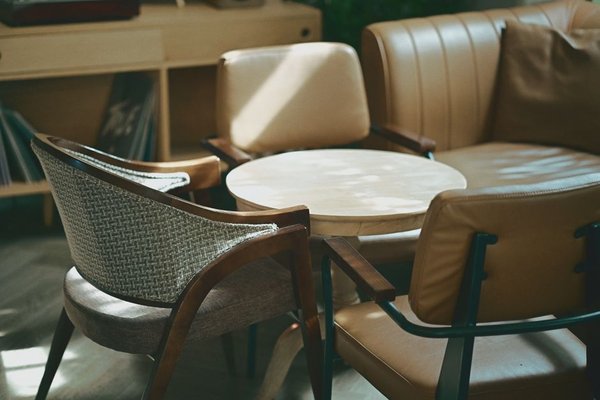
Mid-century modern design lasts because it feels stylish without becoming fussy. Clean lines, warm woods, sculptural shapes, and practical furniture work in a compact flat or a generous open-plan home. The best mid-century modern living room ideas do not turn your space into a period set. A few well-chosen references create a room that feels comfortable, collected, and current.
Build the Mid-Century Foundation
1. Start with a low-profile sofa
Choose a sofa with slim arms, a straight back, and visible legs. The raised frame helps a small mcm living room feel lighter.
2. Use walnut as the main wood tone
Walnut brings the rich brown colour associated with the era. Repeat it through a coffee table, media unit, or shelving rather than matching everything.
3. Add a tapered-leg sideboard
A streamlined sideboard provides closed storage while reinforcing the style. Keep its surface edited with a lamp, artwork, and one decorative object.
4. Choose a geometric coffee table
Kidney, oval, triangular, and rounded tables soften boxy seating. Curved edges also improve movement in a tight mid century living room layout.
5. Float furniture away from the walls
Pull the sofa forward slightly and arrange chairs around a central rug. The room will feel more conversational and intentionally planned.
6. Anchor seating with a large rug
Select a rug large enough for the front legs of every seat. Muted geometrics, subtle stripes, or warm neutrals add structure without visual noise.
Bring in Colour and Pattern
7. Pair warm neutrals with one retro shade
Begin with cream, tan, or soft grey, then add mustard, olive, rust, or burnt orange. A limited palette keeps retro living room decor sophisticated.
8. Try an earthy green accent chair
Olive or moss upholstery works naturally with walnut and brass. An accent chair is easier to update later than a brightly coloured sofa.
9. Use rust through textiles
Introduce rust with cushions, a throw, or a footstool. The shade adds warmth without making the room feel overly themed.
10. Add one geometric print
Use pattern on curtains, cushions, or framed fabric. Look for circles, arches, and repeated lines in a restrained colour scheme.
11. Paint one wall a softened period colour
Muted ochre, dusty teal, or warm clay can make a strong backdrop. A greyed version feels architectural rather than theatrical.
12. Keep ceilings and trim simple
Warm white ceilings and uncluttered trim let furniture shapes stand out, especially when the room already contains bold wood grain or colourful upholstery.
Make Lighting Part of the Design
13. Hang a globe pendant
A glass globe or clustered orb light adds a clear mid-century reference. Centre it over the seating zone, not automatically in the room’s middle.
14. Add an arched floor lamp
An arched lamp brings light over a sofa or reading chair without needing a table. Its long curve also balances straight furniture lines.
15. Choose a sculptural table lamp
Look for ceramic, mushroom, or tripod forms. A distinctive lamp acts like functional art on a simple walnut living room sideboard.
16. Layer three levels of light
Combine ceiling, eye-level, and low accent lighting. The room will feel warmer at night, while the statement fixture avoids carrying the whole scheme.
Add Character Without Clutter
17. Create a focused gallery wall
Mix abstract prints, line drawings, and one vintage-style poster. Consistent frame colours will make the display feel curated.
18. Display ceramics in small groups
Arrange two or three pieces of different heights on a shelf or console, leaving enough empty space for each shape to register.
19. Bring in a large leafy plant
A rubber plant, fiddle-leaf fig, or bird of paradise softens angular furniture. Use a plain ceramic or woven planter.
20. Use open shelving selectively
Reserve open shelves for books and a few meaningful objects. Hide cables, games, and everyday clutter behind doors below.
21. Mix authentic and contemporary pieces
One vintage chair can sit beside a new sofa with period-inspired lines. Combining eras makes the room personal and avoids a museum look.
22. Add texture with bouclé or wool
Use tactile fabric on a chair, cushion, or footstool. Texture prevents a neutral scheme from appearing flat without disturbing its controlled palette.
Adapt the Look to Your Space
23. Use nesting tables in a small room
Nesting tables provide extra surfaces when guests arrive and tuck away afterwards. Slim frames keep them visually light.
24. Choose wall-mounted storage
A floating media console or modular wall unit keeps the floor visible, helping a compact room feel noticeably larger.
25. Define an open-plan seating zone
Use a rug, pendant, and sofa position to create a boundary. A console behind the sofa can separate lounge and dining areas without a wall.
26. Keep pathways clear
Arrange furniture so people can move between doors and seats without weaving around corners. Rounded tables are especially useful in narrow rooms.
27. Scale furniture to the room
In a small flat, choose a two-seat sofa and one compact chair. In a larger room, use the same low forms at a more generous scale.
28. Make the television less dominant
Place it on a long, low unit and balance it with artwork or shelving. Avoid designing every element around the screen.
29. Update existing furniture with new legs
For a budget refresh, replace heavy cabinet feet with tapered wooden legs. Check stability and load limits before making the change.
30. Edit the room before adding more
Remove one unnecessary table, cushion group, or ornament and reassess. Mid-century rooms feel convincing when every piece has breathing space.
A Practical Layout Example
Consider a 3.5-by-4-metre room with a window on one wall and a television opposite. Place a low sofa along the longest wall, angle one compact chair towards it, and use an oval coffee table between them. A 200-by-300-centimetre rug can connect the seats, while a slim walnut console behind the sofa creates a landing spot without blocking the walkway. This arrangement delivers a functional layout without overcrowding the room.
Natural internal linking opportunities include small living room layout ideas, open-plan living room zoning, and how to choose the right living room rug.
Frequently asked questions
What colours work best in a mid-century modern living room?
Warm neutrals, olive, mustard, rust, teal, and muted blue suit the style. Use one or two stronger shades against a calm base.
Can mid-century modern work in a small living room?
Yes. Low furniture, raised legs, wall-mounted storage, and rounded tables maintain clear sightlines and make compact rooms easier to navigate.
Does all the wood need to match?
No. Choose one dominant wood, such as walnut, then allow small variations. A shared warm undertone matters more than an exact match.
How do I stop the room looking too retro?
Combine period-inspired furniture with contemporary lighting, plain walls, and restrained accessories. Avoid several bold patterns or iconic replicas in one space.
Create a Room That Feels Collected
A successful mid-century living room works because furniture is well proportioned, circulation is clear, materials feel warm, and decoration is edited. Start with the layout, add one strong wood tone and a sculptural light, then build gradually. The result will reference a celebrated design era while remaining relaxed enough for everyday life.