
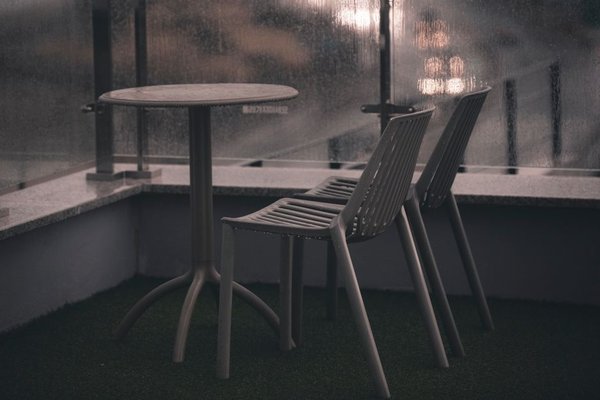
What garden furniture small spaces can actually fit?
The best garden furniture small spaces can fit includes a 24- to 28-inch bistro table, folding chairs, a narrow bench, and nesting side tables. Keep a clear 30-inch walking route where possible, allow roughly 24 inches behind chairs that need to slide out, and measure the furniture fully opened before buying.
A tiny patio can hold useful seating without becoming a storage lot. Start with the route through the space, then choose pieces whose real dimensions leave that route open.
What garden furniture works best in a small outdoor space?
Start with seating for the people who use the garden most days, not the largest group you might someday host. Narrow, movable pieces with one clear purpose tend to make the most sense when usable floor area is under 80 square feet.
For garden furniture for small spaces, these seven arrangements make a practical shopping shortlist. The dimensions are starting points rather than guarantees about specific products; always check the manufacturer’s exact measurements.
- Round bistro table with two slim chairs: Best for coffee or two-person meals. Look for a top 24 to 28 inches across and chairs around 18 inches wide. Rounded corners make passing a seated guest less awkward.
- Freestanding folding table: Best when one patch of paving must handle meals and movement. A table around 30 inches wide and 20 inches deep can go away after use. Do not drill into rental walls without permission.
- Narrow backless garden bench: Best along a fence without a chair back taking up space. A 36- to 42-inch seat, 16 to 18 inches deep, makes the footprint predictable. Check for stable footing on uneven paving.
- Two stacking outdoor chairs: Best when occasional guests need seats. Choose frames about 18 to 20 inches wide, then check the stacked height against your shed or closet. Stack only as directed by the manufacturer.
- Nesting outdoor side tables: Best beside a reading chair where dining furniture would obstruct circulation. A larger 18-inch top and smaller 14-inch top give useful surfaces. Make sure the smaller table slides fully underneath.
- Compact armless loveseat: Best for reading rather than dining. Search for a seat 42 to 48 inches wide and no more than 30 inches deep. Removing arms saves width, but it does not excuse poor seat comfort.
- Weather-resistant storage bench: Best when cushions and tools need a nearby home. A 40-inch-wide unit with an 18-inch seat depth can do two jobs. Check lid clearance and whether its compartment genuinely suits outdoor exposure.
Do not trust a photograph of an empty patio. Tape furniture footprints onto the ground, then test the route with a chair pulled out. The same footprint-first thinking applies to small spaces furniture throughout the home.
How much room should you leave around a small garden table?
Allow about 24 inches behind each chair for pulling it out, and aim for a separate 30-inch clear walking path where possible. When the garden is also the route to a door or gate, protect that access first rather than counting an occupied chair space as free passage.
Measure the usable rectangle, not the fence-to-fence width
Start at the door swing, then subtract planters, steps, hose reels, and uneven edges. A 6-by-8-foot patio has 48 square feet on paper, but a 30-inch passage along its 8-foot length takes 20 square feet. Your table and occupied chairs must fit into what remains.
- Round table for two 24 to 28 in diameter
- Chair pullback space 24 in behind each occupied chair
- Main walking route 30 in clear width where feasible
- Single slim chair footprint about 18 x 20 in before pullback
- Narrow bench seat 36 to 42 in wide and 16 to 18 in deep
Place cardboard outlines on the ground for the table and chairs, then mark the pulled-back chair positions. Sit, stand, carry a watering can through, and open the door fully. This quick check exposes pinch points that a floor plan can miss.
If you’re furnishing raised decking, the guide to deck furniture small spaces considers its different surface constraints. For a covered entry, porch furniture small spaces focuses on doors and railings.
Which materials are easiest to maintain in a compact garden?
Powder-coated aluminum and quality outdoor resin generally allow straightforward wipe-down care. Yet maintenance also depends on rain, sunlight, nearby planting, and access around the furniture; a cramped garden can make even a quick cleaning awkward.
| Outdoor furniture material | Routine care | Limitation in a small garden |
|---|---|---|
| Powder-coated aluminum | Wash with mild soap; inspect coating chips | Light pieces may move in strong wind |
| HDPE outdoor plastic | Scrub with mild soap and rinse | Thick frames can consume valuable floor area |
| Teak and outdoor wood | Clear debris; follow the finish instructions | Heavy frames require access for cleaning |
| Coated steel | Dry after washing; watch for scratches | Damaged coating can expose rust-prone metal |
| Woven outdoor resin | Brush debris from weave; rinse gently | Leaves lodge in hard-to-reach corners |
Check beneath a chair before buying: exposed fasteners, feet that collect water, and permanently attached cushions may complicate upkeep. Leave enough space beside planting beds to sweep out leaves and allow damp surfaces to dry.
Give the seating a measured backdrop
If repainting a permitted garden wall, Benjamin Moore Pale Oak OC-20, approximated on screen as #D8CFC4, offers a specific starting sample. Choose an exterior-rated formulation appropriate for that wall, and use the shade across roughly 60 percent of the visible painted wall area. Test a real sample before committing.
#D8CFC4 · Benjamin Moore Pale Oak
On a north-facing wall, this can read cooler and grayer; south-facing light brings out more warmth. Cover roughly 60 percent of visible painted wall area, recognizing that an on-screen hex is only an approximation.
Let the remaining wall retain its existing finish instead of introducing extra colors. Renters should leave permanent finishes untouched unless their lease and property owner permit painting.
How can you store garden furniture when space is limited?
Decide on a storage location before purchasing any foldable or stackable piece. Keep the seat used every day accessible, and ensure the folded furniture fits a real corner, closet, or shed without blocking gates, steps, or exits.
Measure the intended storage spot as carefully as the patio itself. Leave room for hands to grip folded frames, allow air to circulate around damp-prone surfaces, and avoid pressing wet cushions against an exterior wall.
- Daily: leave one comfortable chair out; store guest seating.
- After rain: dry cushions thoroughly before enclosing them.
- In wind: secure folded pieces against falling or blowing over.
- In winter: clean and dry furniture, then follow its cover and storage instructions.
Storage benches make sense only if the lid opens without hitting a railing or a guest. Related ideas in multifunctional furniture for small spaces can help, but a large multipurpose unit still crowds a narrow patio.
When does small garden furniture not work, even if it looks good in photos?
A staged picture can hide the problem by pushing chairs against a fence and photographing the table without anybody seated. Once the chairs slide back, that attractive setup may block the only route to the gate. A two-person bistro set is not automatically practical on a patio only 4 feet wide, especially if an outward-opening door uses the same strip of ground.
Storage benches can also disappoint. The seat may fit, but the lid requires clearance behind or above it, and a supposed weatherproof compartment may still admit condensation. An armless loveseat looks compact from the front yet takes too much depth to leave a safe passage. Lightweight folding sets are not a sensible unattended fixture on an exposed, windy balcony.
Do not solve these failures by squeezing access below what household members actually need. Keep required exit paths unobstructed, observe building and balcony rules, and check any load or fastening questions with the property manager or a qualified professional. If the layout cannot fit seating and a usable route, buy one chair instead of a set.
Frequently asked questions
Can a 4-by-6-foot patio hold two chairs and a table?
Possibly, if a door swing or essential walkway does not need the same space. Draw the occupied chair positions first; a 24-inch table by itself does not reveal the full seating footprint.
Are round outdoor tables useful near narrow walkways?
Rounded edges remove sharp corners from a tight turn, but the chairs still need clearance. Choose the shape that works with the actual walking route.
Should cushions stay in a storage bench all winter?
Only if the unit’s instructions support that use and the contents remain dry. Clean, dry indoor storage is often safer through prolonged wet or freezing weather.
Can indoor chairs work under a covered patio roof?
A roof cannot prevent humidity, wind-driven rain, or outdoor temperature swings. Unless the manufacturer approves outdoor use, the finish and upholstery may deteriorate.
How can folding chair legs avoid scratching paving?
Choose maker-approved protective feet suitable for the ground surface and clear away trapped grit. Place chairs on stable, level paving rather than dragging them.
Protect the walking route first, then buy only the seating your garden really needs. Check real product dimensions, tape out the layout, and decide where guest pieces will be stored before placing an order.