
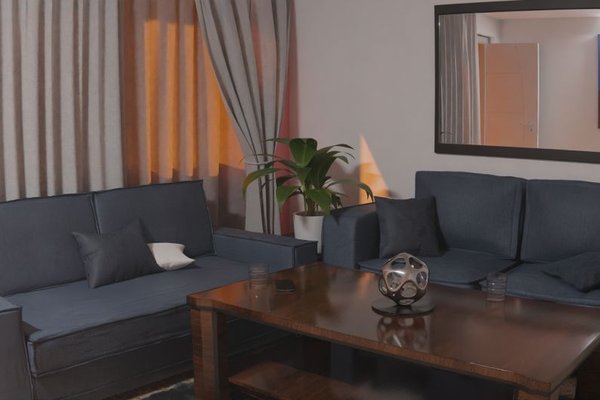
What are the best sofas for living room spaces?
The best sofas for living room spaces fit the room before they fit a trend: allow about 30 to 36 inches for main walkways, choose a seat depth that matches how you sit, and buy upholstery suited to your household. For most U.S. homes, an 80- to 90-inch sofa is a practical starting point.
A good sofa has to balance seating, circulation, comfort, durability and visual scale. Start with the room and doorway measurements, then choose the style, upholstery and color.
Which sofa is best for a living room?
For most living rooms, the best all-around choice is a straight sofa about 80 to 90 inches wide with a seat depth near 21 to 24 inches. It gives three adults usable seating without consuming the floor area of a large chaise or corner unit.
Mark the sofa footprint on the floor with painter’s tape before ordering. Keep roughly 30 to 36 inches for a main walkway and about 18 inches between the sofa and coffee table; 14 to 16 inches can work in a compact room if circulation stays clear. If placement is still unresolved, how to arrange living room furniture should come before fabric or cushion style.
9 sofa picks for different living rooms and budgets
- 72-inch apartment sofa: Best for small rooms and condos where narrow arms and a compact footprint preserve usable floor space.
- 84-inch standard sofa: The safest all-purpose pick for many U.S. living rooms because it seats three without overwhelming the room.
- 90-inch deep-seat sofa: Best for lounging; a 24- to 26-inch seat depth feels generous, though shorter adults may need a lumbar pillow for upright sitting.
- Reversible-chaise sofa: Best for renters or changing layouts because the chaise can switch sides without replacing the whole piece.
- L-shaped sectional: Best for larger family rooms where seat count matters more than flexibility; compare it with a conventional sofa using sectional vs sofa before committing.
- Modular sectional: Best for households likely to move or reconfigure the room because individual modules are easier to carry and rearrange.
- Sleeper sofa: Best when the living room doubles as guest space; measure the fully opened bed as well as the closed frame.
- Leather sofa: Best for a wipeable surface and visible aging; medium brown #8A5A3B is versatile, while dark brown #3B2A21 can look heavy in limited daylight.
- Performance-fabric family sofa: Best for children, pets or frequent entertaining; prioritize tightly woven performance fabric and removable covers where available.
Set a spending cap before shopping: under $1,000 for a first-home or shorter-term purchase, $1,000 to $2,500 for a main-room sofa, and above $2,500 only when construction, upholstery choice or modularity justifies it. These are planning bands, not guarantees of quality.
Which type of sofa is best for a living room?
A straight sofa is the most flexible type because it can sit against a wall, float in an open room or pair with chairs. A sectional makes more sense when the room can dedicate one corner to seating and you regularly need four or more seats together.
Choose the type from the room’s geometry first. In a narrow room, a 78- to 84-inch frame with arms under 5 inches wide preserves more seat space; in an open room, a 90-inch sofa or modular sectional can define the conversation zone. For more ways to finish that zone, see living room furniture ideas.
What dimensions should you check?
- Overall width: Measure arm to arm and leave visible floor or wall at both ends.
- Overall depth: About 34 to 38 inches is easier to fit than a 40-inch-plus lounge model.
- Seat depth: About 20 to 22 inches favors upright sitting; 23 to 26 inches favors lounging.
- Seat height: Around 17 to 19 inches suits many adults and is easier to rise from than a very low seat.
- Delivery path: Measure the narrowest door, hallway turn, stair landing and elevator opening before ordering.
Which sofa color is best for a living room?
The best sofa color works with the room’s fixed surfaces and daylight. A medium-value color usually hides daily wear better than cream #F3EEE6 or near-black #1E1E1E, while still leaving room to change rugs, pillows and wall paint later.
| Sofa color | North-facing room | South-facing room |
|---|---|---|
| Cream #F3EEE6 | Can shift grayer; Sherwin-Williams Alabaster SW 7008 on walls keeps the transition soft. | Looks warmer and brighter; avoid adding too many yellow-leaning surfaces. |
| Charcoal #4A4A48 | Reads cooler and heavier; keep it to about 20% to 25% of the visible room area. | Gains warmth and depth when the walls and floor are lighter. |
| Navy #243447 | Can approach blue-black in low daylight; lighter walls keep it from closing in the room. | Shows its blue character more clearly and handles stronger contrast. |
| Olive #68705A | Turns grayer and more subdued; test the actual fabric beside the window for a full day. | Looks richer and slightly yellower; cream #F3EEE6 balances it cleanly. |
| Camel #B9784B | Adds warmth without needing yellow wall paint. | Can read more orange in direct afternoon light; keep it near 15% to 20% if the floor already has orange undertones. |
A useful room proportion is roughly 60% wall and ceiling color, 25% large furniture and flooring influence, and 15% accents. It does not need to be exact, but it keeps a strong sofa color from taking over once the rug, curtains and wood are included.
Is a leather or fabric sofa best for a living room?
Neither material is automatically better. Leather is easier to wipe and changes visibly as it ages, while fabric offers more textures and can feel less slippery against bare skin.
| Wear and cleaning | Leather sofa | Fabric sofa |
|---|---|---|
| Daily spills | Usually easier to wipe quickly if the finish is protected. | Depends on fiber, weave and stain treatment. |
| Pet claws | Scratches may remain visible and become part of the patina. | Tight weaves resist snagging better than loose or looped textures. |
| Pet hair | Easy to see and remove from a smooth surface. | Can cling to textured upholstery and seams. |
| Seasonal feel | Can feel cooler at first in winter and warmer against skin in summer. | Usually feels more consistent to the touch across seasons. |
| Style flexibility | Works best when the material itself is a major visual feature. | Offers more color, pattern and texture choices. |
If durability is the priority, ask for cleaning codes, abrasion information and care instructions for the exact upholstery. Check whether cushion covers are removable, replacements can be ordered, and pet damage or stains are excluded from the warranty.
When does a large sofa or sectional not work in a living room?
A large sofa fails when it solves seating on paper but breaks circulation in real life. If the chaise cuts a 36-inch walkway down to 20 inches, the corner blocks a radiator or window, or the only delivery route requires an impossible stair turn, the piece is wrong for the room no matter how good it looks in photographs.
Deep, low sofas are another example. They photograph well because of their relaxed horizontal line, but a 26-inch seat depth and a seat height near 16 inches can be uncomfortable for shorter adults, older guests or anyone who prefers upright support. Cream #F3EEE6 upholstery can also be high-maintenance around muddy paws, toddlers or frequent snacks unless the covers are washable or the fabric is designed for stain resistance.
On a tight budget, skip oversized modular systems with extra corner and ottoman pieces unless you genuinely need them. A well-scaled straight sofa plus one movable chair often gives better circulation and more future flexibility.
How to choose before you order
- Measure the wall, full floor footprint and delivery path.
- Decide whether the priority is upright sitting, lounging, sleeping or maximum seat count.
- Mark the footprint with painter’s tape and live with it for a day.
- Check return fees, delivery method, assembly requirements and upholstery-care rules.
- Order a fabric or leather sample when available and view it in morning and afternoon light.
Use the Living Rooms hub to coordinate lighting, rugs, window treatments and furniture placement around the sofa instead of choosing each piece separately.
Frequently asked questions
How much space should be between a sofa and coffee table?
About 18 inches is a comfortable target in many rooms because it leaves knee room while keeping the table within reach. In a compact layout, about 14 to 16 inches can work if people can still pass safely.
What sofa size works in a 10-by-12-foot living room?
A sofa around 72 to 84 inches wide is a practical starting range, depending on doors, windows and other furniture. Tape the full depth on the floor too, because depth can affect circulation more than a few inches of width.
Should a sofa touch the wall?
It can, but it does not have to. Pulling it forward 3 to 6 inches can make the arrangement feel less cramped, while larger rooms may work better with the sofa floated farther out to define a conversation zone.
How many people should an 84-inch sofa seat?
Most 84-inch sofas are intended for about three adults, but arm width and cushion layout matter. A three-cushion model with narrow arms usually provides more usable seating than a bulky frame of the same overall width.
Is a firm or soft sofa better for everyday use?
A medium-firm seat is a practical starting point for mixed households because it supports upright sitting without feeling rigid. Very soft cushions suit lounging but may need more fluffing and can be harder to stand up from.
The best purchase is the sofa that fits the room, supports the way you actually sit and leaves enough clearance to move around comfortably. Start with dimensions, then use color, upholstery and style to finish the decision.