
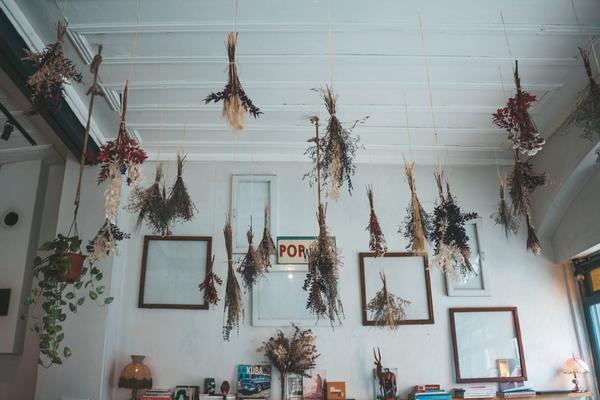
What are the best boho wall art ideas?
The best boho wall art ideas combine texture, natural materials, personal artwork, and relaxed arrangements. Try woven hangings, tapestries, baskets, framed prints, mirrors, fiber art, or an eclectic gallery wall. Mixing handmade-looking pieces with warm colors and varied shapes helps a blank wall feel inviting without making the room look overly coordinated.
A blank wall can make even a beautifully furnished room feel unfinished. Bohemian decorating solves that problem particularly well because it encourages layering rather than rigid matching. Instead of searching for one oversized piece that fills every inch, you can build warmth gradually with textiles, artwork, collected objects, natural fibers, and pieces that feel connected to your personality.
How do you decorate a blank wall in boho style?
Start with one visually interesting piece and build outward using different textures, shapes, and scales. Boho walls usually feel best when the arrangement looks collected over time rather than purchased as a perfectly coordinated set, so leave room for variation and personal touches.
A large tapestry, woven hanging, framed print, mirror, or grouping of baskets can become the anchor. From there, introduce smaller pieces that share one or two characteristics with it, such as earthy colors, natural fibers, curved shapes, or handmade details.
For example, a rust-colored textile might sit beside a botanical print, a small carved wood object, and a round rattan mirror. The pieces do not need to match. They simply need enough visual connection to keep the arrangement intentional.
If the surrounding room already includes several patterns and decorative objects, keep the wall slightly calmer. In a simpler space, the wall can carry more personality. This balance is especially useful if you are also developing the overall look through bohemian living room ideas, where rugs, seating, plants, and wall decor all compete for attention.
Choose an anchor before adding smaller pieces
Without an anchor, a collection of small decorations can appear scattered. Choose the piece you want the eye to notice first, then position supporting objects around it.
- Use a large textile above a sofa or bed.
- Center a statement mirror above a console.
- Begin a gallery arrangement with your largest framed artwork.
- Group several woven baskets into one larger visual composition.
- Use a substantial fiber hanging to add softness to a narrow wall.
The anchor does not necessarily have to sit exactly in the center. Slight asymmetry often works well with bohemian interiors because it contributes to the relaxed, collected character of the room.
What kinds of wall art work best in a bohemian room?
Textiles, woven pieces, botanical artwork, vintage-inspired prints, handmade objects, mirrors, baskets, and personal photographs all suit a bohemian room. The strongest arrangements usually combine two or three types of wall decor so the wall has depth instead of looking flat.
Woven wall hangings add instant texture
Woven wall art is particularly effective on plain painted walls because the fibers create shadows and physical depth. Macramé, wool hangings, raffia pieces, and other textile-based designs can soften the harder surfaces found in a room.
Natural cream and beige fibers work well if you prefer a light, earthy look. For something richer, choose designs containing terracotta, mustard, olive, brown, muted pink, or deep blue. A woven piece does not have to be huge; several smaller fiber works can form an interesting arrangement together.
Tapestries can cover large empty areas
One of the easiest boho tapestry ideas is to use a single large textile where framed artwork would otherwise require several pieces. Tapestries bring both color and softness, making them useful behind beds, sofas, reading chairs, or dining areas.
Look for motifs that complement the rest of the room rather than competing with it. Botanical designs, abstract patterns, sun-inspired motifs, geometric forms, and vintage-style textiles can all work. If the tapestry is heavily patterned, give it enough surrounding space to breathe.
Baskets turn everyday materials into wall decor
Shallow woven baskets are useful for adding texture without introducing another framed picture. Arrange several in different diameters, combining circular designs with occasional irregular shapes.
You can create a compact cluster above a console or spread the collection horizontally across a long wall. Repeating natural materials elsewhere in the room through rugs, lampshades, or furniture helps the baskets feel integrated rather than decorative for decoration’s sake.
Mirrors keep layered walls feeling lighter
Bohemian interiors can contain a lot of visual detail, so a mirror provides a useful break between patterned pieces. Rattan, carved wood, bamboo, brass-toned, sunburst, or softly irregular frames suit the style particularly well.
A mirror can also reflect daylight and make a dense arrangement feel less heavy. This is especially helpful in smaller living rooms and bedrooms where you want character without covering every surface with color.
How do you create a boho gallery wall without making it look cluttered?
Give the collection a loose organizing principle, such as a shared color family, repeated natural materials, or consistent spacing. You can still mix frame styles and artwork sizes, but repeating a few visual elements prevents an eclectic arrangement from turning into random clutter.
An eclectic gallery wall might combine illustrations, photographs, landscapes, abstract prints, fiber pieces, mirrors, and small decorative objects. Before hanging anything, arrange the pieces on the floor so you can test spacing and proportions.
Begin with the largest piece and gradually place medium and small items around it. Aim for varied shapes while keeping the distance between neighboring pieces reasonably consistent. That consistency gives the eye an invisible structure even if the outer edges remain irregular.
If you want to explore this approach in more detail, bohemian gallery wall ideas can help you develop arrangements specifically around mixed frames, artwork, and collected objects.
Mix frames, but repeat something
Using five completely unrelated frame finishes, ten unrelated colors, and several competing patterns can overwhelm a small wall. Instead, repeat at least one element. You might use mostly warm wood frames with two brass accents, or repeat black details across several otherwise different pieces.
Another option is to connect the artwork through color. Prints do not have to feature identical palettes, but repeating terracotta, green, cream, gold, or another room color creates continuity.
How can you make boho wall decor look personal rather than generic?
Include objects that have a story, memory, handmade quality, or genuine connection to your interests. Personal photographs, travel finds, original artwork, postcards, handmade textiles, pressed botanicals, or pieces collected gradually will usually feel more authentic than filling the entire wall with one matching decor set.
The appeal of bohemian wall decor comes partly from its freedom. A framed sketch can sit beside a small textile. A vintage postcard can share space with contemporary abstract art. A favorite photograph can be mixed with decorative pieces rather than separated into a formal photo display.
Plants can also contribute to the composition. A trailing plant on a nearby shelf or wall-mounted planter introduces organic movement and makes natural-fiber artwork feel more connected to the room. For additional ideas on balancing greenery with furnishings and decor, bohemian plant styling fits naturally with this approach.
Ideas for Different Walls Around the Home
Above a sofa
A sofa usually needs wall decor with enough visual weight to match its width. Try a substantial tapestry, a wide gallery arrangement, three coordinated-but-not-identical prints, or a combination of woven pieces and framed artwork.
Avoid placing a tiny object alone above a large sectional. Even attractive artwork can look lost when its scale does not relate to the furniture beneath it.
Above a bed
Textile-based decor works especially well above beds because it reinforces the softness of the space. Consider a lightweight fiber hanging, decorative textile, basket grouping, or several framed prints arranged horizontally.
Keep the arrangement connected to the bedding through color or texture rather than exact matching. This helps the bedroom feel layered and relaxed instead of styled as a matching set.
On a narrow wall
Narrow spaces are ideal for vertical arrangements. Stack two or three framed pieces, hang an elongated textile, or combine a small mirror with artwork above and below it.
Using the height of the wall can make an awkward strip beside a doorway, dresser, or window feel intentional without adding furniture to an already limited area.
In a small room
A small room does not need tiny artwork everywhere. One medium-to-large statement piece often looks calmer than many miniature decorations. If you prefer a collection, limit the palette and leave visible wall space around the arrangement.
Easy Ways to Keep the Look Balanced
Bohemian interiors welcome layering, but thoughtful editing still matters. If every wall is equally busy, the individual pieces lose impact. Let one or two areas become decorative focal points while leaving other surfaces quieter.
- Repeat two or three colors already present in the room.
- Combine smooth framed artwork with rough or woven textures.
- Mix circular, rectangular, and irregular shapes.
- Vary scale rather than using pieces that are all the same size.
- Leave some uncovered wall around dense arrangements.
- Connect wall materials to rugs, pillows, furniture, or lighting.
Most importantly, resist the urge to finish the wall simply because an empty spot remains. A little breathing room can make textured and colorful pieces stand out more clearly.
Frequently asked questions
What colors work best for boho wall art?
Earthy shades such as terracotta, olive, rust, tan, cream, ochre, and warm brown are common choices, but bohemian interiors are not limited to one palette. Jewel tones, muted pastels, black accents, and brighter colors can also work when they connect with colors already used elsewhere in the room.
Can boho wall art work in a modern home?
Yes. In a modern room, use fewer pieces and emphasize texture over heavy pattern. A large woven hanging, organic-shaped mirror, or restrained gallery arrangement can introduce bohemian warmth while allowing clean-lined furniture and open space to remain prominent.
Do all the frames in a boho gallery wall need to match?
No. Mixing wood, metal, painted, and simple neutral frames can make the wall feel collected and informal. For cohesion, repeat at least one finish, color, or material across several pieces instead of making every frame completely unrelated.
What can I use instead of framed pictures?
Try tapestries, woven baskets, macramé, fiber art, mirrors, textile panels, lightweight decorative objects, wall-mounted planters, or handmade pieces. Mixing dimensional objects with a few framed works is also an effective way to prevent a large wall from feeling flat.
How much wall space should I leave around boho art?
There is no fixed measurement for every arrangement, but visible negative space helps individual pieces remain readable. Rather than filling the wall edge to edge, create a defined decorative area and leave enough open space around it to separate the display from nearby furniture, windows, and doorways.
Give Blank Walls Warmth Without Overplanning Them
The most inviting boho wall art ideas are rarely about finding one perfect decoration. They come from combining texture, color, meaningful artwork, and objects that look as though they were collected rather than ordered as a single set.
Start with an anchor, add supporting pieces slowly, and repeat just enough color or material to create continuity. Whether you choose woven fibers, baskets, mirrors, textiles, framed prints, or a mixed gallery arrangement, the goal is a wall that feels warm, expressive, and comfortably connected to the rest of your home.