
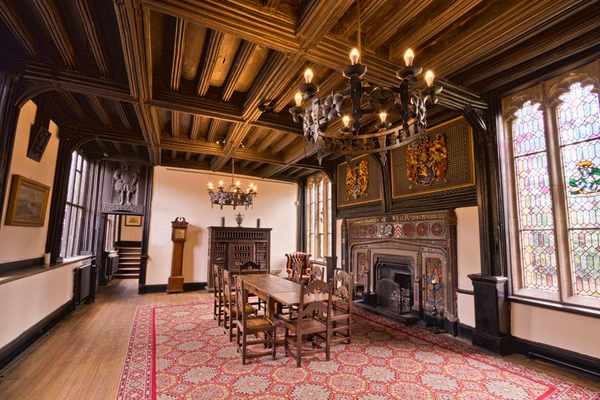
What is tudor style interior design, and how do you make it livable?
Tudor style interior design pairs substantial timber, plaster, deep windows, and historic-looking joinery with comfortable furnishings. Keep original beams and trim visible, paint suitable larger surfaces in carefully sampled colors, arrange furniture with proper walking clearances, and use layered lighting. The goal is a usable home with Tudor character, not a dark period set.
Dark wood does not automatically make a room gloomy. Begin with the architecture you already have and make practical decisions about light, materials, and scale around it.
Definition: Tudor interior style describes the timber, plaster, masonry, and detailed woodwork associated with English Tudor buildings and later Tudor Revival houses. In the United States, many houses borrow those shapes without using the original construction methods.
Which features define Tudor-style interiors?
Common clues include ceiling beams, substantial fireplaces, paneled doors, plaster walls, and windows set deeply into thick-looking openings. You do not need every element; the room is more convincing when a few strong details carry its identity.
Read the room before decorating
Find out whether a beam is structural, decorative, or a later addition. Preserve original material where possible, and ask a qualified preservation contractor to evaluate damaged plaster or uncertain wood finishes before sanding or attaching hardware. A twentieth-century house may need a different repair approach from a genuinely older building.
The best Tudor interiors let craftsmanship stand out. Keep the view toward a carved door, hearth, or prominent ceiling structure open instead of surrounding it with fake heraldic signs and artificially distressed accessories. For context on using architecture to guide decoration, read style interior design.
- Beams: Strong lines across a ceiling establish rhythm and visual weight.
- Plaster: Slight surface irregularities suit the hand-built character.
- Windows: Deep reveals cast shadows and deserve unobstructed daylight.
- Fireplaces: A substantial hearth often sets the room’s seating direction.
Check existing materials before buying anything. Real historical detail usually does more for the room than imitation antiques.
What wall colors work with dark Tudor beams and trim?
Choose a specific wall color that reflects light without visually erasing the framing. Test a physical sample in the actual room: north-facing daylight often pulls it cooler and grayer, while south-facing sun makes its warmer undertones more apparent.
Use the larger painted planes strategically
Benjamin Moore Pale Oak, shown as #D8CFC4, is a practical sample for broad wall fields between dark beams. Keep it on about 60 percent of the visible surfaces so the original wood retains its definition.
#D8CFC4 · Benjamin Moore Pale Oak
In north-facing light it can read grayer; south-facing sun brings out a warmer, occasionally pink cast. Reserve about 60 percent of the visible room for this wall color.
For ceilings and deep window returns, try Benjamin Moore White Dove, illustrated as #F0EDE5. Allow roughly 25 percent of the visible area for this lighter painted surface, leaving the remaining 15 percent to existing wood, masonry, and accent textiles.
#F0EDE5 · Benjamin Moore White Dove
It can appear cooler in north-facing light and creamier in south-facing light. Use it on about 25 percent of the visible area, mainly the ceiling and recessed returns.
Those percentages describe what the eye sees, not a formula for calculating paint gallons. Screen hex codes are visual guides, not guaranteed manufacturer matches; buy actual paint samples before selecting the finish. Neither paint choice justifies covering significant original timber.
Respect older plaster
Many English Tudor interiors gain their character from irregular surfaces. Low-sheen paint can keep texture from attracting too much glare, but old plaster may require a specialist-approved coating; standard modern wall paint is not automatically suitable. If moisture has damaged a wall, address its cause before repainting.
Which furniture and fabrics suit a Tudor room?
Choose pieces with enough visual substance to feel at home beside heavy joinery, while keeping their footprints modest enough for daily use. Straightforward upholstered seating can work with detailed woodwork; an entire suite of reproduction furniture is unnecessary.
Size the seating before choosing the fabric
In a 12 x 15 ft living room, start with a 78 to 84 in sofa and chairs around 30 in wide. Position the group toward the fireplace when it is the focal point, but keep passage to doors clear. Do not block an operating hearth, vents, or service access.
- Sofa width in a 12 x 15 ft room 78 to 84 in
- Sofa to coffee table gap 16 to 18 in
- Main walkway to a doorway 30 in minimum
- Rug beneath front sofa legs 8 x 10 ft
- Armchair footprint by the hearth 30 x 32 in
Choose durable upholstery before choosing an ornate motif. Tight weaves tolerate regular use, and layered curtains can reduce glare and echo. Measure each unusual window individually; symmetrical ready-made panels may fit poorly around deep recesses or projecting trim.
Protect the original work
This table shows where historic fabric should guide decisions and where a reversible update can bring comfort without unnecessary damage.
| Existing Tudor element | Preservation-first approach | Reversible furnishing approach |
|---|---|---|
| Exposed ceiling beams | Inspect the finish and repair carefully | Use freestanding lamps |
| Irregular plaster wall | Get appropriate repair and coating advice | Display art on a freestanding shelf |
| Deep window opening | Keep original trim visible | Use curtains that stack off the glass |
| Carved wooden door | Retain functioning historic hardware | Place a bench nearby rather than altering it |
| Large masonry hearth | Have its condition checked professionally | Arrange movable seating facing it |
Well-scaled contemporary furniture allows Tudor home decor to feel collected rather than theatrical. For another tradition built around visible joinery, craftsman style interior design offers useful ideas, though the histories differ.
How do you brighten a Tudor interior without losing its character?
First improve access to existing daylight, then add useful layers of artificial light. Keep the woodwork intact; lighting and furniture placement can make its profile easier to see without stripping away the room’s identity.
Give the windows breathing room
Move tall furniture away from deep window recesses. Where permitted, hang curtains so they can open beyond the glass, taking care not to damage significant trim. In north-facing rooms, review paint samples under cooler daylight; in south-facing rooms, watch for harsh midday contrast and use adjustable shades to control glare.
Put lamps where people sit
Position a shaded reading lamp next to the main chair, another near the opposite end of the sofa, and an adjustable source for general light. Consistent bulb color appearance helps the walls look coherent from corner to corner. A mirror can reflect an existing window or lamp, but should not create glare into a favorite seat.
Do not drill into old beams to run wiring. New circuits and hardwired light fittings belong with a licensed electrician; renters should stick to approved plug-in solutions. Borrow restraint rather than heaviness from gothic style interior design if your room already has arches or tracery.
When does a dark Tudor look fail in a small or poorly lit home?
It fails when every choice adds more visual weight to a room that already lacks daylight. Faux beams on an 8 ft ceiling might look atmospheric in a wide-angle photograph, yet can make an ordinary 10 x 11 ft room feel compressed. Oversized carved chairs may photograph beautifully beside a fireplace while leaving too little clearance to walk through the room. Those are props, not practical solutions.
Do not paint original paneling simply because a bright renovation photo looks appealing. Removing an old finish may be irreversible or inappropriate for a historic house. Decorative fake leaded panes can also reduce useful light while creating extra surfaces to clean. If the room has serious dampness, paint and styling will not solve the underlying problem.
Renters should not drill into beams, change historic hardware, or repair plaster without permission. A small budget goes further with two movable lamps, curtains that actually fit, and one correctly sized sofa than with a roomful of reproduction furniture. Homes with pets or young children may need washable textiles and fewer fragile collectibles. Character is worth keeping; daily frustration is not.
Frequently asked questions
Must a Tudor-inspired room have exposed beams?
No. Deep windows, a prominent hearth, paneled doors, and careful proportions can convey the style. Adding decorative beams to a low ceiling can make the room less comfortable.
Can a modern sofa work beside historic woodwork?
Yes. A simple upholstered sofa lets carved details remain the focus and is often more comfortable than reproduction seating. Check its width and the walking space before buying.
Is it safe to paint old dark wood trim?
Not without identifying its age and existing finish. Significant original woodwork may need advice from a qualified preservation professional because sanding or stripping can remove irreplaceable material.
How should curtains fit deep-set Tudor windows?
Measure the glass, reveal depth, and space above every opening. Allow fabric to stack clear of the glass where possible, without fastening hardware into fragile or historically important material.
What is the least expensive way to make the room brighter?
Clear the window openings and add useful plug-in lamps near the seating. If painting is allowed, try a physical sample on the wall before paying for a full-room repaint.
A livable Tudor room does not need to imitate a museum display. Protect the real details, use paint samples in the room’s actual light, and measure the furniture before making a purchase.