
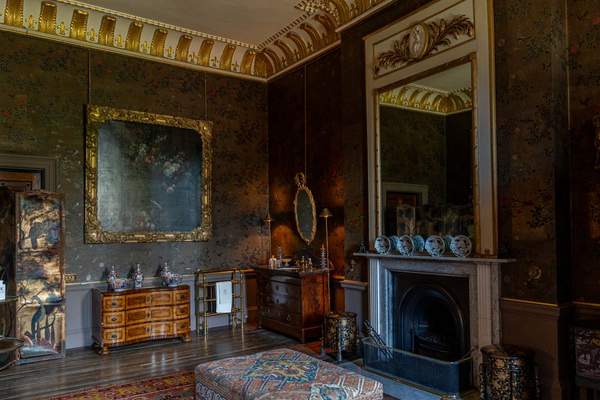
How does georgian style interior design work in an ordinary home?
Georgian style interior design creates order through balanced furniture placement, evenly spaced wall details, restrained ornament, and a clear focal point. Begin with symmetrical seating, simple moldings, a measured paint scheme, and substantial but comfortable furniture. You do not need a historic house or expensive antiques to achieve the effect.
A Georgian-inspired room should feel deliberate, not staged for a museum photograph. Establish a visual center, repeat a few proportions, and leave enough space for everyday life.
Definition: Georgian interior design draws on the architecture and decorative conventions of the Georgian period, broadly the eighteenth and early nineteenth centuries. Today, the term usually describes formal symmetry, ordered proportions, architectural trim, and carefully placed furnishings rather than a literal historical reconstruction.
Which features define Georgian interiors?
Georgian interiors are recognizable by balanced layouts, aligned openings, orderly wall divisions, and furniture organized around a central point. Their formality comes mainly from proportion and repetition; elaborate carving and costly antiques are not prerequisites.
Let the architecture set the rhythm
A fireplace, pair of windows, or centered doorway can establish the main axis. Where a wall lacks a focal point, a large mirror or framed artwork can provide one without changes to the building. Align the largest furnishings with that center instead of arranging everything along the walls.
Simple picture-frame molding can suggest period paneling, but its rectangles need equal margins and a logical stopping point at doors or corners. In a room with an 8 ft ceiling, a chair rail roughly 30 to 32 in above the floor is often more manageable than elaborate full-height trim. Mark proposed outlines with removable painter’s tape first.
- Window casing: Keep trim widths consistent where openings share a wall.
- Ceiling edge: Choose one modest molding profile.
- Fireplace mantel: Make an existing mantel the main display location.
- Lighting: Balance a principal seat with lamps at similar heights.
For the wider principles behind these choices, see style interior design. Proportion is more useful than buying decorative objects simply because they are labeled historic.
What colors suit Georgian rooms and millwork?
Use one main wall color, one clearly defined trim treatment, and a limited accent. Set proportions according to visible painted surface area, then judge samples in the room’s actual daylight.
For about 65 percent of visible painted surfaces, including the main walls, consider Benjamin Moore Pale Oak, shown here with the screen-reference hex #D8CFC4. Its gentle depth shows the shadows around molding without overwhelming smaller rooms.
#D8CFC4 · Benjamin Moore Pale Oak
North-facing light can make it read grayer, while south-facing sun emphasizes warmth. Assign it approximately 65 percent of painted surface area.
For roughly 25 percent of the painted area, particularly doors, baseboards, and built-ins, use Benjamin Moore White Dove with an approximate digital reference of #F0EFE6. Consistent trim helps define the architectural divisions.
#F0EFE6 · Benjamin Moore White Dove
Northern light makes this finish appear cleaner and cooler; southern exposure draws out its creamy cast. Reserve roughly 25 percent for trim and millwork.
Keep the remaining 10 percent for a deliberate accent, such as a painted cabinet interior, with Benjamin Moore Hale Navy, approximately #434C56 on screen. One concentrated accent holds the composition together.
#434C56 · Benjamin Moore Hale Navy
North-facing light makes the accent look cooler and deeper; south-facing light reveals more of its blue character. Limit it to about 10 percent of painted area.
Hex values are screen references, not manufacturer mixing formulas. Buy samples by their paint names and check them morning and afternoon; the arrangement that succeeds in a south-facing room may feel flatter in northern light.
Choose a finish that fits the surface
Sheen affects the way Georgian panel divisions catch light. These practical differences matter more than following a single finish rule for the entire room.
| Painted surface | Matte finish | Eggshell finish |
|---|---|---|
| Main living room walls | Disguises minor wall irregularities | Shows a little more reflected light |
| Picture-frame molding wall | Softens raised profiles visually | Emphasizes trim edges |
| Busy entry walls | May show hand marks more readily | Often easier to wipe clean |
| Painted bookcase backing | Limits glare behind objects | Adds subtle reflection |
| Older patched plaster | Hides slight surface defects | May reveal bumps in side light |
How should furniture be arranged around Georgian symmetry?
Center the largest seating piece on the main architectural axis and balance it with chairs, lamps, or a substantial piece opposite. Maintain usable circulation; a successful layout needs visual order without forcing identical furniture into every corner.
Measure the seating group first
In a 12 x 15 ft room, align an 80 to 88 in sofa with the fireplace, centered window, or chosen artwork. Place the coffee table on the same line and arrange two chairs opposite or diagonally across the grouping. The chairs can differ if their overall visual weight is balanced.
An 8 x 10 ft rug can anchor this seating group, with the sofa’s front legs on the rug. Keep a clear path to the door and do not squeeze a chair into the center simply to complete a photographic pair.
- Sofa width in a 12 x 15 ft room 80 to 88 in
- Sofa to coffee table gap 16 to 18 in
- Main walking route 36 in clear
- Passage behind a chair 30 in clear
- Rug for the seating group 8 x 10 ft
- Artwork center height 57 to 60 in above the floor
Keep mirrors and lighting aligned
A mirror centered above a sideboard reinforces the room’s axis, especially if the sideboard is wide enough to support it visually. Two lamps at comparable heights add evening balance. Have a qualified electrician assess any new wiring or ceiling-fixture installation.
Which fabrics and details keep Georgian style formal but livable?
Select upholstery with tailored lines, curtains that frame windows, and a few appropriately scaled accessories. Favor washable or replaceable surfaces where people actually sit, eat, and play.
Let curtains reinforce the symmetry
Hang a curtain rod about 4 to 6 in above the window trim when the wall permits, extending it approximately 6 to 10 in beyond each side. That gives panels room to stack away from the glass. Hem the fabric to meet the floor without dragging across it.
For a busy sofa, consider tightly woven performance upholstery and removable cushion covers. A subtle repeating pattern on pillows gives interest without asking every chair and curtain to compete. Choose a rug that can be cleaned using the manufacturer’s instructions.
Georgian home decor can be simple: a restrained set of framed prints, a pair of lamps, and one sizable vessel. Align artworks within a grouping and leave shelves useful for books and daily belongings.
Georgian decorating works best when the room’s routines come first. Add accessible storage, keep breakable ceramics beyond children’s reach, and secure tall furniture against tipping. To separate adjacent period influences, consult types of interior design style before purchasing additional accent pieces.
When does a Georgian-inspired room fail in everyday life?
Strict symmetry can make a small living room harder to use. Two matching armchairs might complete a beautiful photograph while blocking access to the kitchen, and oversized period-style furniture can consume the entire seating area. Below roughly 120 square feet, begin with one sofa and one carefully aligned focal point rather than buying a matched suite.
Elaborate wall molding is a poor first project in many rentals. Adhesives can tear painted drywall paper, nails leave holes, and permanent changes may breach the lease. Choose freestanding furniture and approved curtain hardware instead, and get written permission before alterations.
North-facing rooms with limited daylight can turn an appealing digital palette into a noticeably duller scheme. Test large physical samples rather than trusting photos. Silk drapes brushing the floor, polished fragile antiques, and perfectly arranged display tables often work only in styled images or rooms nobody uses. With pets or children, prioritize washable upholstery, stable furniture, secured tall cabinets, and storage you can reach quickly. Clear paths and comfortable seating are worth more than a period-perfect tableau. If a decorative idea repeatedly interferes with daily life, leave it out.
Frequently asked questions
Do I need a period house to use Georgian design?
No. Modern rooms can borrow the balanced layout, ordered wall treatment, and focal-point logic without copying historic construction. Start with furnishings you can move.
Can Georgian details work with an 8 ft ceiling?
Yes, if molding profiles and panel divisions remain restrained. Tape out proposed placements before installing anything permanent.
Must every piece of furniture have a matching partner?
No. Balance the size and placement of the major pieces around the central axis. A single matched pair of lamps may provide enough repetition.
Are original antiques essential?
No. Stable secondhand wooden furniture with suitable proportions can work well. Check structural condition, scale, and repair costs before purchasing.
What should I buy first for this kind of living room?
Measure the floor plan and choose the focal point before buying. Settle the principal sofa and rug sizes, then add lamps and decorative details.
A usable Georgian-inspired room starts with proportion, not a shopping list. Establish the axis, fit furniture to actual walking routes, and test paint in your light. Add formality only where it supports the way you live.