
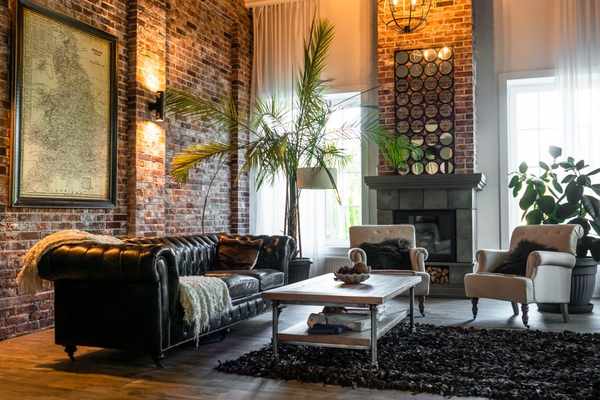
Rustic living rooms feel relaxed, grounded and welcoming rather than overly styled. The look works because it combines practical furniture with natural materials, warm colour and a sense of age. You do not need exposed beams or a country cottage to make it work, either. These rustic living room ideas range from small decorative updates to fuller room schemes, so you can choose what suits your space, budget and existing furniture.
Build the Room Around Natural Materials
1. Start with a Warm Neutral Base
Use warm white, oatmeal, stone or soft beige on the walls. These shades keep a rustic living space decor scheme light while giving timber, leather and woven textures room to stand out.
2. Add Reclaimed Wood
A reclaimed coffee table, shelving unit or sideboard brings instant character. Knots, marks and uneven colour make the room feel collected rather than newly furnished all at once.
3. Make the Fireplace the Focal Point
Arrange seating toward the fireplace and keep the mantel simple. A timber beam, stone surround or aged brick finish can anchor the entire cosy rustic lounge.
4. Choose a Substantial Coffee Table
Look for solid wood, chunky legs or a simple trestle shape. A sturdy table gives the seating area visual weight and provides a practical surface for books, trays and everyday use.
5. Use Stone in Small Doses
If a full stone wall feels too heavy, introduce stone through a hearth, lamp base, planter or decorative bowl. The rough surface adds contrast without making the room feel cold.
Create Comfort with Texture and Colour
6. Layer Wool and Linen
Combine linen curtains with wool throws and softly textured cushions. Natural fabrics make a rustic sitting room feel tactile and comfortable without relying on busy patterns.
7. Bring in Earthy Colours
Terracotta, moss green, clay, tobacco and muted ochre sit naturally beside wood. Use one or two as accents so the palette feels warm but still calm.
8. Anchor the Seating with a Rug
Choose a flatweave, faded traditional design or thick wool rug large enough to sit beneath the front legs of the main furniture. This visually connects the seating arrangement.
9. Mix Cushion Patterns Carefully
Try small checks, narrow stripes and understated botanical prints in related colours. Repeating the same tones keeps the mix cohesive rather than cluttered.
10. Add a Soft Window Seat
Where space allows, turn a deep sill or low built-in bench into a reading spot. A fitted cushion and two textured pillows create a useful rustic detail.
Choose Furniture with Character
11. Pair a Fabric Sofa with Leather
A relaxed linen-look sofa works beautifully with an aged leather chair. The contrast adds depth and avoids the matching-suite appearance that can make rustic rooms feel flat.
12. Include One Vintage Piece
A vintage chest, cabinet or occasional chair gives the room a believable sense of history. One strong piece is often more effective than filling the space with themed accessories.
13. Use Open Shelving
Simple timber shelves can display pottery, books and useful baskets. Leave some empty space between objects so the shelves feel personal but not crowded.
14. Add a Bench for Flexible Seating
A wooden bench can sit behind a sofa, beneath a window or along an unused wall. It provides occasional seating while reinforcing the informal country-inspired look.
15. Choose Rounded, Comfortable Shapes
Rustic style should feel easy to live with. Sofas with generous arms, curved chairs and soft ottomans balance the harder lines of beams, boards and wooden furniture.
Use Lighting and Details to Set the Mood
16. Layer Several Light Sources
Combine a central pendant with table lamps and a floor lamp. In the evening, lower-level lighting creates a cosier atmosphere than relying on one bright ceiling fitting.
17. Pick Lamps with Natural Finishes
Ceramic, timber, rattan and antique-brass bases suit rustic interiors. Linen or parchment-style shades soften the light and add warmth.
18. Display Handmade Pottery
Use a few useful pieces such as jugs, bowls or candleholders. Slight variations in glaze and shape bring a handcrafted quality that mass-produced accessories often lack.
19. Decorate with Branches and Greenery
A vase of leafy branches, dried grasses or seasonal stems adds height and movement. For a low-maintenance option, choose preserved foliage rather than artificial plants.
20. Hang Art with a Sense of Place
Landscapes, botanical studies and simple sketches work well. Choose frames in aged timber or muted metal, then group pieces loosely instead of creating a rigid gallery wall.
Make the Layout Feel Relaxed and Practical
21. Pull Furniture Away from the Walls
Even in a modest room, moving the sofa forward slightly can create a more intimate conversation area. Place a slim console behind it if the gap needs a purpose.
22. Use Baskets for Everyday Storage
Keep blankets, magazines, toys or firewood in sturdy woven baskets. They hide visual clutter while adding another natural texture to the room.
23. Balance Old and New
Pair rustic elements with clean modern pieces, such as a simple sofa or understated lighting. This prevents the room from looking like a themed set and makes it easier to update.
24. Create a Practical Family-Friendly Scheme
For a real-world family room, choose washable cushion covers, a forgiving mid-tone rug and a coffee table with rounded corners. The space can still feel stylish while coping with children, pets and daily mess.
25. Edit the Final Arrangement
Remove anything that feels overly decorative or repetitive. Rustic rooms look best when useful objects, comfortable seating and natural materials do most of the visual work.
Useful Details to Explore Next
Natural follow-on topics include rustic colour palettes, cosy living room lighting and natural texture ideas. These can help you refine individual parts of the scheme without redesigning the whole room.
Frequently asked questions
What colours work best in a rustic living room?
Warm neutrals, earthy greens, clay tones, muted ochre and soft browns work particularly well. Keep the largest surfaces calm, then use deeper colours through cushions, rugs and artwork.
How can I make a modern living room look rustic?
Add natural wood, woven textiles, pottery and warmer lighting. A vintage side table or reclaimed shelf can introduce age and texture without replacing modern furniture.
Can rustic style work in a small living room?
Yes. Use lighter wall colours, one or two characterful wooden pieces and compact storage baskets. Avoid too many dark finishes or bulky decorative items.
How do I stop rustic decor looking outdated?
Mix older materials with simple contemporary shapes, limit themed accessories and keep the palette restrained. Authentic textures usually age better than novelty country decor.
Create a Rustic Living Room That Feels Personal
The strongest rustic living room ideas are not about copying a fixed formula. They are about combining comfort, useful furniture and materials that become more appealing with age. Start with one meaningful change, such as a reclaimed table, a wool rug or layered lighting, then build gradually. The result will feel warmer, more natural and genuinely connected to the way you use the room.