
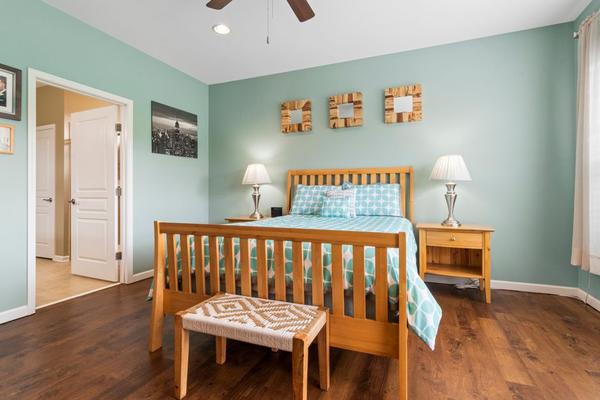
A coastal bedroom should feel restful before it looks themed. The most convincing rooms borrow from the shoreline through light, texture and a muted palette rather than obvious nautical props. Think washed timber, airy curtains, rumpled linen and blues softened with grey or green. The following coastal bedroom ideas are designed for real homes, including small rooms, rental spaces and guest bedrooms that need calm without feeling cold.
Build a Calm Coastal Foundation
1. Start with warm white walls
Choose a soft white with a cream, sand or faint grey undertone. Bright gallery white can feel stark, while warmer shades reflect daylight gently and make ocean-inspired accents look more natural.
2. Layer several sandy neutrals
Combine oat, beige, stone and pale taupe across bedding, rugs and upholstery. Using several close tones adds depth without creating visual noise, which is ideal for a low-stimulation retreat.
3. Use ocean blue as an accent
Bring in blue through cushions, a throw, artwork or a single upholstered chair. Dusty navy, sea-glass blue and faded denim usually feel calmer than bright turquoise.
4. Introduce muted coastal greens
Sage, eucalyptus and grey-green echo dune grass and weathered coastal landscapes. They work especially well in a seaside bedroom design that needs warmth alongside blue.
5. Choose pale or weathered wood
A light oak bed, washed pine nightstand or driftwood-toned bench adds an organic coastal note. Keep the finish matte rather than glossy so the room feels relaxed and tactile.
Add Texture Without Clutter
6. Make linen the main fabric
Linen bedding, curtains or cushion covers create the soft, slightly rumpled finish associated with easy beach houses. A linen-look cotton blend is a practical alternative when frequent washing or budget matters.
7. Layer the bed lightly
Use breathable sheets, a quilt or coverlet, and one casually folded throw. Avoid piling on too many decorative cushions; a restrained bed looks calmer and is easier to reset each morning.
8. Add a natural fibre rug
Jute, sisal or flatwoven wool introduces texture underfoot and grounds pale furniture. In a bedroom, choose a softer weave and place it partly beneath the bed to avoid rough edges beside bare feet.
9. Include woven storage
Seagrass baskets can hold spare blankets, laundry or bedside clutter. Their texture supports beach bedroom decor while giving everyday items a defined place.
10. Mix smooth and weathered surfaces
Pair crisp cotton sheets with a rough timber stool, ceramic lamp and woven shade. This contrast keeps a neutral room from appearing flat or overly coordinated.
Shape the Light and Layout
11. Hang curtains high and wide
Mounting the rod above the window and extending it beyond the frame makes the opening appear larger. Lightweight curtains then filter glare while preserving the breezy character of the room.
12. Use layered, warm lighting
Combine a ceiling fixture with bedside lamps or wall lights. Warm bulbs create a softer evening atmosphere than cool white light, while separate sources prevent harsh shadows.
13. Keep the window area open
Avoid placing tall storage directly beside a good window. Let daylight travel across the room, especially when the bedroom is compact or faces a shaded side of the house.
14. Give furniture breathing room
Coastal rooms feel airy because the layout is edited. Keep clear walking paths and remove pieces that serve no useful purpose. One bench or chair is enough when space is limited.
15. Use a mirror to spread daylight
Position a mirror where it catches light from the window rather than directly facing the bed. A simple timber, rattan or thin metal frame will suit the relaxed palette.
Add Character with Restraint
16. Choose one large coastal artwork
A quiet seascape, abstract horizon or botanical dune print can establish the mood without turning the room into a themed display. One substantial piece often looks more restful than a busy gallery wall.
17. Bring in subtle stripes
A narrow ticking stripe on a cushion, quilt or upholstered headboard nods to classic coastal style. Keep the contrast gentle so it reads as texture rather than a bold pattern.
18. Add a simple natural headboard
Rattan, cane, pale timber or upholstered linen gives the bed a clear focal point. In a small room, an open cane design can feel visually lighter than a heavy solid frame.
19. Style a practical coastal guest room
For a real-world example, place a luggage bench at the foot of the bed, leave one empty drawer, and add a basket with a spare blanket and phone charger. Guests receive useful comfort while the room still feels uncluttered.
20. Finish with a few collected details
Use two or three meaningful objects, such as a handmade ceramic vase, a smooth stone or a framed travel photograph. Avoid bowls of shells and novelty anchors unless they genuinely belong to your story.
How to Keep the Look Cohesive
Before buying anything, select three guiding materials and three main colours. For example: linen, pale oak and woven fibre paired with warm white, sand and muted blue. Repeating this small vocabulary throughout the room creates cohesion and makes it easier to reject pieces that would add clutter.
For related inspiration, consider these internal-link topics: Coastal Living Room Ideas, Small Bedroom Layout Ideas, and How to Layer Neutral Textures.
Frequently asked questions
What colours work best for a coastal bedroom?
Warm white, sand, pale taupe, soft blue and muted green form a flexible base. Dark navy can add definition in small amounts, while natural timber prevents the palette from feeling chilly.
How can I create a coastal bedroom without using blue?
Build the look with warm whites, sandy neutrals, weathered wood, linen, rattan and woven textures. Coastal style depends as much on lightness and natural materials as it does on colour.
Can coastal decor work in a small bedroom?
Yes. Use pale colours, lightweight curtains, streamlined furniture and concealed storage. Limit accessories and choose one strong focal point, such as a cane headboard or a quiet landscape print.
How do I avoid making the room look too themed?
Reference the coast indirectly through colour, texture and light. Skip mass-produced nautical signs and use fewer, more personal objects instead.
Create a Retreat That Feels Naturally Coastal
The best coastal bedroom ideas create space for rest rather than filling every surface. Begin with a warm, light backdrop, add tactile natural materials and introduce ocean colours sparingly. When each item contributes comfort, function or meaning, the room feels airy and collected instead of staged. That measured approach works just as well in a primary bedroom as it does in a calm coastal guest room.