
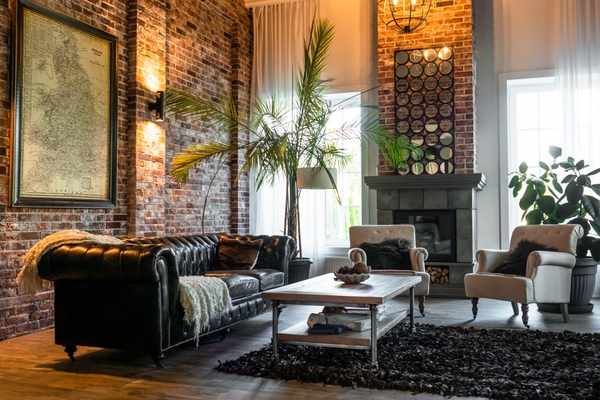
Industrial living rooms succeed through contrast: rough surfaces with comfortable seating, dark metal beside warm timber, and open space grounded by thoughtful details. You do not need a converted warehouse to achieve the look. The best industrial living room ideas adapt urban loft character to apartments, modern builds, and traditional houses. Begin with one or two architectural cues, then add texture, lighting, and practical furniture that feels collected rather than staged.
Architectural Features That Set the Tone
1. Make Exposed Brick the Focal Point
An original brick wall adds instant depth. If real brick is unavailable, use convincing brick slips on one wall instead of covering the whole room.
2. Try a Concrete-Effect Wall
Mineral paint, limewash, or a concrete-effect finish creates subtle movement. Balance its cool appearance with timber, upholstery, and warm lighting.
3. Celebrate Visible Beams
Paint steel beams charcoal or leave timber beams weathered. Their strong lines establish the raw interior style found in converted lofts.
4. Add Black-Framed Internal Glazing
Steel-look glass doors divide a living room from a kitchen or office while preserving light and adding crisp architectural structure.
5. Keep Selected Conduits Visible
Neatly installed surface-mounted conduit can look intentional. Keep the layout orderly, because random wiring appears unfinished rather than industrial.
6. Choose Dark Window Details
Black or bronze frames echo warehouse windows. Renters can create a similar effect with dark curtain poles and narrow-framed blinds.
Furniture Ideas for Comfort and Character
7. Anchor the Room with Leather
A cognac, tobacco, or dark brown leather sofa warms concrete and metal. Choose a clean shape with visible stitching.
8. Mix Leather with Fabric Seating
Combine a leather sofa with a linen, wool, or textured armchair. The contrast stops an industrial style living room feeling themed.
9. Select a Reclaimed-Wood Coffee Table
Visible grain, knots, and a sturdy form add character. A black steel base connects the table to other industrial decor ideas.
10. Repurpose a Factory Cart
A vintage cart with safe, lockable wheels makes a distinctive coffee table. Add fitted glass when the original surface is uneven.
11. Use Slim Metal Side Tables
Open-frame steel tables provide function without crowding the floor, making them ideal for a compact urban loft living room.
12. Choose Low Modular Seating
Modular sofas support a relaxed, open-plan layout and can be rearranged for entertaining, reading, or watching television.
13. Add One Vintage Storage Piece
A restored locker, printer’s cabinet, or metal apothecary unit adds storage and personality without filling the room with matching factory furniture.
14. Float Furniture Away from Walls
Pull the sofa forward and place a console behind it. This creates a defined conversation area in long, open-plan rooms.
Colour, Texture, and Softening Details
15. Build a Warm Neutral Palette
Layer charcoal, warm grey, tan, rust, and creamy white. These shades support raw materials while keeping the room welcoming.
16. Ground the Seating with a Rug
A faded Persian-style or low-pile textured rug softens hard flooring. Choose one large enough to sit beneath the seating’s front legs.
17. Hang Linen or Canvas Curtains
Natural fabrics temper brick and metal. Hang curtains high and wide to soften the architecture without blocking daylight.
18. Layer Wool and Woven Textiles
Wool throws, washed cotton, and woven cushions make industrial rooms feel lived-in. Keep patterns restrained so texture leads.
19. Introduce Deep Green Accents
Olive, forest green, and muted teal complement brick, leather, and black metal through chairs, cushions, art, or plants.
20. Allow Imperfect Finishes
Patinated metal, aged timber, and softly mottled walls create authenticity. Choose durable finishes designed to age naturally.
Lighting That Creates an Urban Mood
21. Hang an Oversized Pendant
A broad metal shade or warehouse pendant creates a strong centre. Position it over the seating zone rather than the ceiling’s midpoint.
22. Install Adjustable Track Lighting
Track lights suit industrial spaces and highlight brickwork, shelves, or art. Warm-white bulbs prevent grey surfaces looking flat.
23. Add a Black Floor Lamp
An articulated lamp introduces height and useful reading light beside a sofa. Select a stable base and glare-controlling shade.
24. Use Exposed Bulbs Sparingly
Filament-style bulbs suit simple fittings, but too many feel harsh. Treat them as accents and use shaded lamps for comfort.
25. Layer Three Lighting Levels
Combine ceiling, floor, and table lighting. In an open-plan flat, this makes the living zone intimate while the kitchen remains brighter.
Styling, Storage, and Finishing Touches
26. Build Timber-and-Metal Shelving
Open shelves display books, ceramics, and useful objects while reinforcing the industrial look. Leave space between items.
27. Display Large Graphic Art
Black-and-white photography, architectural drawings, vintage maps, or abstract prints suit the room’s strong lines. One large work can be enough.
28. Add Sculptural Plants
Rubber plants, snake plants, and olive trees soften hard materials. Use concrete, terracotta, or dark metal planters.
29. Conceal Modern Technology
Route cables neatly and hide routers in ventilated storage. Good organisation keeps brick, metal, and wood as the visual focus.
30. Include Personal Pieces
Finish with travel finds, records, inherited furniture, books, or handmade ceramics. Personal objects prevent the space resembling a showroom.
How to Put the Look Together
Use a simple three-part starting formula: one architectural feature, one warm material, and one black metal element. For example, pair a concrete-effect wall with a tan leather sofa and slim steel coffee table. Add a generous rug and layered lamps before smaller accessories. This practical order creates cohesion and reduces clutter.
Natural internal linking opportunities include Industrial Interior Design Guide, Open-Plan Living Room Layout Ideas, and How to Layer Living Room Lighting.
Frequently asked questions
What colours suit an industrial living room?
Warm greys, charcoal, black, brown, rust, cream, and muted green work well. Use lighter tones across larger surfaces when daylight is limited.
Can industrial style work in a small room?
Yes. Choose slim furniture, one feature wall, hidden storage, and a restrained palette. Avoid oversized factory-style pieces that restrict movement.
How can industrial decor feel cosy?
Add a large rug, warm bulbs, curtains, cushions, natural wood, and comfortable seating. Texture works better than excessive accessories.
Does the room need exposed brick?
No. Concrete finishes, dark frames, metal lighting, reclaimed wood, and visible structural lines can create the same character.
Create a Bold Space That Feels Like Home
Successful industrial living room ideas do not copy a warehouse. They combine honest materials, practical furniture, confident lines, and thoughtful lighting. Choose features that suit your architecture and routine, then soften them with texture and personal objects. The result feels bold and modern without losing warmth, comfort, or individuality.