
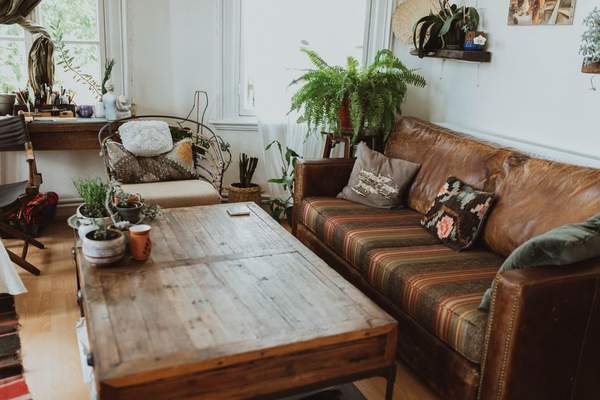
A bohemian living room should feel as though it has developed naturally over time. The best spaces are not filled with matching furniture or decorated from a single shopping trip. Instead, they combine meaningful objects, comfortable seating, layered textiles, collected artwork, and colours that reflect the people who live there.
That relaxed, gathered quality is what makes bohemian design especially suited to living rooms. This is where everyday life happens, so the room needs to be welcoming rather than overly styled. The following bohemian living room ideas focus on creating warmth, personality, and visual depth without allowing the space to become cluttered or chaotic.
Build a Warm and Collected Bohemian Living Room
1. Begin With a Calm Base
A neutral background gives colourful textiles, artwork, and accessories room to stand out. Warm white, cream, sand, pale taupe, and soft clay all work well. A calm base is particularly useful in a smaller room because it prevents layered boho living room decor from feeling visually heavy.
2. Anchor the Room With a Large Rug
Choose a rug large enough to connect the main furniture pieces. Ideally, the front legs of the sofa and chairs should rest on it. Persian-inspired motifs, faded florals, kilim patterns, and earthy geometric designs bring instant character while helping the seating area feel intentional.
3. Layer Two Rugs for More Depth
Place a smaller patterned rug over a larger natural-fibre rug. A jute or sisal base adds texture, while the upper rug introduces colour and pattern. This technique is useful when a favourite vintage rug is too small to anchor the entire seating arrangement.
4. Mix Cushions Without Matching Them
Combine cushions in different sizes, fabrics, and patterns while repeating one or two colours across the arrangement. Velvet, linen, woven cotton, embroidery, and block prints can sit together comfortably. The repeated colours create connection without making the sofa look like a coordinated furniture display.
5. Add a Soft, Oversized Throw
Drape a chunky knit, fringed blanket, or lightweight kantha quilt over the sofa. Avoid folding it too precisely. A relaxed placement makes the room feel lived in and gives you an easy way to introduce seasonal colour without replacing larger pieces.
6. Choose a Sofa With a Relaxed Shape
Low-profile sofas, deep seats, rounded arms, and softly structured upholstery suit a boho style living room. Linen-look fabrics, warm neutrals, olive green, rust, and muted mustard are versatile options. Comfort should guide the decision more than a perfectly polished silhouette.
7. Pair Different Accent Chairs
Your chairs do not need to form a matching pair. Try combining a woven rattan chair with an upholstered armchair, or place a vintage wooden chair beside a modern sofa. The difference creates the collected appearance associated with thoughtful bohemian home decor.
8. Use a Vintage Trunk as a Coffee Table
An old trunk, carved chest, or weathered wooden box adds storage and history. It can hold blankets, board games, or less attractive everyday items while serving as the centre of the seating area. Check that its height works comfortably with the sofa before committing.
9. Create an Informal Furniture Arrangement
Instead of pushing every piece against the walls, bring seating closer together to encourage conversation. Angle one chair slightly toward the sofa and leave enough room for movement. A conversational arrangement feels warmer than furniture positioned only around a television.
10. Introduce Natural Wood Tones
Wood brings balance to colourful patterns and soft fabrics. Look for side tables, shelving, stools, or frames in walnut, mango wood, oak, or reclaimed timber. Mixing wood finishes is acceptable, but repeating each tone at least twice helps the room remain cohesive.
11. Bring in Rattan and Woven Details
Use woven materials through baskets, chair frames, lampshades, cabinet doors, or trays. These elements add texture without demanding strong colour. A few carefully placed pieces usually look more sophisticated than filling the entire room with rattan furniture.
12. Build a Personal Gallery Wall
Combine framed prints with photographs, small paintings, textile art, mirrors, or handmade pieces. Lay the arrangement on the floor first so you can adjust the balance. Keep the spacing relatively consistent even when the frames vary in colour, shape, and material.
13. Display Textiles as Wall Art
A woven hanging, embroidered cloth, small rug, or vintage fabric can soften a large empty wall. This works particularly well behind a sofa where a framed picture might feel too formal. Make sure valuable textiles are protected from direct sunlight and moisture.
14. Use Books as Part of the Decor
Books make a bohemian living room feel genuinely inhabited. Arrange some vertically and stack others beneath a lamp, bowl, or decorative object. Choose books you actually read or enjoy browsing rather than buying decorative sets purely for their coloured spines.
15. Add Plants at Different Heights
Place greenery on the floor, shelves, side tables, and hanging planters to create movement around the room. A tall plant can soften an empty corner, while trailing plants work well on high shelving. Select varieties based on the room’s real light conditions rather than appearance alone.
16. Create a Dedicated Reading Corner
Turn an underused corner into a small retreat with a comfortable chair, reading lamp, side table, and basket for books or blankets. This gives the room a practical focal point and supports the relaxed lifestyle associated with bohemian interiors.
For example, in a narrow living room, place the reading chair diagonally beside the window rather than directly against the wall. Add a small round table and a wall-mounted lamp to preserve floor space. The arrangement fills an awkward corner without interrupting the main walkway.
17. Use Warm, Layered Lighting
One bright ceiling light can flatten the room. Combine table lamps, floor lamps, wall lights, and subtle decorative lighting instead. Warm bulbs create a softer atmosphere and highlight the textures that make eclectic living room ideas feel rich rather than busy.
18. Choose Sculptural Lampshades
Woven pendants, pleated fabric shades, coloured glass lamps, and ceramic bases can act as decorative objects even when switched off. Use distinctive lighting in one or two locations, then keep the remaining lamps simpler so the room does not feel overdesigned.
19. Introduce Earthy Accent Colours
Terracotta, ochre, olive, aubergine, tobacco brown, and dusty rose create warmth without relying on overly bright shades. Introduce them through cushions, ceramics, artwork, and rugs. Repeating an accent colour across three areas of the room helps it feel deliberate.
20. Combine Patterns at Different Scales
Pair a large floral or geometric motif with smaller stripes, checks, or block prints. Patterns compete when they are all equally bold. Varying the scale gives the eye places to rest while maintaining the layered appearance central to boho living room decor.
21. Style Open Shelves With Breathing Space
Open shelves are ideal for displaying pottery, books, framed pictures, and travel finds, but every centimetre does not need to be filled. Group objects in small arrangements and leave gaps between them. Negative space allows individual pieces to feel meaningful.
For more guidance on balanced displays, add an internal link to how to style open shelving.
22. Add Handmade and Imperfect Objects
Hand-thrown ceramics, woven baskets, carved bowls, and handmade artwork introduce small variations that mass-produced pieces often lack. These irregularities make a room feel personal. One expressive handmade item can have more impact than several generic decorative accessories.
23. Use Curtains to Soften the Architecture
Hang linen, cotton, or lightly textured curtains close to the ceiling and allow them to fall almost to the floor. This makes the room appear taller while softening hard window frames. Sheer panels are useful for maintaining privacy without blocking natural light.
24. Give Collected Objects a Shared Home
Souvenirs and sentimental items can look scattered when placed throughout the room individually. Gather related objects on a tray, shelf, mantel, or console. A collection of small ceramics, for example, will feel more purposeful when displayed together rather than distributed across every surface.
25. Edit the Room Before Adding More
Bohemian design welcomes layers, but warmth is not the same as clutter. Step back and identify areas where several patterns, colours, or small objects are competing. Removing one item may strengthen the entire arrangement. Leave enough open floor and surface space for the room to function comfortably.
A useful editing method is to photograph the living room from the doorway. Busy corners and awkward furniture placement often become easier to spot in a photograph than when you are standing inside the space.
How to Keep Bohemian Decor Cohesive
The strongest bohemian rooms contain variety within a loose framework. Before buying anything new, decide which elements will connect the room. These might include a repeated wood tone, a small palette of earthy colours, or natural materials used across several areas.
- Repeat key colours in at least two or three places.
- Balance detailed patterns with plain upholstery and walls.
- Mix furniture styles while keeping the scale comfortable for the room.
- Group small accessories instead of scattering them everywhere.
- Prioritise objects with personal meaning or practical value.
You could also connect this article naturally to living room furniture placement ideas and warm neutral colour palettes for readers planning a complete room update.
Frequently asked questions
What colours work best in a bohemian living room?
Warm neutrals provide a flexible base, while terracotta, olive, mustard, rust, deep blue, and muted pink add character. The best palette depends on the mood you want, but repeating a limited selection of colours will keep the room cohesive.
Can a small living room have bohemian decor?
Yes. Use a light background, one appropriately sized rug, a few textured textiles, and carefully selected plants or artwork. Avoid using too many small accessories, as they can make a compact room feel crowded.
Does bohemian furniture need to be vintage?
No. Modern furniture can work beautifully when combined with vintage, handmade, or natural elements. A simple contemporary sofa, for example, can be softened with patterned cushions, a worn rug, a wooden coffee table, and collected artwork.
How do I make bohemian decor look intentional rather than messy?
Repeat colours and materials, vary the scale of patterns, and leave some surfaces partially empty. Every object should contribute beauty, function, or personal meaning. Regular editing is just as important as layering.
A Room That Tells Your Story
A memorable bohemian living room is not defined by how many patterns, plants, or vintage pieces it contains. Its character comes from the relationship between those elements and the life taking place around them. Start with comfortable furniture and a practical layout, then add texture, colour, artwork, and collected objects gradually.
The result should feel warm but not crowded, expressive but still restful. When each layer has a reason to be there, the room becomes more than a collection of decorating ideas. It becomes a personal space that feels settled, welcoming, and unmistakably yours.