
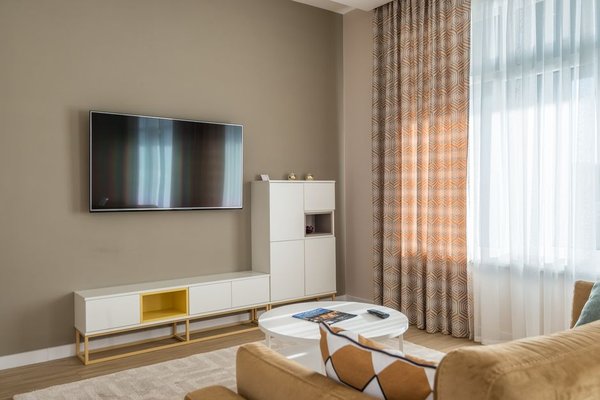
Walk into a genuinely well-designed Scandinavian living room and the first thing you notice isn’t the furniture — it’s the light. Pale walls bounce it around the room, wood floors soak it up, and every surface seems to have been chosen because it looks good under grey Nordic skies for eight months of the year. That’s really the whole design brief in a sentence. Scandinavian style wasn’t born out of a Pinterest trend; it grew out of long winters, small apartments, and a genuine need to make limited daylight and limited square footage feel calm rather than cramped.
Living rooms are consistently the most-searched room when people look up this style, and it makes sense — it’s the space where the aesthetic has to work hardest. It needs to host guests, function as a reading nook, survive kids and pets, and still look pulled together without appearing staged. Below are 30 ideas that cover the full range, from foundational choices like flooring and wall color down to the small styling details that separate a room that looks Scandinavian from one that just looks beige.
Getting the Foundation Right
Before layering in decor, the bones of a nordic living room need to support the look. These are the structural decisions worth getting right first.
1. Start With Light Wood Furniture
Light wood furniture is the backbone of this style — think ash, birch, beech, or pale oak rather than dark walnut or mahogany. A light wood coffee table or media console immediately signals Scandinavian influence, partly because it reflects light instead of absorbing it, and partly because it echoes the actual wood species native to the region.
2. Choose a Warm White or Soft Grey Wall Color
Stark, cool white can feel clinical. Scandinavian interiors tend to favor warmer off-whites or soft dove greys that have a hint of pigment to them, which keeps the room from feeling like a hospital waiting area once the furniture goes in.
3. Prioritize Natural Light
Sheer or unlined linen curtains, hung close to the ceiling, let in maximum daylight while softening the window line. If the room gets limited natural light, mirrors positioned to reflect window light can make a real difference.
4. Pick a Pale, Textured Rug
A flatweave wool rug in oatmeal, ivory, or pale grey grounds the seating area without introducing visual weight. Avoid heavily patterned or dark rugs — they tend to fight with the room’s overall lightness.
Building a Minimalist Layout
A minimalist living room isn’t about owning less furniture; it’s about owning furniture that earns its place. Every item should have a function or a visual purpose — ideally both.
- Float the sofa away from the wall if the room is large enough, creating a defined conversation zone rather than pushing everything to the perimeter.
- Limit the color palette to two or three tones plus wood — typically white, one neutral, and one muted accent.
- Choose furniture with visible legs instead of skirted bases, which keeps sightlines open and makes the room feel less crowded.
- Avoid matching furniture sets — a slightly mismatched sofa and armchair, unified by color, feels more collected and less showroom.
5. Use a Low-Profile Sofa
Scandinavian sofas tend to sit lower and have simpler arms than traditional Western designs, which keeps ceilings feeling taller and rooms feeling more open.
6. Add One Statement Chair
A single well-designed accent chair — often in a bouclé or wool fabric — gives the eye somewhere to land without cluttering the layout.
7. Keep Storage Closed and Simple
Open shelving looks great in photos but gets visually noisy fast. A simple sideboard in light wood with closed doors keeps clutter out of sight while reinforcing the material palette.
Layering Texture So the Room Doesn’t Feel Cold
This is where a lot of attempts at scandi decor go wrong. People strip a room down to white walls and light wood and end up with something that photographs well but feels uninviting to actually sit in. The fix is texture, and lots of it.
8. Chunky Knit Throws
Draped over the arm of a sofa or folded at the end, a chunky wool or cotton throw adds tactile warmth instantly.
9. Sheepskin or Faux Sheepskin Accents
Layered over a chair or on the floor near the sofa, sheepskin is almost a signature of Nordic interiors — it softens hard surfaces and adds visual texture without adding color.
10. Mix Fabric Weights
Pair a linen sofa with a bouclé cushion and a wool rug. The contrast in weave and weight is what makes a neutral room feel rich instead of flat.
11. Woven Baskets for Storage
A woven seagrass or rattan basket by the sofa for blankets or magazines adds organic texture and doubles as practical storage.
12. Layer Rugs
A smaller patterned or textured rug layered over a larger flatweave adds depth to the floor without overwhelming the palette.
Practical Example: A Real Living Room Makeover Scenario
Picture a fairly typical rental living room: beige walls that can’t be painted, a dark laminate floor, and a sectional sofa that came with the apartment. This is where most people assume Scandinavian style is off the table — but it’s actually a good test case for the philosophy, since it forces decisions rather than a full renovation.
The fix starts with a large ivory flatweave rug sized to sit under the front legs of the sofa, which visually lightens the dark floor. A slipcover in oatmeal linen covers the sectional. A light ash coffee table replaces whatever came with the unit, paired with two rattan pendant-style baskets for blanket storage. Sheer linen curtains go up close to the ceiling to elongate the window, and a single large abstract print in muted tones goes above the sofa. Total furniture swap: three items. The room reads as fully Scandinavian within a weekend, without touching the walls or floor — proof that the style is more about material choice and restraint than square footage or budget for renovation.
Color and Accent Choices
13. Stick to a Muted Accent Color
Dusty blue, sage green, or terracotta work well as single accent colors — used in a cushion, a piece of art, or a single upholstered chair, never dominating the room.
14. Black Accents in Small Doses
A black-framed mirror, a black floor lamp, or slim black window frames add contrast and prevent the palette from feeling washed out.
15. Botanical Greenery
A single large plant — a fiddle leaf fig or olive tree in a simple ceramic or woven planter — brings in living color and softens hard architectural lines.
Lighting That Sets the Mood
Given how much of Scandinavian design responds to low-light seasons, lighting deserves more attention than it usually gets.
- Layer three light sources — overhead, a floor lamp, and a table lamp — rather than relying on a single ceiling fixture.
- Use warm bulbs (around 2700K) instead of cool white, which keeps the room feeling cozy after dark.
- Choose sculptural lamp bases in ceramic, wood, or matte metal as functional decor pieces.
- Add candles — a genuinely common Nordic habit (hygge, in Danish specifically, though the concept spans the region) that adds flickering warmth cheaply.
Finishing Touches
16–20. Small Details That Add Up
- Ceramic vases with a single stem or dried pampas grass
- A stack of hardcover books used as a side table riser
- Linen cushion covers in two complementary neutrals
- A wall clock with a simple wood or black frame
- Minimal wall art — one or two large pieces rather than a busy gallery wall
For readers furnishing a full home rather than a single room, it’s worth reading our guide on Scandinavian bedroom design essentials for how these same principles translate to a more restful space, or our breakdown of the best light wood furniture brands for a Nordic home if sourcing pieces is the next step. Anyone still deciding on flooring before committing to this look might also find our piece on choosing the right wood tone for a Scandinavian home useful.
Frequently Asked Questions
What colors work best in a Scandinavian living room?
Warm whites, soft greys, and beige form the base palette, with one muted accent color like sage green or dusty blue used sparingly. Avoid saturated or dark colors as a primary tone — they work only as small accents.
Is Scandinavian style the same as minimalist style?
They overlap but aren’t identical. Minimalism prioritizes reducing objects to the essentials, while Scandinavian design allows for texture, warmth, and personal touches as long as the overall palette and material choices stay restrained. A Scandinavian room is minimal but rarely sparse.
Can Scandinavian style work in a small living room?
It’s arguably one of the best styles for small spaces, since the emphasis on light colors, light wood, and open sightlines is specifically designed to make compact rooms feel larger and less cluttered.
Do I need to buy new furniture to get this look?
Not necessarily. Slipcovers, a light rug, updated cushions, and swapping one or two key pieces — like a coffee table or lamp — can shift a room significantly without a full furniture overhaul, as shown in the rental makeover example above.
The common thread running through all of these ideas is restraint paired with warmth — a room that looks calm but doesn’t feel cold, and looks simple without feeling unfinished. Start with the foundation pieces, layer in texture gradually, and resist the urge to fill every surface. That editing process, more than any specific product, is what actually makes a living room read as Scandinavian.