
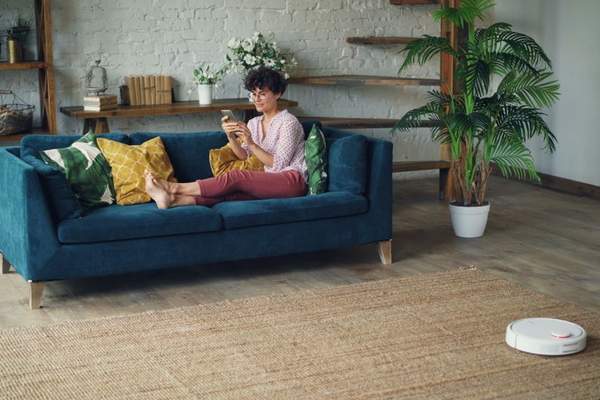
Is a jute rug living room setup a good idea?
A jute rug living room setup works well when you want a textured, grounded-looking floor covering and can keep it mostly dry. Choose a large enough rug for the sofa’s front legs, use a rug pad, and expect a firm, sometimes scratchy feel. Skip jute where frequent spills or dampness are unavoidable.
Jute looks simple in photographs, but its fibers, weave, and care needs matter more than its appearance. Before ordering, check where people sit barefoot, how the sofa meets the rug, and whether the room can handle a surface that dislikes moisture.
Definition: Jute is a plant fiber spun into yarn and woven into a rug, often in thick loops or braids. Its irregular strands create visible texture and a relatively firm surface. The word describes the fiber, not a promise of softness, stain resistance, or a particular backing.
What are the benefits of a jute rug in a living room?
Jute adds texture without needing a busy printed pattern, and a tightly woven piece can anchor a sofa and chairs visually. It is especially useful in a seating area where shoes are usually removed and food or drinks rarely end up on the floor.
For buyers considering jute rugs for living room seating, the visible weave makes a simple grouping feel deliberate. Natural variations are normal, so examine close-up product images rather than expecting an identical pattern across every square foot. The material also appears in rustic rugs for living room ideas, but it need not dictate the furniture style. Look for securely bound edges, an even weave, and written care instructions before committing.
For a wall color behind the woven texture, consider Benjamin Moore Pale Oak OC-20, represented by the approximate screen hex #D8CFC4. Aim for this paint on about 60 percent of the visible room surfaces; let existing upholstery, flooring, and the rug account for the remainder rather than trying to match every object.
#D8CFC4 · Benjamin Moore Pale Oak
Reads warmer and slightly pinker in south-facing light, while north-facing light can make it appear grayer. Use on walls and ceiling for roughly 60 percent of the room, and confirm with a physical paint sample.
How rough does a jute rug feel underfoot?
A typical jute rug feels textured and firm, not plush; thicker braids can be prickly against bare feet. The exact feel varies by weave, strand thickness, and how tightly the fibers are packed, so a product photo cannot reliably tell you whether it will be comfortable.
If you often stretch out on the floor to read or play with children, touch a sample before buying. Rub the material lightly with your palm and the underside of your forearm, then stand on it barefoot if the store permits. Notice whether ends poke through the weave and whether the edges curl after the sample is handled.
What size jute rug works best under a sofa?
For a typical sofa grouping in a 12 x 15 ft living room, an 8 x 10 ft jute rug is a practical starting point. The rug should extend beyond both sofa ends and support at least the front legs of the main seating pieces, without crowding circulation.
Measure the sofa width first, not just the empty floor. For an 84 in sofa, aim for a rug that reaches at least 6 in beyond each arm; an 8 ft-wide rug gives approximately 6 in per side when centered. Mark the intended outline with removable painter’s tape, then sit in the chairs and check where feet actually land. The longer rug edge usually follows the longer side of the furniture grouping.
- Rug for a 12 x 15 ft living room 8 x 10 ft
- Rug for a 14 x 18 ft living room 9 x 12 ft
- Rug width beyond an 84 in sofa 6 in per side minimum
- Sofa to coffee table gap 16 to 18 in
- Clear walkway around seating 30 in minimum
Our living room rug overview explains how the rug establishes the seating zone. For tape-out diagrams, see living room rug layout; for larger standard formats, consult 9 x 12 rugs for living room before ordering.
Can you layer a softer rug over jute?
Yes. A smaller, softer upper rug can make the place where your feet land more comfortable while allowing the jute border to remain visible. Both rugs must lie flat, and their pads or grippers must be compatible with the floor finish and the manufacturers’ instructions.
Use a low-profile top rug under a coffee table rather than building a tall stack of edges near a walking route. Leave a visible jute border of roughly 8 to 12 in on each side of the top rug. The setup should not create a raised corner where someone could catch a toe.
For layered rugs living room examples, focus on photographs showing the entire floor edge rather than a close crop. Check that sofa feet are supported predictably, and test whether the top piece moves when someone changes position on the couch.
| Seating-area need | Jute rug on its own | Soft rug layered on jute |
|---|---|---|
| Barefoot lounging | Firm, textured contact | Softer contact where the top rug sits |
| Floor-level play | Braids may feel abrasive | More comfortable central play zone |
| Edge visibility | One perimeter to secure | Two perimeters to check for curling |
| Vacuuming | One woven surface to maintain | Two layers to lift and clean separately |
How do you clean a jute rug without damaging it?
Keep routine cleaning dry and gentle: vacuum regularly using suction without an aggressive beater bar, and remove loose soil before it works between the braids. For a fresh liquid spill, blot immediately with a clean absorbent cloth; avoid saturating the fibers or scrubbing them.
- Weekly care: Vacuum the surface and nearby floor, lifting corners instead of forcing a brush across binding.
- Dry debris: Pick up larger particles first, then vacuum along the weave rather than tugging at loose ends.
- Spills: Blot from the outside toward the middle with a dry cloth. Do not rub the fibers into a fuzzy patch.
- Persistent marks: Ask a specialist experienced with plant fibers before applying water, chemicals, or steam.
Do not put a nonwashable jute rug in the washing machine, soak it in a bathtub, or use a steam cleaner by default. Excess moisture can cause shrinkage, distortion, water marks, and lingering odor. If the rug gets wet underneath, lift it promptly and let both the rug and floor dry fully according to their care requirements. Check the manufacturer’s tag first, because backing materials may require special handling.
When is a jute rug the wrong choice for a living room?
Skip jute if your living room routinely hosts toddler snacks, muddy dogs, spilled coffee, or shoes coming straight in from a rainy yard. A natural-fiber rug may photograph beautifully under a carefully staged coffee table, but that image does not show what happens after repeated wet cleaning. For households that need to scrub accidents frequently, the maintenance burden is not a minor trade-off; it is a reason to choose a different floor covering.
It is also a poor fit for anyone who sits or exercises on the floor and finds coarse texture uncomfortable. A pad helps with movement and some cushioning, not with scratchy strands. In a small room, a rug so large that it blocks a 30 in circulation route creates a trip problem regardless of how well it frames the sofa.
Be skeptical of styled photos with multiple thick layers, furniture balanced on uneven edges, or a rug tucked right against exterior doors. Those arrangements look tidy from one camera angle but can bunch during actual use. If you cannot keep the fiber dry and the edges secure, don’t buy jute just for the picture.
Frequently asked questions
Will a jute rug shed when it is new?
Some loose fibers and dust can appear when a jute rug is unpacked, especially with a chunky weave. Gentle vacuuming may reduce debris, but persistent unraveling or growing gaps are reasons to contact the seller.
Do I need a rug pad underneath jute?
Usually yes: a pad helps hold the rug in place and reduces rubbing against the flooring. Choose one the pad and floor manufacturers approve, and verify that it does not mark the finish.
Can furniture leave permanent dents in a jute rug?
Heavy legs can compress woven fibers, sometimes leaving impressions after the furniture moves. Use suitable furniture feet and shift a piece carefully when practical, but do not assume dents will disappear completely.
Is a jute rug suitable over hardwood floors?
It can work over hardwood if both the floor finish and rug pad are compatible and the rug stays dry. Sweep up grit from underneath regularly and check the floor for trapped moisture or scuffing.
A jute rug earns its place when its size, texture, and dry-cleaning limits suit the people using the living room. Test the feel, tape out the footprint, and consider likely spills before committing. The best-looking choice is the one that still works after an ordinary week at home.