
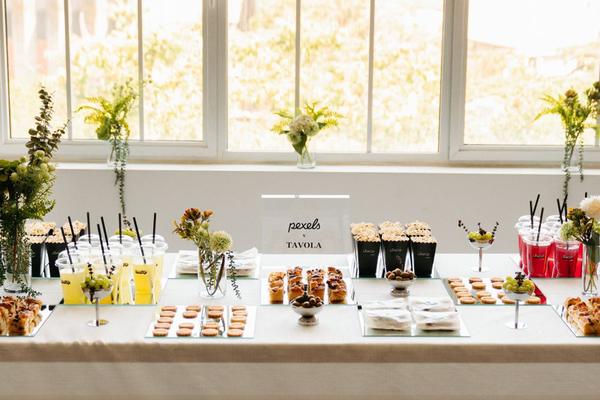
What are the best light refreshments ideas for a simple gathering?
The best light refreshments ideas pair two or three savory bites, one easy sweet, fresh fruit and simple drinks so guests can snack without needing a full meal. Plan about 5 to 7 small bites per person for a 60- to 90-minute afternoon gathering, keep portions bite-size, and separate drinks from food to prevent crowding.
A simple refreshment table works best when the food is easy to pick up, portions are predictable and guests can move through the setup without stopping in one spot. The most useful light refreshment ideas also let you prepare most components before anyone arrives.
What light refreshments work for an afternoon gathering?
For an afternoon gathering, choose foods that feel substantial enough to satisfy but not so heavy that they turn the event into a meal. A mix of savory, crisp, fresh and lightly sweet items gives guests variety without requiring a large menu.
- Cucumber and herb tea sandwiches: Cut each sandwich into four rectangles and plan one to two pieces per guest. Assemble a few hours ahead, cover tightly and refrigerate.
- Hummus vegetable cups: Spoon about 2 tbsp of hummus into small cups with cucumber sticks, bell pepper strips and snap peas. They are tidy, naturally portioned light snack ideas that need no utensils.
- Caprese skewers: Thread cherry tomatoes, small mozzarella balls and basil leaves onto short picks. Keep them chilled and serve smaller batches rather than one oversized platter.
- Mini chicken salad croissants: Fill small croissants lightly so they can be eaten without spilling. One half-size croissant per guest works when several other foods are available, making it a useful choice among light appetizer ideas.
- Fresh fruit skewers: Use grapes, pineapple, strawberries and melon, and plan two small skewers per guest if fruit is the main fresh item. Keep them cold until serving.
- Popcorn cups: Portion roughly 1 cup of lightly seasoned popcorn into paper cups. It is inexpensive, easy to replenish and needs no refrigeration.
- Lemon shortbread squares: Cut squares about 1 1/2 in wide and serve one or two per person. They provide a sweet finish without creating a full dessert buffet.
- Iced tea and sparkling water: Offer one unsweetened drink and one sparkling option, allowing about 12 to 16 fl oz per guest. Put drinks at one end so pouring does not block the food.
If you want to expand the menu without making it heavier, the site’s light food ideas and light dessert ideas are natural next references. For room-level planning around fixtures and ambiance, the broader light ideas hub keeps the related material together.
Which refreshments can be prepared several hours ahead?
Dry snacks, baked sweets, washed produce and most serving pieces can be prepared well ahead, while sandwiches and chilled protein items are better assembled closer to guest arrival. Keep perishable foods at 40°F or below until service and avoid leaving them at room temperature for more than 2 hours.
Shortbread, cookies and popcorn can be portioned in the morning and kept covered. Fruit can be washed, dried and cut several hours ahead, then refrigerated in covered containers before assembly.
Prepare sandwich fillings first and refrigerate them. Assemble sandwiches about 2 to 4 hours before the gathering, cover them closely and keep them chilled. Hummus cups and caprese skewers can also be made several hours early and refrigerated.
- Morning: Bake or portion cookies, cut serving paper, label any allergy-sensitive dishes and stage dry serviceware.
- Three to four hours before: Cut fruit, assemble chilled cups and prepare sandwich fillings.
- One to two hours before: Assemble sandwiches, fill beverage containers and arrange empty platters in their final positions.
- Just before guests arrive: Move chilled food to the table in small batches and add ice to drinks.
How many small bites should you allow per guest?
For a 60- to 90-minute gathering held between meals, plan about 5 to 7 small bites per guest, plus drinks. If the event falls close to lunch or dinner, increase that to roughly 8 to 10 small bites because people are more likely to arrive hungry.
For 10 guests, a practical mix is 20 savory pieces, 20 fresh or vegetable portions and 15 to 20 small sweets, with popcorn as backup. That gives variety without assuming everyone takes one of everything.
For 20 guests, double the base amounts but do not put everything out at once. Refill from the refrigerator so perishable food stays colder and you can see which items need replenishing.
How can you divide a refreshment table into drink, savory and sweet zones?
Use three clear zones so guests can see the whole table and move in one direction without crossing back through the line. Give the savory section the most space, put drinks at one end and keep sweets at the opposite end so pouring and plate-building happen in different places.
| Table zone | What goes there | Share of table width | Best position |
|---|---|---|---|
| Drink zone | Iced tea, sparkling water, cups, ice | About 35 percent | One end of the table |
| Savory zone | Sandwiches, skewers, hummus cups | About 45 percent | Center section |
| Sweet zone | Fruit, shortbread, small cookies | About 20 percent | Opposite end from drinks |
For an 8 ft table, that works out to roughly 34 in for drinks, 43 in for savory food and 19 in for sweets. Keep stacks of napkins and small plates near the start of the savory zone rather than beside the drinks, where guests are already stopping to pour.
- Serving table depth 24 to 30 in
- Clear aisle in front of table 36 in minimum
- Drink zone on an 8 ft table about 34 in wide
- Savory zone on an 8 ft table about 43 in wide
- Sweet zone on an 8 ft table about 19 in wide
- Space between platters 3 to 4 in
If the table sits against a painted wall and you want one specific, quiet backdrop, Benjamin Moore Pale Oak at #D8CFC4 is a workable choice because it keeps the serving area visually calm without relying on an undefined color description.
#D8CFC4 · Benjamin Moore Pale Oak
Reads warm and very slightly pink in south-facing light. In a north-facing room it drops noticeably grayer. Use it on walls and ceiling, roughly 60 percent of the room.
Do not add extra décor just to fill space. Food and serviceware already create visual density, and a clear path matters more than a styled photograph.
When do light refreshment setups not work well?
A light spread is the wrong choice when guests reasonably expect a meal. If your gathering runs through lunch or dinner, lasts more than about two hours, or follows an activity that leaves people hungry, a few sandwiches and fruit skewers will feel skimpy even if the table looks full. The same problem appears when alcohol is being served; guests need more substantial food than decorative bite-size portions.
Some setups also work better in photographs than in real homes. A table packed edge to edge with tiny bowls may look polished, but it slows people down, leaves nowhere to set a plate and makes refilling awkward. Tall drink dispensers can also be impractical under low shelves, while uncovered platters are a poor choice around pets or young children.
On a tight budget, do not buy six different miniature foods just for variety. Choose two savory items, one fruit option, one sweet and two drinks, then make enough of each. A smaller menu with correct portions is more useful than a photogenic spread that runs out early.
Frequently asked questions
What drinks count as light refreshments?
Water, sparkling water, iced tea, lemonade and coffee all fit a light refreshment table. For a short afternoon gathering, offer at least one unsweetened option and plan roughly 12 to 16 fl oz of total beverage capacity per guest.
Can light refreshments replace lunch?
Usually not if the event overlaps normal lunch hours or lasts long enough for guests to expect a meal. If lunch replacement is unavoidable, increase portions, add a more substantial protein item and plan closer to 8 to 10 small bites per guest.
How do you keep perishable refreshments safe on the table?
Keep cold foods refrigerated at 40°F or below until close to serving, and put out smaller platters that can be replaced from the refrigerator. Perishable food should not sit at room temperature for more than 2 hours, or more than 1 hour if the temperature is above 90°F.
What is a budget-friendly light refreshment menu?
Use popcorn cups, one simple sandwich, cut fruit, a small cookie and water or iced tea. Buying ingredients for a few repeatable items is usually cheaper and easier to portion than creating many different miniature dishes.
How far ahead can you set the table?
Plates, napkins, cups, serving utensils and empty platters can be arranged several hours ahead in a clean indoor space. Keep food and ice off the table until close to guest arrival, especially for items that need refrigeration.
Good light refreshments ideas are less about having many foods and more about choosing portions that are easy to serve, prepare and replenish. Build the menu around a few reliable bites, give each table zone enough physical space and keep chilled food cold until it is actually needed.