
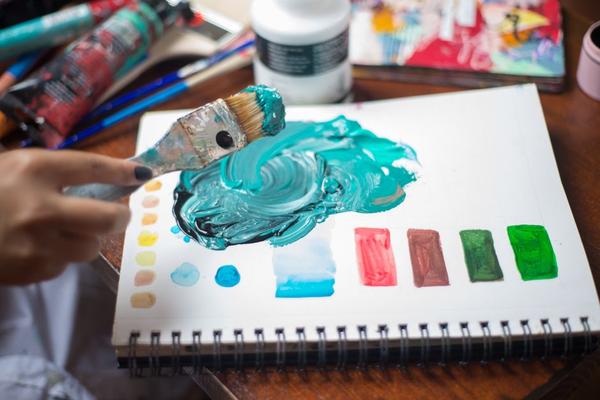
How to make green colour paint with a controlled mix?
To learn how to make green colour paint, start with two parts yellow paint and one part blue, stirring a small test batch until uniform. Add blue in tiny increments for a deeper green, yellow for a warmer result, a trace of red to reduce intensity, or white to lighten. Record every addition before scaling up.
Mixing a usable green takes more than combining two colors and hoping for the best. Work with compatible paints, repeatable measurements, and dry samples viewed in the room where the finished color will live. A screen reference can guide your eye, but it cannot predict a pigment mixture exactly.
Which colors should you mix first to make green?
Begin with yellow and blue paints of the same type and finish, using yellow as the larger portion. Make a small batch first because the strength of blue pigment can change the result quickly, and the precise shade depends on the pigments in both starting paints.
For anyone asking what colours make green paint, the simple answer is yellow plus blue; the practical answer includes pigment strength, undertone, and batch consistency. Use measured teaspoons for craft acrylics or marked disposable cups for larger compatible batches. Never mix water-based paint with oil-based paint.
A repeatable small-batch method
- Set out a clean mixing area: Protect the surface, use a clean container and stirrer, and label the paint products. Wear the protective equipment specified on each container and ventilate the area according to its label.
- Measure the yellow base: Put 2 teaspoons of yellow into a cup. Use a separate clean tool for each starting paint so you do not contaminate the original containers.
- Add blue gradually: Stir in 1 teaspoon of blue until no streaks remain. Note the ratio as 2:1, not merely “a little more yellow,” so you have a starting point you can reproduce.
- Make a test stroke: Brush the mixture onto primed white sample material and allow it to dry for the time stated on the product label. Wet paint can look different from its fully dried color.
- Correct in measured increments: Add 1/8 teaspoon at a time of the adjustment pigment, mix thoroughly, and log the total. Reserve some of the original batch as a control.
- Scale only after approval: Once the dried test is right, multiply every component by the same factor. Mix enough for a complete coat or project at once, because recreating a custom formula later can be difficult.
How do you make green warmer or cooler?
To shift a green warmer, add a small measured amount of yellow; to move it cooler, introduce a trace more blue. Make one adjustment at a time, because changing several pigments together hides which addition caused the shift.
A finished-wall reference worth comparing with your trial mixture is Sherwin-Williams Evergreen Fog SW 9130, displayed digitally as #95978A. It is a manufacturer color to sample or have professionally matched, not a guarantee that a yellow-and-blue hand mix will reproduce its formula.
#95978A · Sherwin-Williams Evergreen Fog SW 9130
North-facing light may make this green appear cooler and grayer, while south-facing light can emphasize its warmer side. For a room built around it, consider about 60 percent of visible painted surface area.
| Adjustment goal | First addition to test | What to check after drying |
|---|---|---|
| Warmer green | A tiny measured amount of yellow | Whether the result becomes too yellow |
| Cooler green | A tiny measured amount of blue | Whether the sample turns too dark |
| Less vivid green | A trace of red from a compatible paint | Whether the green loses too much clarity |
| Lighter green | Small additions of compatible white | Whether the undertone remains recognizable |
| Deeper green | More of the original blue-green mixture | Whether the balance shifts unexpectedly |
How can you mute a green that is too bright?
Add an extremely small amount of compatible red paint to counter excess green intensity, then test the dry result before adding more. A large addition can quickly produce a muddy mixture that is difficult to rescue, so work with a separate test portion rather than the entire batch.
Choose a manufacturer reference first, then compare your paint sample against it without treating a hex code as a mixing formula. Sherwin-Williams Sea Salt SW 6204, with the screen reference #CDD2CA, offers a pale, restrained target for a room sample.
#CDD2CA · Sherwin-Williams Sea Salt SW 6204
In north-facing rooms it often reads grayer and cooler; south-facing light tends to make the green easier to notice. If used as the principal wall finish, assign it roughly 60 percent of the visible painted area.
For a full-room scheme, use approximately 60 percent for the principal green-painted surfaces, 30 percent for existing floor, furnishings, or other large visible surfaces, and 10 percent for smaller accents. These are planning proportions, not instructions to repaint a rental. Check that balance in the actual room under both north-facing and south-facing daylight.
For more ready-made options with controlled intensity, consult sage green paint colours and compare physical samples against your own dry mix.
How do you lighten or deepen green without losing its undertone?
Lighten the mixture with compatible white added in small, measured portions; deepen it with a carefully prepared darker version of the same yellow-and-blue blend. Avoid jumping straight to black, which may alter the undertone and reduce the chance of reproducing your original green.
Save an untouched reference cup before making either change, and compare all dry samples together. To identify what paint colours make green suited to your wall, pay attention to the individual starting pigments rather than assuming that every tube labeled blue or yellow acts the same way.
The guide to light green colour paint helps identify retail alternatives before spending time on homemade adjustments. For a wider choice of manufacturer shades, compare our green paint colours guide with your sample under the room’s actual lighting.
Check the mixture at room scale
A coin-sized wet swab is not enough evidence for a wall. Use portable primed sample boards, observe them in daylight and the room’s normal artificial light, and write down the ratio, product, sheen, and drying time. In a rental, check permission before applying paint directly to a wall.
- Sample board width 12 in
- Sample board height 18 in
- Gap between comparison boards 6 in
- Sample center above floor 48 in
- Viewing distance from sample 6 ft
When does hand-mixing green paint not work well?
Hand-mixing is a poor choice when you need identical coverage across several walls, a large open-plan room, or future touch-ups. A tiny error in the blue-to-yellow ratio becomes obvious when a second batch dries alongside the first. Mixing paint from incompatible products can also compromise the finish, even if the wet colors appear to blend. For substantial wall jobs, a store-tinted formula is more dependable.
North-facing rooms expose another limitation: a green that looks balanced in a sunny sample photograph may look gray or flat on the actual wall. South-facing rooms can make the same mixture appear warmer. The perfectly uniform walls in styled photographs may rely on controlled studio lighting, color editing, and professionally prepared finishes. A hand-mixed cup is not a shortcut to that result.
In rentals, do not paint test patches or alter walls without permission. Use removable sample boards and verify the lease rules first. Families with young children or pets should keep paint, stirrers, and drying boards secured and out of reach. If your budget permits only one can, avoid gambling the entire supply on experimental pigment additions.
Frequently asked questions
Can I make green using only blue and yellow acrylic paint?
Yes, compatible blue and yellow acrylic paints can produce green when thoroughly combined. Start with a measured small batch because different pigment formulations will create different results from the same ratio.
Can I mix leftover wall paints from different brands?
Do not assume leftover paints are compatible simply because both containers say latex or acrylic. Check the manufacturers’ instructions for base, sheen, and mixing restrictions before experimenting; use a store-matched formula for an important finish.
Why does my mixed green look different after it dries?
Wet paint and dry paint reflect light differently, and sheen affects how a finished color appears. Let the test dry according to the manufacturer’s instructions and judge it vertically in the intended room.
Can a hex code tell me exactly how much yellow and blue to use?
No. A hex value represents a digital color reference, not pigment concentration, paint base, or a universal mixing ratio. Use it to compare appearances, then request a physical sample or professional color match.
Should I make one large batch or several small batches?
Make small experimental batches until you approve a dry sample, then produce the final quantity together if the products allow it. Keep the recipe and product information, but manual touch-ups may still show differences.
Controlled green starts with measured yellow and blue, single-variable corrections, and a dry sample viewed where the paint will be used. Keep your original mix as a reference, and switch to a repeatable retail formula when consistent wall coverage matters more than experimenting.