
How do you rent home staging furniture without overfurnishing?
To rent home staging furniture without crowding the rooms, measure first, furnish only the spaces that influence buyers most, and choose pieces smaller than your everyday furniture. Confirm delivery paths, rental dates, setup rules, and pickup timing before paying so the staging supports the listing instead of becoming another moving problem.
Rental furniture works best when it shows scale and purpose, not when it tries to make every room look fully lived in. Plan from the floor dimensions outward, then rent only what helps a buyer understand how the home functions.
What order should you follow to rent home staging furniture?
Use one sequence from measuring through pickup so each decision limits the next one. This keeps a showroom package or last-minute delivery slot from deciding the layout for you.
- Measure the rooms and access route: Record wall lengths, ceiling height, door openings, stair widths, elevator size, and the clear path from the truck to each room.
- Choose the rooms that need help: Start with the living room, primary bedroom, dining area, and any awkward space whose purpose is unclear in photos.
- Set a piece limit for each room: Decide the maximum number of large items before browsing, such as one sofa, one coffee table, one chair, and one rug in the living room.
- Select a package by footprint: Check the actual dimensions of every item rather than assuming a package labeled apartment, condo, or house will fit your rooms.
- Confirm delivery and setup: Verify the delivery window, elevator reservation, assembly responsibility, damage procedure, and whether the crew removes packaging.
- Book pickup around the sale plan: Leave enough rental time for photography, showings, inspections, and normal closing uncertainty instead of scheduling removal immediately after photos.
What should you measure before renting staging furniture?
Measure the usable floor area, not just the room’s wall-to-wall dimensions. Doors, radiators, fireplaces, floor vents, traffic paths, and the swing of a closet or balcony door can reduce the area where furniture can actually sit.
For a 12 x 15 ft living room, target a sofa around 78 to 84 in wide; a 96 in sectional consumes too much of the usable footprint. Before ordering any home staging furniture rental, tape the largest pieces onto the floor and walk the normal route through the room.
- Sofa to coffee table 16 to 18 in
- Main walking path 30 to 36 in
- Living-room rug 8 x 10 ft in a 12 x 15 ft room
- Dining chair pullback 36 in behind the chair
- Art center height 57 in from the floor
Measure the narrowest point on the delivery route too. A sofa that fits the room can still fail at a 30 in doorway or tight stair turn, so give the company access dimensions before delivery day.
Which rooms should you furnish first?
Furnish the rooms that establish scale, function, and the emotional first impression of the listing. In most homes, that means the living room and primary bedroom first, followed by the dining area or another room whose use is not obvious when empty.
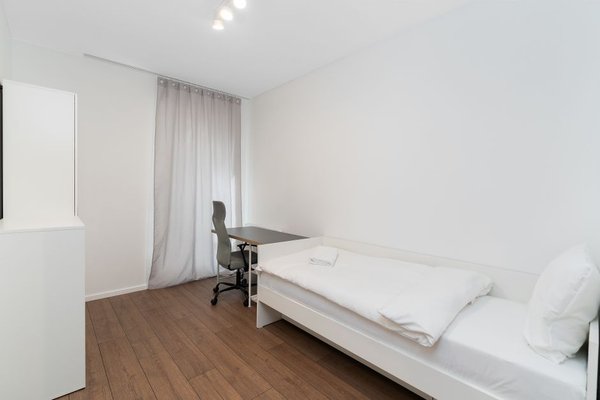
A small secondary bedroom may need only a bed, two compact nightstands, and a lamp. A bonus room may need a desk and chair rather than a full lounge setup; the goal is to remove doubt, not fill every wall.
If the property already photographs well, let the rental pieces support it. For a room that genuinely needs repainting before staging, Benjamin Moore Pale Oak with hex #D8CFC4 is one practical wall color because it keeps the backdrop restrained without becoming a strong feature.
#D8CFC4 · Benjamin Moore Pale Oak
Reads warmer and slightly pinker in south-facing light, while north-facing light pulls it noticeably grayer. Use it on walls and ceiling for roughly 60 percent of the room, then let furniture, flooring, and textiles make up the remaining visual area.
If the existing paint is clean and photographs well, repainting just to match rented pieces is usually wasted work. The home staging furniture should adapt to the house, not the other way around.
How do you choose the right rental furniture package?
Choose by room dimensions and the number of pieces you actually need, not by the package name. Reject any package that narrows the walking paths or forces unnecessary pieces into the room.
Use the table below to compare two common approaches. In tight rooms, treat the expanded option as a ceiling rather than a default list.
| Room need | Lean package | Expanded package |
|---|---|---|
| Living room | Sofa, coffee table, rug | Sofa, two chairs, coffee table, side tables, rug |
| Primary bedroom | Bed, two nightstands, two lamps | Bed, two nightstands, lamps, bench, dresser |
| Dining area | Table with four chairs | Table with six chairs plus console |
| Best fit | Small or already detailed rooms | Large rooms with generous circulation |
| Overfurnishing risk | Lower when dimensions are checked | Higher if pieces are chosen as a complete set |
Ask for item-by-item dimensions before paying. If you are comparing home staging furniture for rent across companies, compare the footprint and rental term as carefully as the monthly price.
Price a smaller base order against temporary home staging furniture added only where needed. That stops an all-house package becoming the default simply because it looks convenient.
What should you confirm before delivery and setup?
Confirm the delivery window, building access rules, item list, assembly responsibility, and condition-report process in writing. Also confirm who moves an item if its planned position blocks a door, vent, outlet, or walkway.
- Access: Give the company doorway, stair, elevator, and parking restrictions before the truck is dispatched.
- Condition: Photograph visible scratches, stains, or chips as soon as the furniture arrives and follow the company’s reporting process.
- Placement: Mark approximate locations with painter’s tape so the crew is not improvising the entire layout while the delivery clock is running.
- Protection: Ask what the crew uses under legs and wheels on hardwood, tile, and other finished floors.
Do not accept a layout just because everything fits. Walk the staged rooms after setup; if you have to turn sideways between a chair and table, remove a piece. Good furniture rental for home staging makes circulation easier, not harder.
How do you plan pickup around the listing and closing timeline?
Book the rental through the period when it still supports the sale, not just through photography day. Showings, inspections, buyer walk-throughs, and closing delays can happen after the listing photos are finished.
Ask what it costs to extend by a week or by a month before signing the first agreement. That figure belongs beside the base quote when you review home staging furniture rental cost, because a cheap initial term can become expensive if the property stays active longer than expected.
Leave a buffer between pickup and any move-out or closing obligation. You need time to inspect floors and walls, clean the rooms, and resolve any damage claim before the keys are due.
When does rented staging furniture not work well?
Rental furniture is a poor fix for a room whose real problem is scale, clutter, damage, or bad circulation. In a small living room, adding two accent chairs because they complete a photographed set can make the space feel smaller in person. The same is true of oversized rugs pushed under every piece, benches at the foot of beds with only 24 in of clearance, and consoles placed against walls simply because the package includes them. Those arrangements can look balanced in one camera angle and still make the actual room awkward to walk through.
It also may not be worth the cost for a vacant property with a tight budget if photography plus a few key rooms will do the job. Homes with pets or young children can create extra cleaning and damage risk, and a building with narrow stairs or strict delivery hours can make setup disproportionately difficult. If the only way a package works is by blocking a door, squeezing a walkway, or removing useful floor area, rent fewer pieces.
Frequently asked questions
How long should you rent staging furniture for?
Choose a term that covers photography, the expected marketing period, and a buffer for delays. Ask for the exact extension price before signing so an extra week or month is not a surprise.
Can you rent only a few staging pieces instead of a full package?
Yes. Rent individual pieces when the home already has suitable furniture or only one or two rooms need help with scale and function.
What happens if a rental sofa does not fit through the door?
Contact the rental company rather than forcing or dismantling the item yourself. Give doorway, stair-turn, and elevator dimensions to the company before delivery.
Who is responsible if rental furniture is damaged?
The rental agreement controls responsibility, so read its damage, cleaning, and reporting terms before delivery. Photograph the items on arrival and report existing damage through the company’s stated process rather than relying on a verbal note.
Can you move rented staging furniture after delivery?
That depends on the rental company’s rules and the item. Ask before moving large or assembled pieces, because unauthorized relocation can create damage risk or conflict with the agreement.
The best staging rental is the smallest set that makes each important room easy to read, photograph, and walk through. Measure first, control the piece count, and keep enough schedule buffer that delivery and pickup support the sale instead of competing with it.
1 thought on “How to Rent Home Staging Furniture Without Overfurnishing”