
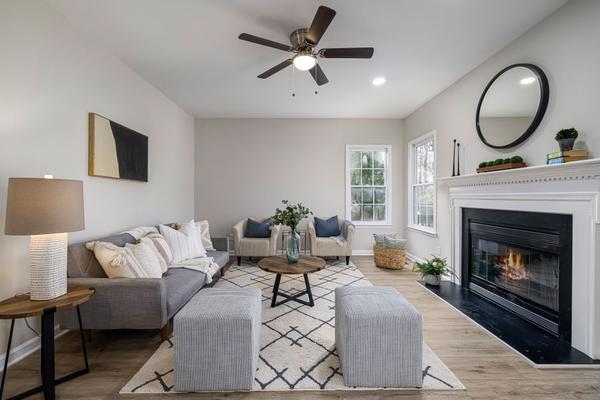
What is temporary home staging furniture?
Temporary home staging furniture is rented or short-term furniture used to make a property feel complete for listing photos and buyer showings, then removed when the marketing period ends. For a short listing, focus on the rooms buyers read fastest: the living room, primary bedroom, and dining area, with furniture sized to show circulation clearly.
Short-term staging works best when every rented piece has a job: define a room, clarify scale, or make the floor plan easier to understand. The goal is not to furnish the whole house; it is to make the most important spaces photograph clearly and feel usable during a showing.
Definition: Temporary staging furniture is furniture brought into a home for a limited marketing period rather than for long-term living. It can include a sofa, chairs, dining set, bed frame, nightstands, lamps, rugs, art, and a few accessories, with pickup arranged after the listing no longer needs staged presentation.
What counts as temporary home staging furniture?
It counts when the piece is used mainly to support the sale presentation and has a planned removal date. That can include rented furniture, a stager’s inventory, or selected pieces borrowed for the listing period, provided the arrangement is safe, functional, and appropriate for the room.
Think of temporary pieces as part of the visual plan for home staging furniture, not as a replacement for everything a household would normally own. A nearly empty living room may need only a sofa, two chairs, a coffee table, a rug, and one lamp to show function and circulation.
For sellers using a formal home staging furniture rental, prioritize pieces that establish scale. Anything that blocks a doorway, crowds a window, or hides usable floor area works against the listing.
What should the temporary set accomplish?
- Show the function of the room: A buyer should understand the room within a few seconds.
- Establish believable scale: Furniture should prove that the space can hold normal-size pieces without looking packed.
- Keep walkways obvious: Doorways, halls, and the route between major furniture pieces should stay visually open.
- Support photography: The room should read cleanly from the doorway and from the likely listing-photo angle.
Which rooms benefit most from temporary furniture?
Start with the rooms buyers use to understand daily life in the home: the living room, primary bedroom, and dining area. The National Association of REALTORS’ 2025 home-staging report found that those were among the rooms most commonly staged, so they are sensible priorities when the rental window is short.
In the living room, choose a sofa that leaves the main path visible. In a 12 x 15 ft room, an 80 to 88 in sofa, an 8 x 10 ft rug, and one or two chairs can define the seating zone without crowding it.
- Sofa to coffee table 16 to 18 in
- Main walkway beside seating 30 in minimum
- Rug in a 12 x 15 ft living room 8 x 10 ft
- Dining chair clearance from table edge 36 in
- Art center height 57 in from the floor
In the primary bedroom, keep the door swing and closet route clear. A queen bed is 60 x 80 in; if that footprint leaves poor side clearances, forcing it into the photograph can make the in-person room feel tighter.
The dining area needs enough furniture to explain where meals happen, not enough chairs to advertise a maximum head count. If four chairs make the route between the table and a nearby door easy to see, that is often more useful than filling every side of the table.
How long should temporary staging furniture stay in a listing?
Keep it in place for the period when buyers are actively seeing the property, starting before listing photography and continuing through the showing period. For a short listing window, arrange the rental so pickup does not create a gap while the home is still being marketed.
The key timing question is whether the staged rooms will still be intact when buyers arrive. Install before photography with enough time to remove packing materials and confirm that doors and traffic paths remain usable.
Before signing any furniture rental for home staging agreement, confirm the minimum term, extension rules, pickup notice, delivery access, and what happens if the timeline changes.
Plan the pickup around the marketing job
- Photography first: The full setup should be complete before listing photos are taken.
- Showings next: Keep the same core layout in place so buyers see what the listing promised.
- Pickup last: Do not remove major pieces while active showings are still being scheduled unless the sale plan has clearly moved to the next stage.
Is temporary rental practical for occupied homes?
Yes, but it works only when rental pieces replace a clear problem rather than simply adding more furniture. In an occupied home, the first job is usually to remove excess pieces, then bring in only what fixes scale, function, or photography.
A seller looking for home staging furniture for rent should measure after personal furniture is removed. That helps prevent ordering another layer of furniture for a room that is already full.
If repainting is allowed and the existing wall color makes furniture and flooring look disconnected in photos, Sherwin-Williams Agreeable Gray SW 7029, #D1CBC1, is one specific option for a broad wall field. Use it only after viewing a physical sample in the actual room rather than choosing from a screen.
#D1CBC1 · Sherwin-Williams Agreeable Gray SW 7029
South-facing light will make it read warmer, while north-facing light pulls it cooler and grayer. Use it on the main wall field at roughly 60 percent of the room, then judge the sample beside the actual flooring and staged upholstery.
Temporary home staging rental furniture is easier to manage after personal storage is handled. Rental nightstands cannot fix a bedroom if boxes, pet equipment, and extra chairs still occupy the walking space.
What happens if the home sells before the rental term ends?
The furniture normally stays subject to the rental agreement until you arrange pickup or reach the contracted end date. A fast sale does not automatically mean the remaining rental period disappears, so check the provider’s terms before ordering.
Ask about early pickup, minimum length, notice, extension charges, rescheduling, and access after the home is under contract. Get the terms in writing.
If you used home staging furniture rentals for photos and showings, keep the delivery contact with the listing paperwork. Schedule removal before possession changes hands unless the written agreement says otherwise.
When does temporary staging furniture not work?
Temporary staging is a poor use of money when the rooms are already too crowded, the delivery route is difficult, or the rental cost is consuming money needed for basic repairs, cleaning, lighting, or moving. It also performs badly in occupied homes where children, pets, or daily routines make fragile accessories and tightly styled surfaces unrealistic to maintain.
Some setups only work in a photograph. A chair pushed close to a wall may make a wide-angle image look balanced but feel awkward when a buyer tries to walk past it. A tiny dining table can make a breakfast area appear generous online while proving almost nothing about how a normal household would use the space. Furniture that blocks a vent, narrows a 30 in walking route, interferes with a door swing, or hides an outlet is not successful staging. On a tight budget, use fewer pieces in the highest-value rooms rather than spreading weak furniture across every room. If the home already reads clearly and photographs well, renting more items can add cost without solving a real presentation problem.
Frequently asked questions
Who usually pays for temporary staging furniture?
The seller commonly treats staging as a selling expense, but payment arrangements can vary by stager, agent, and contract. Confirm who pays delivery, rental, pickup, extensions, and damage charges before any furniture is scheduled.
Should I rent accessories as well as large furniture?
Only rent accessories that finish a room the furniture has already defined. A lamp, rug, or restrained piece of art can help, but accessories should not consume the budget before the room has the right sofa, bed, table, or seating scale.
Can I move rented staging furniture after it is installed?
Check the rental agreement before moving anything significant. Heavy pieces can damage floors or walls, and some staging companies want their inventory kept in the installed position unless they approve a change.
Do I need to stage every empty room?
No. Prioritize rooms that explain how the home functions and leave secondary spaces empty if the budget or rental window is tight. A clearly sized empty office or spare room can be easier to understand than a room filled with undersized rental pieces.
What should I measure before ordering rental furniture?
Measure the room, doorways, stair turns, elevator dimensions if applicable, and the clear path from the entry to the final furniture location. Also mark door swings, built-ins, vents, and fixed features so the staged layout does not create circulation problems.
Temporary furniture is most useful when it makes a short listing period easier to understand, not when it tries to make every room look decorated. Measure first, stage the rooms that matter most, read the rental terms before delivery, and remove any piece that looks convincing in photos but gets in the way during an actual showing.
4 thoughts on “Temporary Home Staging Furniture for Short Listing Periods”