
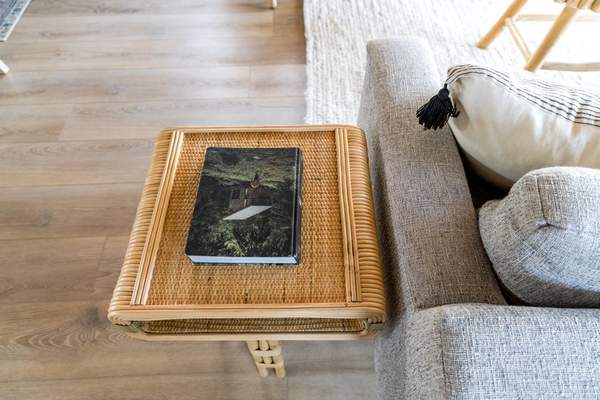
A coastal living room works best when it captures the feeling of the shore without obvious seaside symbols. Think shifting daylight, weathered timber, soft sand tones and fabrics that move easily. These coastal living room ideas build that atmosphere from the layout outward, whether you live beside the sea or miles inland.
Build a Light, Relaxed Coastal Foundation
1. Start with a Warm White Backdrop
Choose a warm white with a cream or stone undertone instead of a cold, brilliant white. It reflects daylight while making wood, rattan and pale blue accents feel welcoming.
2. Layer Sand and Oatmeal Neutrals
Use sandy beige, oatmeal and pale taupe across rugs, cushions and upholstery. These shades give beach living room decor a natural foundation and keep blue accents from feeling themed.
3. Add Soft Blue in Small Doses
Introduce misty blue through a throw, ceramic lamp or occasional chair. Repeating the colour two or three times around the room creates rhythm without turning every surface into an ocean reference.
4. Bring in Sea-Glass Green
A muted green-grey adds freshness and works beautifully with warm white walls. Try it on a painted side table, a single cushion or the inside of built-in shelving.
5. Keep the Ceiling Bright
A light ceiling makes the room feel taller. In a compact seaside living room, painting beams or heavy timber details a pale tone reduces visual weight.
Use Layout and Light to Create Airiness
6. Pull Furniture Away from the Walls
Float the sofa slightly forward and group seating around a rug. Even a small gap behind furniture gives the layout breathing room and makes conversation feel more natural.
7. Protect the Main Sightline
Arrange low-backed furniture so windows, garden doors or an attractive view remain visible. A coastal lounge should feel connected to light and landscape, not blocked by bulky pieces.
8. Choose Leggy Furniture
Sofas, consoles and armchairs raised on visible legs expose more floor and create a lighter silhouette. This is especially useful when adapting coastal lounge ideas to a small room.
9. Use a Round Coffee Table
A round table softens a boxy layout and improves movement between seats. Pale oak, woven cane or a limewashed finish keeps it visually light while adding useful texture.
10. Create an Easy Reading Corner
Place a comfortable chair near a window with a compact table and soft lamp. A striped cushion or woven footstool gives the corner a subtle coastal identity without clutter.
11. Hang Curtains High and Wide
Mount the curtain pole above the window and extend it beyond the frame. Full-length linen-look curtains can then sit clear of the glass, allowing more daylight inside.
12. Add a Mirror Opposite Daylight
A mirror across from a window bounces light deeper into the room. Choose a slim timber, white or antiqued brass frame.
Layer Natural Materials and Comfortable Texture
13. Anchor the Room with a Textured Rug
A jute-look, sisal-style or flatwoven wool rug introduces the grainy texture associated with dunes and beach paths. For family homes, a washable low-pile version is often more practical.
14. Mix Linen-Look and Cotton Fabrics
Combine relaxed linen-look curtains with cotton cushions and a softly woven throw. Slight variations in texture create depth even when the palette remains pale and restrained.
15. Add Rattan Selectively
One or two woven pieces are enough: perhaps a chair, tray or lamp base. Too much matching rattan can feel like a furniture set, while a limited amount looks collected.
16. Use Pale or Weathered Wood
White oak, ash and gently weathered finishes bring warmth without darkening the room. Avoid making every wood tone identical; subtle variation gives the space a more natural character.
17. Choose a Relaxed Sofa
A deep sofa in off-white, pale grey or faded blue sets an inviting tone. Removable, washable covers make lighter upholstery realistic in homes with children, pets or frequent guests.
18. Layer Cushions with Restraint
Mix plain, striped and lightly patterned cushions in no more than three main colours. Leave enough empty seating space so the arrangement still feels usable and relaxed.
19. Introduce Handcrafted Ceramics
Use a few imperfect ceramic vases, bowls or lamp bases in chalky white, blue-grey or green. Their matte surfaces add character without relying on literal nautical ornaments.
Add Coastal Character Without the Clichés
20. Display One Large Coastal Artwork
A single landscape, abstract seascape or atmospheric photograph has more impact than several themed signs. Choose artwork that echoes the palette without matching it exactly.
21. Style Shelves with Space Between Objects
Group books, ceramics, baskets and one natural object, then leave gaps. This keeps seaside living room styling calm and prevents a souvenir-display effect.
22. Use Stripes as a Supporting Pattern
Fine blue-and-white or sand-and-cream stripes work on one cushion, ottoman or Roman blind. A subtle scale feels classic rather than nautical.
23. Add Greenery with a Loose Shape
An olive tree, palm-like plant or branches in a ceramic vase bring movement. Choose one generous plant instead of scattering small pots.
24. Warm the Scheme with Aged Brass
Aged brass on a floor lamp, picture frame or cabinet handle stops pale coastal rooms feeling flat. Its warm tone complements sandy neutrals and natural timber particularly well.
25. Edit the Final Layer
Remove anything that makes the room feel crowded, overly matched or obviously themed. In a real-world north-facing lounge, for example, keep the walls warm white, use a pale rug and place blue only near lamps or windows where it catches light.
Useful Next Steps for a Cohesive Home
Once the living room is settled, carry one or two elements into nearby spaces rather than copying the entire scheme. Natural internal-link opportunities include coastal bedroom ideas, modern coastal interior design and small living room layout ideas.
Frequently asked questions
What colours work best in a coastal living room?
Warm white, sand, oatmeal, pale blue, sea-glass green and small touches of navy work well. The most balanced rooms use neutrals as the base and reserve stronger colour for accents.
How can I make a coastal living room feel modern?
Use clean-lined furniture, fewer decorative objects and natural texture instead of anchors, shells and signs. Contemporary lighting and one large piece of art also sharpen the look.
Can coastal decor work in a small living room?
Yes. Choose raised furniture, a pale rug, full-length curtains and a clear sightline to the window. Limit the palette and use one or two woven accents rather than many small accessories.
Does coastal style require blue?
No. A convincing coastal room can rely on warm white, sand, weathered wood, woven fibre and soft green. Blue is useful, but texture and light create most of the atmosphere.
A Brighter, More Personal Coastal Living Room
The strongest coastal living room ideas are practical first and decorative second. Start with daylight, comfortable seating and an uncluttered layout, then build character through natural materials, faded colour and a few carefully chosen details. The result should feel easy, personal and quietly connected to the coast—not like a themed set.