
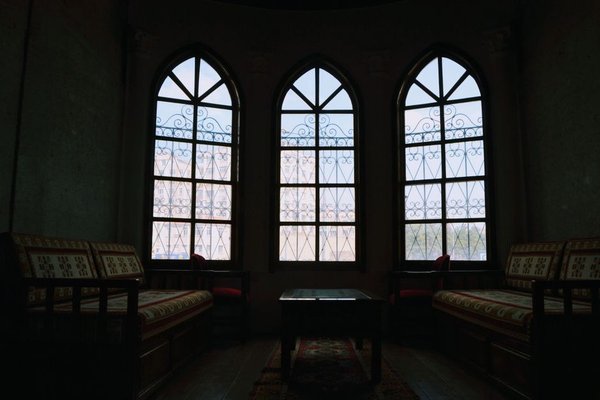
How can gothic style interior design feel livable?
Gothic style interior design feels welcoming when you borrow its pointed arches, carved shapes, dramatic lighting, and substantial textures without copying a cathedral. Keep most walls light, confine the deepest paint to one focal area, choose furniture that fits the floor plan, and let windows and lamps reveal the detailing.
A Gothic-inspired room needs recognizable shapes, not a room full of props. Decide which architectural cues deserve attention and which surfaces should remain quiet enough for ordinary living.
Definition: Gothic interior design draws on pointed arches, tracery, vertical lines, intricate woodwork, and craftsmanship associated with medieval Gothic architecture and later Gothic Revival interiors. Today, those features can appear through furniture, mirrors, hardware, textiles, and paint rather than permanent building work. Darkness is optional.
Which features make an interior look Gothic?
Pointed forms, repeating architectural patterns, and an emphasis on height make a space read as Gothic. One strong shape, such as an arched mirror or a carved cabinet, usually communicates the idea more clearly than a dozen themed accessories.
Look for architecture in the silhouette
A pointed arch has a peak where two curves meet. Tracery is the delicate, branching framework found in historic windows; quatrefoil motifs use four rounded lobes. These shapes give gothic interiors their identity even when the building itself has ordinary rectangular doors and windows.
- Pointed mirror: Position one above a console, leaving visible wall around its frame so the outline is unmistakable.
- Vertical detailing: A tall cabinet, narrow wall panel, or pair of elongated sconces can lead the eye upward without changing a ceiling.
- Carved repetition: A chair back, wood screen, or textile motif can echo window tracery without requiring custom millwork.
- Craftsmanship: Real grain, visible joinery, textured fabric, and weighty metal fittings create depth at close range.
Historic Gothic and Gothic Revival are related but not interchangeable labels. Domestic furniture often borrows medieval church forms through nineteenth-century design. The guide to victorian style interior design provides useful period context.
What colors work in a modern Gothic room?
A workable palette gives the eye an illuminated background, a deliberate deep accent, and a small share of wood, metal, and fabric. That balance preserves drama while allowing carved details and furniture outlines to remain visible in daylight and after dark.
Start with a wall color that carries the daylight
Benjamin Moore Pale Oak OC-20, represented here by #D8CFC4, is a practical main-wall choice. Give walls and, where appropriate, the ceiling about 70 percent of the room’s visible palette; this keeps the pointed silhouettes prominent rather than swallowing them.
#D8CFC4 · Benjamin Moore Pale Oak
North-facing daylight makes it appear grayer, while south-facing sunlight brings forward its warmer undertones. Use it across roughly 70 percent of the visible room.
Reserve the deepest paint for a single visual anchor
Sherwin-Williams Iron Ore SW 7069, represented by #434341, works on a fireplace surround, a freestanding cabinet, or one limited accent wall. Plan for around 20 percent of the visual palette, not four walls plus the ceiling; use the remaining 10 percent for unpainted wood, upholstery, and metal.
#434341 · Sherwin-Williams Iron Ore
North-facing light makes this charcoal feel cooler and denser; south-facing sun reveals more of its softened depth. Keep it to approximately 20 percent of the visible room.
Those proportions include furnishings, not just painted surfaces. Inspect real sample patches in morning, afternoon, and lamp light before committing; screen hex values are only guides.
Which furniture and materials create Gothic character?
Choose furniture with an architectural outline, visible construction, or a carefully carved detail. You need only one substantial piece; leave the remaining seating comfortable, scaled to the room, and easy to move around.
A narrow tracery-front cabinet, a tall-backed chair, or a sturdy wood table can carry the theme. tudor style interior design provides a useful reference for timber furniture, while Gothic’s pointed geometry remains distinct.
Check substance before buying decoration
A carved piece can develop character but may dominate a small floor plan. Compare comfort, upkeep, and usable space before purchasing.
| Room piece | Character-rich treatment | Everyday tradeoff |
|---|---|---|
| Statement chair | Solid wood frame with an arched or pierced back | Test the seat depth and back angle before buying |
| Storage cabinet | Carved or tracery-style door panels | Confirm shelf depth and door swing clearance |
| Window covering | Full-length, lined woven drapery | Keep fabric clear of heaters and avoid blocking daylight |
| Lighting fixture | Metal fixture with defined vertical elements | Check usable light output and available ceiling height |
| Decorative surface | Natural stone or solid wood with visible texture | Consider weight, staining, cleaning, and installation |
For modern gothic decor, an understated sofa with one patterned pillow is often more effective than a matching suite of carved seats. Upholstery should be chosen by comfort and cleanability first. If a vintage chair looks wonderful but cannot support a relaxed hour of reading, treat it as an accent, not primary seating.
Textiles add texture without pretending a house is historic. Plug-in lamps and framed art work in rentals; new hardwired fixtures or structural changes need qualified tradespeople and permission.
How can you use Gothic details without making a small room feel dark?
Give the Gothic idea one clear focal point, preserve walking space, and keep the window unobstructed. In a small room, a tall mirror or slender cabinet supplies the vertical emphasis without using the floor area that heavy furniture needs.
Plan the floor before adding objects
Start by measuring the room and marking doors, radiators, vents, and outlets on a simple sketch. For a 12 x 15 ft living room, map the sofa, a coffee table, and the main pathway before shopping for an arched cabinet. A statement piece that blocks a door is not a successful design choice.
- Sofa to coffee table 16 to 18 in
- Main walking path 30 in minimum
- Rug with front sofa legs on it 8 x 10 ft in a 12 x 15 ft room
- Center of framed Gothic artwork 57 in above the floor
- Depth of a slender accent console 12 to 16 in
Open doors and mark furniture positions with painter’s tape. If a piece blocks circulation, reduce its footprint instead of narrowing the path.
Let lighting show the pattern
A single overhead bulb flattens carving and leaves corners unusable. Use an ambient fixture for general movement, a reading lamp where you sit, and a small accent light aimed at the mirror or cabinet; choose diffused shades that prevent glare. The goal is to reveal edges and texture, not to create a permanent theatrical scene.
In a bedroom, an arched headboard can establish the shape without crowding the bedside. In an entry, one mirror and a shallow console give gothic home decor a presence without sacrificing function.
Do not crowd an inherited cabinet with competing silhouettes. For mixing historic references with current furniture, see style interior design; aim for a coherent room, not a costume set.
When does a Gothic-inspired room simply not work?
It does not work well when the space lacks daylight, storage, or a usable walking route and the plan calls for bulky furniture on every wall. Four deep-painted walls in a north-facing rental may look cinematic in a professionally lit photograph but feel oppressive during an ordinary winter morning. Photographs also hide the lamp cords, narrow paths, and dust that collect in intricate carving.
Oversized faux-stone arches, adhesive moldings on fragile plaster, and heavy drapes that cover the only window are poor solutions. Fake architectural details often look convincing from one camera angle and flimsy from the side. They can also damage surfaces when removed, particularly in a rental. Do not install them without permission and a suitable mounting method.
With children or pets, top-heavy cabinets and tall mirrors need appropriate anti-tip restraints and secure fixing; a freestanding object is not automatically safe. If secure installation is impossible, choose smaller framed artwork or textiles instead. On a tight budget, buy one useful piece you genuinely like. A cart full of miniature gargoyles does not replace comfortable seating, clear access, or good lighting.
Frequently asked questions
Can a Gothic-inspired room use modern furniture?
Yes. A plain sofa or streamlined dining table gives carved or pointed details breathing room. Keep the historical cue concentrated in one or two pieces rather than matching every item.
Do I need cathedral-style windows to get the look?
No. A pointed mirror, tracery-inspired cabinet, or framed architectural drawing can establish the reference. Ordinary rectangular windows are entirely compatible with the scheme.
Is Gothic Revival furniture the same as medieval furniture?
No. Gothic Revival makers reinterpreted medieval architectural forms for later domestic use. Many familiar carved chairs and cabinets belong to that revival tradition rather than the Middle Ages.
Can renters create this look without changing the walls?
Yes. Use a freestanding statement piece, a rug, removable textiles, and plug-in lighting. Check your lease before attaching mirrors, shelves, or anything that needs drilling.
How many Gothic accessories are enough?
Begin with one dominant architectural silhouette and two supporting details, then stop and assess the room from the doorway. If every object competes for attention, remove pieces until the main shape reads clearly.
The strongest Gothic room makes its architecture legible while leaving daily routines effortless. Start with measured furniture, controllable lighting, and one memorable shape; add detail only when the room still feels open and comfortable.