
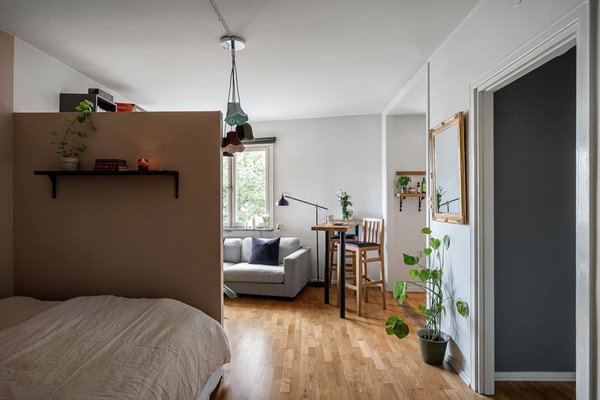
Can diy home decor for apartments work without permanent changes?
Yes. Diy home decor for apartments works best when each project is removable, light enough for the surface, and sized to preserve clear walking paths. Focus on freestanding storage, tension-fit pieces, removable wall coverings, slipcovers, and lightweight art, then keep every original fixture and finish untouched for move-out.
A rental can feel deliberate without drilling, rewiring, repainting, or replacing landlord-owned fixtures. The most useful approach is to treat every project as reversible from the start and to measure the room before buying materials.
This guide keeps diy home decor practical for apartments, where wall condition and floor space matter as much as appearance.
Which DIY home decor projects are apartment-friendly?
Apartment-friendly projects are removable, freestanding, or tension-mounted, with no need to cut into walls or alter electrical, plumbing, or built-in components. The safest choices also pack flat, move easily, and can be tested in one small area before you commit to the whole room.
Use this numbered list as a checklist, not a shopping mandate. Skip any item your lease or wall condition does not support.
- Freestanding picture ledge: Use a narrow console, bookcase, or shelf unit to lean framed art rather than hanging it. Keep heavier frames low, and use anti-tip hardware only if your lease and wall type permit it.
- Tension-rod textile panel: Fit a tension rod inside a window recess, alcove, or open shelving bay, then hang a hemmed textile panel from rings. It adds pattern without attaching fabric to the wall.
- Removable lamp-cord routing: Keep plug-in lamps tidy with removable cord clips on a clean, sound surface. Do not run cords under rugs or across a walking path, and never modify an outlet yourself.
- Slipcovered seating: A washable slipcover changes a sofa or chair without replacing upholstery. Measure seat width, back height, and arm depth so the cover does not bunch into walkways.
- Freestanding open storage: Use a slim bookcase, rolling cart, or cube unit instead of wall-mounted shelving. For a small room, diy home decor how to save space is most useful when storage stays shallow enough that the circulation path remains clear.
- Removable wall panel: Mount peel-and-stick material to a removable backing panel rather than directly to a questionable wall. This helps avoid damaged or freshly painted drywall.
- Tabletop decor tray: Group small objects on one tray so the arrangement has a fixed footprint and can be moved in one lift. This is one of the simplest forms of easy diy home decor because it needs no attachment to the apartment itself.
If the budget is tight, reuse what you already own. That keeps affordable diy home decor from turning into unnecessary clutter.
How can you decorate walls without permanent changes?
Start by checking whether the wall surface is clean, fully cured, smooth, and free of peeling paint. Removable products can still lift weak coatings, so test a small concealed patch and follow the product maker’s removal instructions rather than assuming every adhesive is rental-safe.
For a large visual change, two practical routes are a removable wall covering applied to a sound surface or a fabric-covered panel that stands or hangs from an approved removable system. The table keeps the differences in one place.
| Wall situation | Peel-and-stick covering | Fabric-covered panel |
|---|---|---|
| Smooth, sound painted drywall | Test a 6 x 6 in patch first; use only if removal leaves the finish intact | Use a lightweight rigid panel and keep attachment removable |
| Textured wall | Adhesion can be inconsistent and edges may lift | A panel keeps the textile surface independent of the wall texture |
| Freshly painted wall | Wait for the coating to cure according to the paint maker before testing anything adhesive | Keep the panel freestanding until the wall finish is fully cured |
| Wall with flaking or weak paint | Do not apply adhesive material over an unstable coating | Use a freestanding panel that does not touch or pull on the weak finish |
| Lease forbids wall adhesion | Do not use it | Choose a floor-standing panel or decorate furniture surfaces instead |
Keep product instructions because surface limits and removal steps vary. If you are unsure whether a wall covering is allowed, ask the property manager in writing before installation.
What dimensions help small apartment decor fit without crowding?
Measure clear floor space before choosing decor, then protect the routes you use every day. Small apartments usually feel crowded because objects intrude into circulation or door swing zones, not simply because the room contains several decorative pieces.
A tape measure and painter’s tape can mark the footprint of a shelf, cart, panel, or side table on the floor before you buy it. That simple mock-up is especially useful with diy home decor how to save money because a wrong-size purchase is expensive even when the item itself is inexpensive.
- Main walking path 30 in minimum
- Sofa to coffee table 16 to 18 in
- Side table below sofa arm top 1 to 2 in lower
- Art center height 57 in from the floor
- Picture ledge depth 4 to 6 in
Also check door swing and drawer extension. A 12 in deep cart may fit the wall but still fail if an open drawer pushes the walkway below 30 in.
Which exact paint or removable color options work with rental constraints?
If your lease allows paint, get written approval for the exact room and confirm whether restoration is required at move-out. If painting is not allowed, use the same color specification as a matching target for a removable panel, slipcover, framed textile, or other item that does not alter the landlord’s finish.
One usable reference is #D8CFC4, Benjamin Moore Pale Oak. Use it only where the lease permits paint, or match removable decor to that exact hex rather than describing the target with a vague color phrase.
#D8CFC4 · Benjamin Moore Pale Oak
Reads warmer in south-facing light and noticeably grayer in north-facing light. Use it for roughly 60 percent of the visible color area if it is the main room color, or keep it to about 20 percent when it appears only on removable panels and textiles.
North-facing rooms can make this specification look cooler, so sample the actual removable material or approved paint before committing. South-facing light pushes it warmer, especially beside large fixed textiles or cabinetry.
If walls cannot be altered, put the color on movable surfaces: a removable panel, fitted slipcover, framed textile, or storage boxes. Keep the landlord’s finish untouched.
When does rental-safe DIY decor not work well?
Some apartment ideas look convincing in a photograph and are annoying in daily use. A large leaning mirror can photograph well but becomes a poor choice where children, pets, or a narrow traffic path make tipping a real concern. Oversized floor plants, deep baskets, and decorative ladders can also consume the exact floor area a small apartment needs for walking, doors, or cleaning.
Removable adhesives are not automatically harmless. Weak paint, dusty walls, textured coatings, recently painted surfaces, and repeated summer heat can all make adhesion unpredictable. If a lease forbids adhesives, holes, repainting, or fixture changes, the restriction wins; do not try to disguise an alteration as temporary.
Tension rods also fail when the opening is too wide, the end pads cannot grip securely, or the load is heavier than the product allows. In those cases, use a freestanding solution. A project is not rental-safe just because it can theoretically be removed; it has to come out without damaging the apartment or creating a safety problem while you live with it.
Frequently asked questions
Can I use peel-and-stick wallpaper in a rental apartment?
Only if your lease allows it and the wall coating is sound enough for a test patch. Follow the product’s surface and removal instructions, and do not apply it over flaking paint, uncured paint, or a surface the manufacturer excludes.
What is the easiest rental-safe project for a first apartment?
Start with a freestanding arrangement such as a picture ledge on a bookcase, a decor tray, or a slipcover. These choices change the room without putting adhesive, holes, or new paint on the landlord’s surfaces.
How do I make apartment decor look intentional instead of temporary?
Repeat a few dimensions and finishes across movable pieces, and keep one clear focal area rather than spreading small objects over every surface. Precise placement and consistent spacing make portable decor feel planned even when nothing is permanently attached.
Are removable hooks safe for every painted wall?
No. Adhesion depends on the wall coating, cure time, texture, cleanliness, load, and the hook maker’s instructions. Test first, stay within the stated load limit, and skip adhesive products entirely if the lease prohibits them.
Should I spend money on decor if I may move soon?
Favor pieces that can move with you, such as slipcovers, trays, textile panels, compact lamps, and freestanding storage. Avoid custom work sized only for one wall unless the cost still makes sense if you cannot reuse it later.
Good diy home decor for apartments is less about making a rental imitate an owned home and more about choosing projects that fit, move, and come off cleanly. Measure first, keep alterations reversible, and put the strongest visual choices on items you own rather than surfaces you do not.
The result can still feel specific and finished without risking the security deposit or creating extra repair work at move-out.