
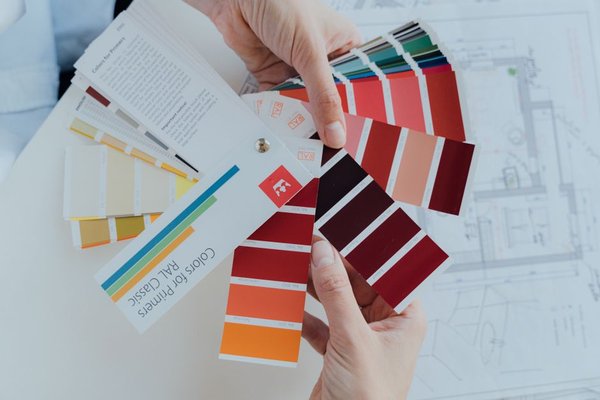
What are the best paint samples for testing color at home?
The best paint samples are large enough to judge undertones in changing light and easy to move or repaint. Start with a large peel-and-stick sheet for quick comparison, then use a brush-on sample of your finalist if wall texture, existing color, or the final sheen could change how the color reads.
A small store chip is useful for narrowing choices, but it is not enough for a final wall-color decision. Test each finalist where you will actually live with it, and check it in morning light, afternoon light, and after your lamps are on.
Which paint sample formats are worth buying?
The most useful sample depends on whether you are still narrowing a shortlist or validating the final choice. These picks cover the stages that matter without buying a full gallon too early.
- Samplize 9-by-15-inch peel-and-stick sample: Best for moving the same color between several walls without painting each one.
- Samplize 15-by-18-inch extra-large peel-and-stick sample: Best when you want a larger field of color behind furniture, trim, flooring, or cabinetry.
- Sherwin-Williams 8-by-8-inch peel-and-stick sample: Best for a shortlist made entirely from Sherwin-Williams colors.
- Benjamin Moore 8-ounce brush-on color sample: Best for seeing a Benjamin Moore color directly on a prepared test surface.
- A movable brush-out board using your finalist: Best for a final check when the existing wall color could distort a sample painted directly over it.
Use movable sheets for exact finalists such as Benjamin Moore White Dove OC-17 or Sherwin-Williams Alabaster SW 7008 before committing to a brush-out. If one sample changes sharply between walls, read how to identify paint undertones before assuming the sample is wrong.
| Testing need | Peel-and-stick sample | Brush-on sample |
|---|---|---|
| Moving one color around the room | Easy to reposition on multiple walls | Requires separate test areas or a movable board |
| Checking existing wall texture | Sits over the surface rather than becoming part of it | Shows how color reads on the prepared test surface |
| Comparing several finalists quickly | Fast and clean for side-by-side viewing | Needs drying time and more setup |
| Judging the chosen wall sheen | Useful for color, but not a substitute for the final paint sheen | Use the actual product and sheen for the last finish test |
| Testing a wall with a strong existing color | Keeps the old paint from mixing visually into a wet test patch | Works best on a properly prepared test board or area |
Use the table to identify the unanswered question before buying another sample. For reflected-light basics, see paint lrv explained.
How large should a paint sample be on a wall?
A useful sample should be large enough that your eye reads it as a field of color rather than a tiny chip. Aim for at least about 8 by 8 inches, and go larger when a small swatch changes noticeably with light.
Place larger samples beside the actual flooring, backsplash, sofa fabric, stone, or woodwork rather than in the middle of an empty wall. Benjamin Moore Pale Oak OC-20, for example, is easier to judge as a 9-by-15-inch or larger field near the finishes it must live with.
Do not cluster small patches together. Leave visible wall space between samples or use separate movable boards. A board around 12 by 18 inches is large enough to judge from several feet away and still easy to move.
Are peel-and-stick paint samples accurate?
High-quality peel-and-stick samples are very useful for judging color because they give you a larger, movable surface that can be checked around the room. They are still a color-selection tool, not a promise that the finished wall will look identical under every condition.
Your wall has its own texture, the final paint has a chosen sheen, and the room has changing daylight plus artificial light. A movable sample helps isolate color, while a final test with the actual paint product answers the last questions about surface and finish.
Sherwin-Williams Agreeable Gray SW 7029 can read differently beside flooring, trim, and upholstery, and the same sample can shift between walls because each receives different light. If that happens, paint looks different on wall explains why the room, not the screen, is the final judge.
How many paint samples should I test at once?
Test three or four finalists at one time. More than that usually makes the decision harder because you start comparing samples against one another instead of judging whether each one works with the room’s fixed materials and light.
Keep every sample large and separated. Check the group from 6 to 10 feet away, then compare each one close to trim, flooring, counters, cabinetry, and upholstery. Remove the weakest option, then live with the remaining two or three through a full day of changing light.
If your finalists include Benjamin Moore White Dove OC-17, Sherwin-Williams Alabaster SW 7008, or Sherwin-Williams Pure White SW 7005, record each manufacturer name and code. That discipline is central to Paint Color Selection.
Should I test paint on every wall?
Yes, if the walls receive meaningfully different light. You do not need to paint a separate patch on every wall when you have a movable sample, but you should physically place the same sample on each important wall and look at it at different times of day.
A north-facing wall or room tends to make many colors read cooler and grayer, while a south-facing exposure generally warms them. That means a sample of Benjamin Moore White Dove OC-17 may feel more restrained in cooler north-facing light and warmer in south-facing light; the point is not to predict the exact result from a name, but to see what your own room does to that exact paint color.
Also test the darkest wall, the wall nearest the largest window, and any wall beside a strong fixed finish. A side shaded by a porch, tree, or neighboring building should be treated as a separate lighting condition.
When do paint samples still fail to predict the finished wall?
Samples can mislead you when the test setup is too different from the finished job. A tiny patch over a strong existing wall color can look dramatically different from the same color after the room is fully repainted. A peel-and-stick sheet can also show the color well while telling you very little about how the final eggshell, satin, or matte surface will reflect lamps and window light across a large wall.
Some sample arrangements work mainly for photographs, not decisions. A neat row of five small squares looks organized on social media, but the neighboring colors contaminate one another visually and the patches are too small to judge from across the room. Testing only beside a sunny window is equally weak if the rest of the room stays shaded.
For a rental, do not paint test patches without permission. Use removable samples or painted boards instead. If your shortlist still changes radically from morning to evening after proper testing, stop adding more colors; narrow the lighting problem first, then retest fewer finalists.
How to get a more reliable result from paint samples
Keep your finalists manageable, label them with exact manufacturer names and codes, and view each one beside the materials that will remain in the room.
- Check samples in morning, midday, late afternoon, and after dark with your normal lamps on.
- Move the same sample to the wall facing the window, the wall beside the window, and the darkest wall.
- Keep samples away from one another so one color does not alter how the next one appears.
- Stand both close to the sample and 6 to 10 feet away before deciding.
- Use the final paint line and sheen for a last brush-out when finish reflection is important.
A screen can help build a shortlist, but the room’s surfaces and light should make the final decision.
Frequently asked questions
Can I trust a paint color shown on my phone?
Use a phone or computer to narrow options, not to approve the final color. Screen brightness, display calibration, surrounding colors, and room lighting can all change what you see, so verify the exact manufacturer color with a physical sample.
Should I put paint samples next to trim and flooring?
Yes. A wall color is read beside the materials that stay in the room, so place the sample next to trim, flooring, cabinetry, countertops, and large upholstery where possible. This is especially important when those fixed finishes have noticeable undertones.
How long should I look at a paint sample before choosing?
Give the finalists at least one complete cycle of daylight and evening artificial light. If the choices remain close, check them over two or three days before deciding.
Do I need to prime before testing a brush-on sample?
If the existing wall is very dark, saturated, stained, or uneven, a properly prepared test board can give you a cleaner reading. For the final job, follow the paint manufacturer’s preparation and primer guidance for the actual surface.
Can I reuse a peel-and-stick sample in another room?
Many removable samples are designed to be moved, so they are useful for checking the same exact color in several locations. Keep the adhesive surface clean and follow the sample maker’s instructions so dust or repeated handling does not reduce how well it sits on the wall.
The best paint samples let the room make the decision: use a large physical sample, move it through every important lighting condition, and compare it with the finishes that will stay. Use a final brush-out only if wall texture or sheen is still uncertain before you buy the full quantity.