
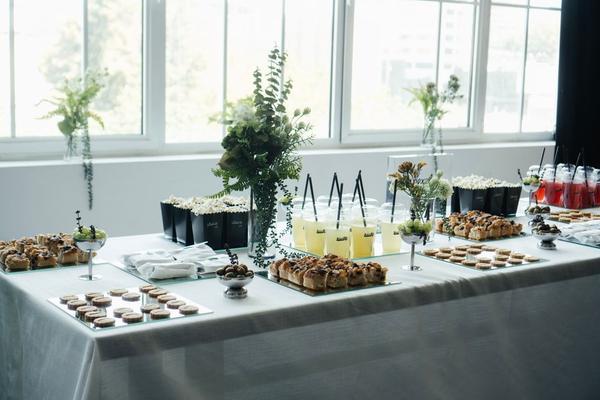
What are some practical light refreshment ideas?
Good light refreshment ideas include tea sandwiches, fruit skewers, cheese and crackers, mini muffins, vegetable cups, nuts, cookies, sparkling water, iced tea, and coffee. For a short meeting or casual gathering, choose mostly one-hand foods, offer both savory and sweet choices, and plan modest portions so guests can eat comfortably without a full meal setup.
Light refreshments work best when they are tidy to eat and simple to replenish. Give guests enough variety to feel considered without turning a short gathering into a sit-down meal.
Easy light refreshment ideas for meetings and casual hosting
A useful spread mixes savory, sweet, crisp, and soft bites while keeping service simple. These light refreshments ideas fit a small table without requiring a full place setting.
- Tea sandwiches: Use small pieces with cucumber and cream cheese, turkey and cheese, or egg salad; two per guest feels substantial without becoming lunch.
- Fruit skewers: Thread grapes, strawberries, melon, and pineapple onto short skewers so guests can take fruit without bowls or forks.
- Cheese and crackers: Set out two cheeses, plain crackers, and grapes; a narrow choice keeps the board tidy and affordable.
- Mini muffins: Choose bite-size blueberry, banana, or bran muffins and plan one or two per person.
- Vegetable cups: Put carrot, cucumber, and bell pepper sticks into small cups with a little dip at the bottom.
- Roasted nuts: Use several small bowls rather than one deep bowl so guests can reach them easily.
- Mini cookies: Oatmeal, chocolate chip, or shortbread cookies add sweetness without cake plates or knives.
- Crackers with hummus: Offer sturdy crackers beside individual hummus cups or a shallow bowl; this is one of the simplest light appetizer ideas for an informal gathering.
- Yogurt cups: Use small chilled cups with spoons and keep them cold until serving.
- Popcorn cups: Portion plain or lightly seasoned popcorn into small paper cups for easy carrying.
For more variations, light food ideas and light dessert ideas extend the menu naturally. The broader light ideas cluster connects this hosting topic with the rest of the site.
Which light refreshments are easy to serve without cutlery?
Finger foods with a dry exterior are the easiest choices: tea sandwiches, fruit skewers, mini muffins, crackers, nuts, cookies, and popcorn cups. Avoid anything that drips, collapses after one bite, or forces guests to balance a bowl while standing.
A practical mix is one sandwich item, one fruit item, one crunchy item, and one small sweet. That covers different preferences without filling the table with duplicates.
- Best for standing guests: fruit skewers, mini sandwiches, crackers, cookies, and portioned nuts.
- Best for laptops and paperwork: mini muffins, dry crackers, popcorn cups, and wrapped tea bags with lidded drinks.
- Use extra care with: yogurt, soft dips, cut tomatoes, juicy citrus, and anything heavily glazed.
Good light snack ideas pass one test: a guest can take a serving with one hand and step away without assembling it.
How much food should you plan per guest for a short gathering?
For a 60- to 90-minute gathering that is not replacing a meal, plan about four to six small savory bites plus one or two sweet bites per guest. Add roughly 12 to 16 fl oz of cold drinks per person, with coffee or tea available separately if the setting calls for it.
Timing matters. If you host directly over lunch or dinner hours, guests may reasonably expect more than light refreshment ideas can provide, so either increase the food substantially or tell them in advance that only snacks will be served.
- Small savory bites: 4 to 6 pieces per guest.
- Sweet bites: 1 to 2 pieces per guest.
- Fruit: about 1 cup per guest when fruit is a main part of the spread.
- Cold drinks: about 12 to 16 fl oz per guest for a short indoor gathering.
- Coffee or tea: plan 1 cup per person when the event is in the morning or late afternoon.
For 10 guests, about 50 savory pieces and 15 small sweets is a sensible middle target. Keep a modest reserve, but do not double every quantity just to make the table look full.
Which drinks pair well with small savory and sweet bites?
Water, sparkling water, unsweetened iced tea, coffee, and hot tea cover most short meetings without competing with the food. Add one lightly flavored option, such as lemon water, if you want variety, but keep very sweet drinks limited when the food already includes cookies or muffins.
Coffee suits muffins and cookies, while iced tea and sparkling water work with sandwiches, crackers, vegetables, and fruit. Label decaf clearly and keep milk or creamer chilled.
- Savory-heavy spread: sparkling water, plain water, unsweetened iced tea, or hot tea.
- Morning spread: coffee, decaf coffee, hot tea, and water.
- Sweet-heavy spread: plain coffee, black tea, and unflavored sparkling water help keep the drink side from becoming overly sugary.
Place cups before the drinks in the direction guests approach the table. This reduces reaching across filled cups and food trays.
How can you arrange refreshments on a compact table?
Use a clear left-to-right flow: napkins and small plates first, savory food next, sweets after that, then drinks at the far end or on a separate nearby surface. Keep the center of the table lower than eye level so guests can immediately see what is available and reach items without moving decorations.
For six to eight guests, a surface around 36 x 18 in can handle a restrained spread if you use narrow trays and replenish from the kitchen instead of displaying every portion at once. Put the most frequently chosen items within 12 in of the front edge and keep pitchers or hot drinks at a stable corner where they are less likely to be bumped.
If the table sits against a painted wall, Benjamin Moore Pale Oak at #D8CFC4 gives it a repeatable backdrop. Keep it to roughly 60 percent of visible room surfaces so the food remains the focus.
#D8CFC4 · Benjamin Moore Pale Oak
Reads warm and very slightly pink in south-facing light. In a north-facing room it drops noticeably grayer. Use it on walls and ceiling, roughly 60 percent of the room.
- Compact serving surface 36 x 18 in
- Clear front pickup zone 6 in minimum
- Food within easy reach 12 in from the front edge
- Space beside a hot drink dispenser 8 in minimum
- Clear standing space in front 30 in minimum
Use shallow trays, group foods by type, and refill in small batches. A crowded surface may photograph as abundant, but it makes guests hover and reach over one another.
When do light refreshments not work well?
Light refreshments are a poor fit when the gathering lands squarely over a normal meal, runs for several hours, or includes guests who were led to expect lunch or dinner. A beautiful tray of fruit, crackers, and mini sandwiches can look generous in a photograph while still leaving people hungry. Tall tiered stands also look impressive online but are awkward on a narrow table because they block sightlines and force guests to reach around them.
They also fail when the menu ignores practical needs. Sticky pastries near laptops, open bowls of dip in a standing meeting, and uncovered dairy left on a warm table create mess and food-safety problems. If young children are present, small hard foods can need extra care, and hot beverage stations should be positioned where they cannot be pulled or bumped. On a tight budget, do not buy six different snacks simply for visual variety. Two savory items, fruit, one sweet, water, and one hot drink are usually more useful than an oversized spread with leftovers.
Frequently asked questions
Can light refreshments replace lunch?
Usually not for a gathering scheduled during the lunch period. If the event overlaps a normal meal time, serve a more substantial menu or state clearly beforehand that only snacks and drinks will be available.
What is a good inexpensive refreshment spread?
Use popcorn cups, a platter of mini sandwiches, seasonal fruit, one small cookie, water, and coffee or tea. Buying fewer types in sensible quantities usually looks cleaner and costs less than trying to fill the table with many unrelated items.
How far ahead can you set out refreshments?
Dry foods such as crackers, cookies, and wrapped muffins can be arranged shortly before guests arrive. Chilled foods, dairy, cut fruit, and dips should stay refrigerated until close to serving time and should not be left out longer than food-safety guidance allows.
Do you need plates for finger foods?
Small plates are still useful even when every item can be eaten by hand, because guests may want to take two or three items at once. For a very brief meeting with individually portioned snacks, sturdy napkins may be enough.
How many different refreshments should you offer?
For a small group, four to six food choices is usually enough if the spread includes savory, fruit or vegetables, and one sweet option. More choices can add clutter without making the gathering feel more thoughtful.
A good refreshment setup is measured by how easily guests can take food, get a drink, and return to the conversation. Keep portions modest, make the serving path obvious, and use a small number of well-chosen foods rather than trying to create a full buffet.
1 thought on “Light Refreshment Ideas for Meetings and Casual Hosting”