
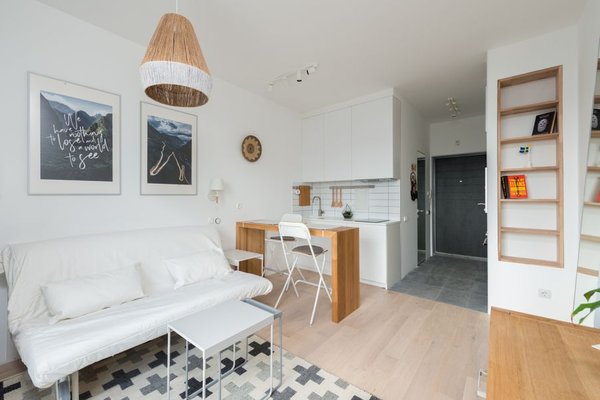
Can a 4×6 rug in living room seating look right?
Yes, a 4×6 rug in living room seating can work when it anchors a compact coffee table or one small chair grouping rather than an entire sofa arrangement. The rug measures 4 by 6 feet, covering 24 square feet. Keep its edges clear of main walking routes and check placement with tape before buying.
A 4-by-6-foot rug looks substantial in a product photograph, yet can feel tiny beside a sofa. The deciding factor is the footprint of the furniture you expect it to connect, not merely the dimensions of the room.
What living room size can use a 4×6 rug?
An 8-by-10-foot living room can accommodate this size as an accent if its furniture is compact and doors clear the edges. In a larger room, the same rug works as a separate small zone rather than an anchor for every seat.
Measure usable floor, not just wall-to-wall distance. A hearth, swinging door, floor vent or bookcase may subtract space. Sketch the room and note every seat’s actual leg positions before buying.
A 4-by-6-foot rug covers 24 square feet: 30 percent of an 8-by-10-foot room, or 20 percent of a 10-by-12-foot room. Those numbers describe floor coverage, not comfort. A cramped path stays cramped even when plenty of floor is visible elsewhere.
A 60-to-66-inch loveseat, small chair and coffee table can form a compact arrangement. An 84-inch sofa spans beyond the rug’s 72-inch length; treat that as a separate coffee-table accent, rather than pretending the rug frames the entire couch. This distinction matters for 4×6 rug living room shopping photographs that crop out furniture ends.
Where should a 4×6 rug sit near a sofa?
Center the rug on the coffee table and usable seating zone, not automatically on the room’s longest wall. Keep it fully in front of a long sofa unless both front feet of a short loveseat can rest securely within its edges.
Start with the table. A table measuring about 24 by 42 inches leaves approximately 12 inches of rug on each side when centered within the 48-by-72-inch footprint. Keep about 16 to 18 inches between the sofa edge and coffee table so knees have space and cups remain reachable.
With a 60-to-66-inch loveseat, check the distance between its front feet rather than assuming they fit. Both feet must land on the textile, not on its stitched binding. A single foot catching the corner makes the setting uneven and can shift the rug.
For the whole furniture arrangement, consult living room rug layout. The broader living room rug guide helps when you need a rug to connect several seats.
- Small rug footprint 4 x 6 ft, or 24 square feet
- Compact coffee table 24 x 42 in
- Sofa to coffee table 16 to 18 in
- Main walking path 30 in minimum
- Pad setback at edges 1 in
Compare the footprint before choosing
These are planning examples, not promises that every sofa or chair will fit. Record the exact leg spacing on your furniture.
| Seating situation | 4 x 6 ft rug | 5 x 8 ft rug |
|---|---|---|
| Floor covered | 24 square feet | 40 square feet |
| Compact coffee table | Fits with a visible border | Leaves more surrounding rug |
| 60 to 66 in loveseat | Front feet may fit if closely spaced | Gives the feet more landing space |
| 84 in sofa | Better as a table accent | Can support a measured front-leg layout |
| Sofa plus two side chairs | Rarely connects all seats | Offers more room; verify chair positions |
Can a 4×6 rug define a small seating area?
Yes, it can mark a reading corner, compact chair pair or coffee-table zone. It succeeds when the furniture clearly belongs to that zone, with no legs awkwardly hovering at its edge.
Try one reading chair with its front feet on the rug and a small table beside it. Check that the chair sits level. If raised front feet cause rocking, move all four feet off the rug or choose one large enough to support the entire chair.
In a studio, the rug can identify the sitting spot without blocking the route to a desk or doorway. Leave a practical 30-inch clear walking path where possible, and check any individual accessibility requirements. Add your real footstool, charging cable and storage basket before judging the shape; photographs that omit daily belongings conceal important space demands.
Listings for accent rugs for living room spaces often show a perfectly uncluttered scene. Test your actual setup, including the things you use every day.
How much floor should show around a 4×6 rug?
There is no universal exposed-floor border, but it should look deliberate rather than squeezed between furniture. A main walking route needs actual clearance, not a decorative strip that forces feet onto a curling rug edge.
Measure between the rug and the nearest wall or furniture. An exposed strip of 12 to 18 inches along a wall with no foot traffic may be fine; preserve a wider path through the room. Near an entry, check that the door swings over the rug and its pad without snagging.
If you want the exposed floor to feel planned, sample Benjamin Moore Pale Oak with the color reference #D8CFC4 on a wall near the rug. A physical sample beside your existing floor is more useful than judging a digital square.
#D8CFC4 · Benjamin Moore Pale Oak
North-facing light can make this reference look cooler and grayer, while south-facing light makes it read warmer and slightly pink. Use it for roughly 60 percent of visible room surfaces, and evaluate the remaining 40 percent against your actual floor and upholstery.
Do not force matching borders on all sides. The rug can sit closer to one wall while the opposite side gives the doorway a clear route. Keep the corners flat and visible.
How can you tell if a 4×6 rug is too small for the furniture?
It is too small when the chairs and sofa meant to form one group cannot touch it consistently, or when the coffee table overwhelms its border. A sofa stretching beyond both ends and chair feet balanced on the binding are straightforward signs.
Before ordering, mark a 48-by-72-inch rectangle on the floor with removable painter’s tape. Place the furniture where you really sit and check these points from the doorway and sofa:
- Front legs: Do all the intended feet land safely inside the outline?
- Table space: Can you move between sofa and table without stepping on an edge?
- Moving chairs: Does sliding a chair back expose a corner underneath its legs?
- Door swing: Can every nearby door open completely?
- Everyday clutter: Does the ottoman or toy basket still have a place?
Good living room rug measurements record leg positions, not just room dimensions. For more layout choices, see placing rugs in living room. If the tape outline looks detached when the room is occupied, a larger rug is likely the more functional purchase.
When does a 4×6 rug simply not work?
It will not anchor a large sectional, a full-size sofa with two substantial side chairs, or a conversation arrangement where every seat needs a common surface. Its 24-square-foot footprint does not expand because the photo was taken from a clever angle. Photos that crop out the sofa ends or hide chair distances can make a little rug look much more useful than it is.
It also fails when the coffee table occupies almost all the textile, leaving a thin border to catch feet. In a household where children or pets regularly run through the room, exposed corners and shifting edges are safety issues, not just aesthetic ones. Choose a nonslip pad approved for your floor, but do not expect that pad to rescue the wrong size.
In a rental, avoid adhesive, nails or anything else that could damage the floor. If the taped outline strands the furniture or blocks movement, stop trying to style around it. Either buy the size the seating requires or use the small rug only as a separate accent.
Frequently asked questions
Should the 6-foot side run parallel to the sofa?
Usually, yes; that alignment connects the rug visually with the seat. Turn it only if your table dimensions and walking route make the other direction more practical.
Can a round coffee table sit on a 4×6 rug?
Yes, a compact round table can sit within the rectangular footprint. Measure its full diameter and allow a visible border around the base.
Do I need a pad beneath a small living room rug?
A floor-compatible nonslip pad is sensible because small rugs can move when stepped on. Follow the pad and flooring manufacturers’ instructions and keep the pad about 1 inch inside the edges.
Can this size be layered over a larger rug?
Yes, it can create a distinct accent if both textiles remain flat and stable. Check every overlapping edge for tripping and avoid layering where people frequently change direction.
A 4-by-6-foot rug belongs in a living room when it has one clear job: frame a compact coffee table or identify a small seating zone. Tape its footprint, measure the legs and protect the walking path before deciding whether its size is right.