
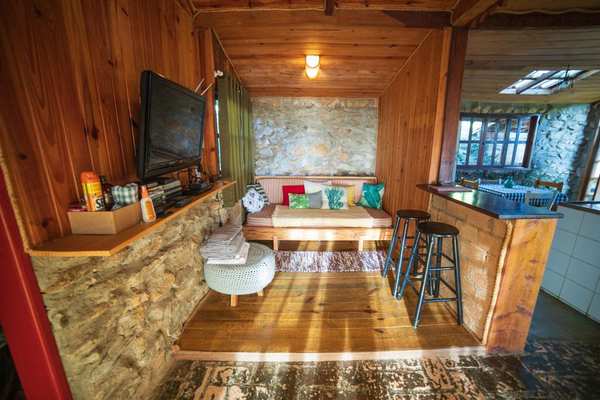
What is cottage style interior design?
Cottage style interior design combines comfortable furniture, layered fabrics, practical storage, and personal objects in rooms made for daily life. Begin with a coordinated paint plan, allow sensible walking space, and mix a few older pieces with useful newer ones. The result should feel gently collected, not arranged around a matching theme.
A cottage room should welcome a wet coat, a stack of books, and an ordinary Tuesday evening. You do not need exposed beams, a stone fireplace, or a country address to create that feeling; you need useful layers and decisions that suit the room you actually have.
Definition: Cottage style is an informal approach to decorating that favors human-scale furniture, texture, familiar objects, and pieces gathered over time. The emphasis is comfort and character rather than period-perfect reproduction.
What features define cottage style interiors?
The clearest signs are furniture that invites use, textiles that soften hard edges, and storage that keeps everyday belongings close. Details should look as though they accumulated for good reasons, not because they came from a single coordinated product line.
Start with a usable room, not decorative clutter
Keep a clear route from the doorway to the main seat, plus a surface for a drink and a reading lamp. A bookcase filled with books earns its place; a shelf of miniature houses rarely does. Put a basket where blankets are used.
Choose pieces with recognizable purpose
A side table might have a drawer for glasses; a dresser may store linens in the dining room; an upholstered bench can provide a place to put on shoes. These practical uses explain why furniture belongs where it does. For cottage interiors, a few mismatched shapes are welcome as long as the seat heights, scales, and daily tasks still make sense.
Which colors work best in a cottage-style room?
Build the scheme around one dominant wall paint, one supporting finish for substantial woodwork or furnishings, and one smaller painted accent. View physical samples in morning and afternoon daylight: north-facing windows generally make colors appear cooler and grayer, while south-facing exposure makes them read warmer.
For the main walls, consider Benjamin Moore Pale Oak OC-20, represented here by #D8CFC4. Put the largest share of the visible scheme here so that patterned cushions, books, and collected furniture do not compete with a busy backdrop.
#D8CFC4 · Benjamin Moore Pale Oak
Appears warmer and a touch pinker in south-facing light, but shifts grayer in north-facing rooms. Allocate roughly 65 percent of the visible palette to walls in this color.
For a substantial supporting finish, use Benjamin Moore White Dove OC-17, approximately #EFEEE5 on screen. This can occupy painted cabinetry, doors, trim, and larger fabric areas rather than just a thin line around the room.
#EFEEE5 · Benjamin Moore White Dove
It can look crisper in north-facing light and creamier under south-facing sun. Aim for about 25 percent of the visual scheme across woodwork and substantial furnishings.
Use Sherwin-Williams Sea Salt SW 6204, represented by #CDD2CA, for one painted dresser, a modest cupboard, or a small collection of accents. The smaller placement gives the room a deliberate stopping point for the eye without requiring a strong statement wall.
#CDD2CA · Sherwin-Williams Sea Salt
Its green-blue cast may look cooler in north-facing light and softer in south-facing sun. Reserve approximately 10 percent of the visible palette for this accent.
The percentages describe overall visual balance, not a paint-order formula. Sample each finish on movable boards at least 12 by 12 inches, then check the boards beside flooring, curtains, and upholstery throughout the day. Screen hex values are planning references; the actual dried paint and lighting govern the final choice.
What furniture and fabrics suit cottage interiors?
Choose furniture with a comfortable profile and enough function for the household, then build textile layers around it. Cotton slipcovers, linen-look curtains, wool rugs, quilted throws, and well-made wooden pieces can all belong in the same room when their scale is controlled.
Give the main pieces breathing room
In a 12 by 15 ft living room, a sofa about 78 to 84 inches long often leaves more flexibility than an oversized sectional. A compact upholstered armchair can sit at a slight angle to the sofa with a reading lamp beside it. For the coffee table, choose a top roughly two-thirds the sofa’s length so the arrangement feels intentional and the end seats remain easy to reach.
- Sofa to coffee table 16 to 18 in
- Clear main walking route 30 in minimum
- Living room rug 8 x 10 ft for a 12 x 15 ft room
- Typical compact sofa length 78 to 84 in
- Art center above floor 57 in
Let fabric earn its place
Textile layers work best when each serves a purpose. Curtains should control glare or privacy; a throw needs to be pleasant against skin; seat covers should be removable if food, children, or pets are part of the room’s routine. Wash-care labels matter more than an attractive product photo, especially for white upholstery or curtains near a cooking area.
The historical detail in English cottage style comes from joinery, rugs, and everyday ceramics. For more formal carved furniture, see victorian style interior design; for woodwork, see craftsman style interior design. Neither needs copying wholesale into a modern cottage room.
How do you make cottage style look collected rather than themed?
Buy the essentials first and leave room for objects with actual meaning. A collected interior has variety, but there is a common thread in its proportions, practical uses, or materials; it should not look like every shelf was filled in one shopping trip.
Begin by keeping the strongest piece you already own, whether it is a solid wooden table, a familiar rug, or a comfortable chair. Let its scale guide later purchases. Add the missing lamp, storage, or seating before buying another decorative object. Choose one or two display spots, then leave a portion of each shelf empty so the pieces are visible and cleaning remains manageable. Use the following contrast when choosing cottage decor.
| Decor decision | Collected cottage approach | Themed shortcut to avoid |
|---|---|---|
| Side tables | Different shapes with compatible heights | Several identical distressed tables |
| Shelf displays | Books, a plant, and a useful bowl | Rows of novelty cottages and signs |
| Textiles | One leading print with quieter supporting fabrics | Matching floral print on every surface |
| Wood furniture | Sound vintage pieces alongside practical newer ones | Artificially distressed finish on every item |
| Wall art | A few personal pictures in varied frames | Mass-produced slogans in every corner |
For a broader foundation in how styles relate to each other, see the style interior design guide.
When does cottage style not work well in a small or busy household?
It can fail quickly in a narrow room when every wall is lined with furniture and every surface holds ornaments. Deep chairs, bulky hutches, layered rugs, and full-length curtains may look wonderful in a photograph of a large country house. In a 10 by 11 ft apartment living room, the same arrangement can block paths, catch dust, and leave no practical place for bags or laundry. Keep one comfortable main chair and use closed storage before adding decorative pieces.
Low or north-facing light also exposes an overly crowded scheme. Too many little prints, tiny framed pictures, and tabletop accessories can make the room feel busy even when the wall paint is light. In a rental, do not glue trim to walls, change permanent finishes, or drill without the lease and landlord’s permission.
Homes with pets or young children need fabrics that tolerate washing and furniture that is stable and safely secured where necessary. Antique upholstery with fragile seams and loose fringe belongs in a low-traffic space, not the main family sofa. The goal is a comfortable home, not a set that only survives a photo shoot.
Frequently asked questions
Can cottage style work in a modern apartment?
Yes. Keep the existing architecture and add a comfortable sofa, an appropriately sized rug, one useful older piece, and layered lighting. Avoid permanent alterations unless your lease allows them.
Do all cottage rooms need floral wallpaper?
No. A single patterned cushion or curtain can introduce the relaxed feeling without covering a wall. Texture from woven fabrics, visible wood, and practical pottery can provide enough character.
Is an antique necessary for an authentic cottage room?
No. A sturdy secondhand table or a well-loved family photograph offers just as much personal history. Choose objects you will use and maintain rather than buying age for its own sake.
How many patterns should a small cottage living room use?
Start with one dominant pattern and one or two smaller supporting designs. Keep larger furniture surfaces comparatively simple, then assess the balance from the room’s entrance before adding more.
What should I buy first on a limited budget?
Fix the layout and lighting first, then purchase a rug or washable textile that solves a real need. Add storage and one distinctive secondhand piece gradually instead of buying a matching decor set.
Good cottage style interior design is built around the ordinary things a room must do. Keep the layout workable, test real paint samples in your own light, and allow the most personal details to accumulate with time rather than buying them all at once.