
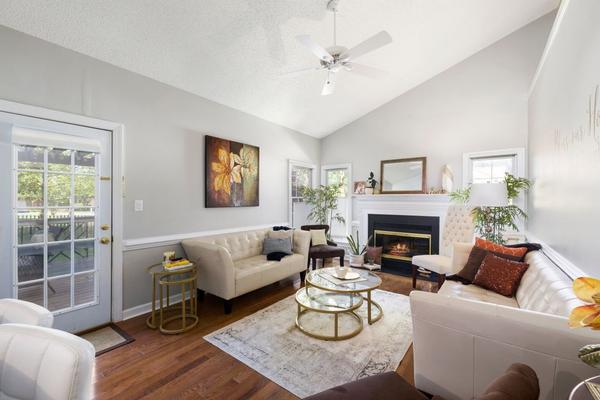
What does home staging and furniture rental include?
Home staging and furniture rental are related but separate services. Staging decides what each room needs, where pieces should go, and what should be removed. Furniture rental supplies temporary sofas, tables, beds, rugs, lamps, art, and accessories. A bundled service combines the planning, rental inventory, delivery, setup, and later pickup.
For a seller, the useful question is whether the service makes scale, circulation, and room purpose clear without crowding the home. The best quote spells out both the staging work and the rental logistics.
How is home staging different from furniture rental?
Home staging is a presentation service; furniture rental is a temporary-product service. A stager may work with furniture you already own, rented pieces, or a mix, while a rental company may simply provide items selected from its inventory.
| Service detail | Home staging service | Furniture rental service |
|---|---|---|
| Primary job | Plans how rooms should look, function, and photograph for sale | Supplies temporary furniture and decor for a stated rental period |
| Room planning | Usually includes editing, placement, scale, and visual balance | May be limited to the pieces ordered unless design help is included |
| Existing furniture | Can reuse suitable pieces already in the home | Normally focuses on rental inventory rather than editing what you own |
| Inventory | May come from the stager, a partner warehouse, or a separate rental supplier | Comes from the rental company’s available catalog |
| Installation | Can include arranging rooms, styling accessories, and preparing spaces for photography | May include delivery and placement, but styling scope should be confirmed |
| Best fit | Sellers who want one person or team directing the whole presentation | Sellers or stagers who already know exactly which pieces and sizes are needed |
For an empty property, home staging furniture rental can sound like one service even when design labor and inventory are billed separately. Read the scope rather than assuming both come from the same provider.
The main home staging furniture plan should begin with room purpose and traffic flow. A vacant 12 x 15 ft living room needs enough furniture to show a seating zone while keeping the floor plan readable.
What does a combined staging and furniture rental service include?
A combined service typically coordinates the staging plan and the temporary furnishings under one project. The exact scope can vary, so the quote should state what is included before you approve it.
- Room selection: which spaces will be staged and which will use existing pieces.
- Furniture selection: pieces sized for the actual rooms.
- Delivery and setup: who carries in, places, and styles the inventory.
- Rental period: start date, included term, extensions, and pickup.
- Condition responsibility: how damage, stains, or missing items are handled.
Ask for a room-by-room inventory rather than a vague package name. For furniture rental for home staging, a list that identifies one 84 in sofa, two 30 in chairs, one 8 x 10 ft rug, and the planned tables is more useful than a description such as “complete living room.”
If repainting is already planned, Sherwin-Williams Accessible Beige SW 7036, matched to #D1C7B8, gives rented upholstery and wood finishes a restrained background while preserving visible contrast with trim.
#D1C7B8 · Sherwin-Williams Accessible Beige SW 7036
In north-facing light it reads cooler and grayer; in south-facing light it becomes warmer and more beige. If you use it, keep it to the main wall field, roughly 60 percent of the visible room, and let trim, flooring, furniture, and smaller accents make up the rest.
Do not repaint just to match rental furniture if the existing finish is clean and photographs well.
Is bundled staging cheaper than hiring furniture separately?
Bundling is not automatically cheaper. It can reduce coordination and duplicate service charges, but the only reliable way to judge value is to compare written quotes that cover the same rooms, rental period, delivery, setup, styling, extension terms, and pickup.
A furniture-only quote can lose its advantage if you still need separate help to measure, select, receive, style, and return the pieces. A seller with one empty room may not need a full bundle.
Before deciding, calculate the home staging furniture rental cost from the complete service scope rather than the headline rental fee. If one quote includes three staged rooms and another includes five, the totals are not directly comparable even if both use the same phrase “full staging.”
Who handles delivery, setup, and pickup of rented staging furniture?
The contract should identify the responsible company for each step. In a bundled service, the stager may coordinate everything, but the actual delivery crew can still come from a separate warehouse or rental partner.
Confirm doorway width, stair turns, elevator rules, and parking before delivery. A sofa that cannot clear the entry or blocks the main walking route is the wrong piece, regardless of how it looks in a plan.
- Sofa to coffee table 16 to 18 in
- Walkway behind a sofa 30 in minimum
- Rug under the front legs 8 x 10 ft in a 12 x 15 ft room
- Art center height 57 in from the floor
- Dining chair pullback 36 in from table edge to wall
These clearances matter because temporary home staging furniture should make rooms easier to read, not force buyers sideways between pieces. Measure the room and access path before approving inventory.
In an occupied home, label what stays and what leaves before the crew arrives so rentals are not squeezed around pieces that should have moved first.
What should sellers compare before choosing a combined service?
Compare scope, inventory quality, room coverage, timing, and responsibility rather than choosing by photographs alone. A polished portfolio does not tell you how clearly the provider handles extensions, pickup, damage rules, or substitutions when an item is unavailable.
- Rooms included: get the exact spaces in writing, especially living room, dining area, primary bedroom, entry, and office.
- Piece sizes: ask for dimensions before installation when a room is narrow or has tight access.
- Substitution policy: find out whether the provider can swap a planned sofa, rug, bed, or table without approval.
- Rental term: confirm the included period and what happens if the listing stays active longer.
- Photography timing: make sure setup is complete before the photographer arrives, with enough time to correct a layout problem.
- Pickup trigger: confirm whether pickup happens on a fixed date, after an accepted offer, or only when you request it.
For home staging rental furniture, scale matters more than filling every corner. One correct seating group can explain a living room better than extra pieces that hide floor area.
When does home staging and furniture rental not work well?
It does not work well when the rented furniture solves the photograph but makes the real room harder to use or understand. Oversized sectionals, deep lounge chairs, extra console tables, and too many decorative objects can produce a polished listing image while shrinking the apparent floor area during an in-person showing. In a small room, the better decision may be fewer pieces, not a more complete package.
It can also be a poor fit on a tight budget when an occupied home already has clean, correctly scaled furniture. Paying to remove usable pieces and replace them with similar rentals adds handling without necessarily making the property easier to read. Homes with pets or young children need special attention to the provider’s damage and cleaning terms before inventory is installed.
North-facing rooms are another weak point for styling that depends on bright online photos. Colors read cooler and grayer there, so a scheme chosen from a south-facing portfolio image can look flatter in person. If the plan only works after heavy photo editing, it is not a strong staging plan.
You should know what is arriving, why each piece is there, who is responsible for it, and when it will leave before delivery day.
Frequently asked questions
Can I rent staging furniture for only one room?
Yes, if the provider offers room-by-room rental rather than a fixed whole-home package. A single living room, dining area, or primary bedroom can be staged when that is the space buyers most need help understanding.
How long should staging furniture stay in the home?
The rental period should cover photography, listing launch, and the time the seller expects the home to remain staged. Because no universal term fits every sale, confirm the included dates and extension process in the written quote.
Can a stager use some of my furniture and rent the rest?
Yes. A mixed plan can keep correctly scaled seller-owned pieces and add rental items only where the room lacks a clear function, matching scale, or visual balance.
Should furniture be removed before a home appraisal?
Staging furniture normally does not need to be removed simply because an appraisal is scheduled, but access to rooms and permanent features should stay clear. Ask your real estate agent or appraiser if there is a property-specific reason to change the setup.
What happens if rented staging furniture is damaged?
The provider’s agreement should explain responsibility for stains, breakage, missing items, or other damage. Review those terms before installation, especially in an occupied home with children or pets.
Home staging and furniture rental can be efficient when the plan, inventory, logistics, and rental term are defined as one clear scope. Measure first, use only the pieces that explain the room, and compare written inclusions before treating a bundled package as better value.