
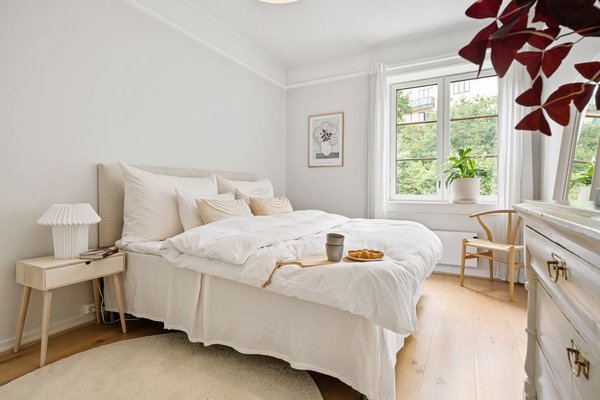
Scandinavian bedroom design is less about creating a showroom-perfect space and more about shaping a room that feels easy to enter at the end of the day. Soft textures, natural materials, muted colours, and thoughtful storage reduce visual noise and support restful sleep.
A successful Nordic bedroom should reflect real life. It needs space for reading, dressing, charging a phone, storing bedding, and moving around comfortably. The goal is not strict minimalism, but a room where every object has a purpose and nothing unnecessary competes for attention.
Start with a quiet, layered colour palette
White is common in Scandinavian interiors because it reflects daylight, but an all-white bedroom can feel flat. Layer soft neutrals such as warm white, oatmeal, pale grey, mushroom, taupe, and light beige. These shades create depth while keeping the room visually quiet.
Dusty blue, sage green, or softened charcoal can also work in small amounts. Choose one main neutral, one supporting shade, and one darker accent. Warm white walls, a light oak bed, stone-coloured linen, and black reading lamps create contrast without making the room busy.
Test paint in morning light, late afternoon, and under bedside lamps. Scandinavian bedroom design depends heavily on light, so a colour that looks fresh at midday may appear dull or overly cool at night.
Choose natural materials that age well
Wood brings warmth to a minimalist bedroom and prevents pale surfaces from feeling clinical. Light oak, ash, pine, and birch suit a Scandi bedroom decor scheme, but the finishes do not need to match perfectly. Slight variation often makes the room feel more relaxed.
Use natural materials where they will be touched and noticed: a timber bedside table, a wool rug, linen curtains, a cotton throw, or a woven basket. Ceramic lamps, paper shades, and stone accessories add texture without loud patterns.
One handmade vase, a framed print, or a wooden tray usually has more impact than several unrelated accessories. Scandinavian style values material, shape, and usefulness over quantity.
Build the bed in soft, breathable layers
The bed is the visual centre of a Nordic bedroom, so focus most of the softness there. Start with breathable cotton or linen sheets, add a lightweight duvet, and finish with one textured blanket or quilt. The layers should feel inviting rather than overly arranged.
Instead of many cushions, use two sleeping pillows and one or two additional pillows for comfort. Slightly rumpled linen often suits cozy bedroom design better than tightly tucked, hotel-style bedding.
For a practical example, imagine a small rental bedroom with white walls and limited floor space. A low oak bed, off-white linen bedding, one rust-coloured cushion, and a grey wool throw add warmth without bulky furniture.
Plan the layout around ease and movement
Scandinavian rooms feel spacious because circulation is protected. Leave a clear route from the doorway to the bed and wardrobe. Keep bedside furniture proportional, and avoid placing a chair where it becomes a permanent landing zone for clothes.
In a small room, a bed with visible floor beneath it can make the space feel lighter. Wall-mounted shelves or compact bedside tables reduce visual weight. Where storage is essential, choose drawers beneath the bed or lift-up storage so extra items remain out of sight.
A natural internal linking opportunity here is small bedroom layout ideas. Another useful related phrase is bedroom flow and furniture placement, especially where doors, windows, and wardrobes restrict the layout.
Use lighting to create a restful rhythm
A single bright ceiling light rarely creates a calm atmosphere. Combine general illumination with low, warm task lighting. Use bedside lamps for reading, a ceiling fixture for everyday visibility, and perhaps a small dresser lamp for a softer evening glow.
Choose warm-white bulbs rather than harsh blue-white light. Fabric, paper, frosted-glass, and opal-glass shades diffuse light and reduce glare. Sheer curtains soften direct sun, while heavier curtains or blinds provide privacy and darkness.
Keep storage simple and visually calm
Clutter has a stronger effect in a restrained room because every loose object becomes more noticeable. Give everyday items a clear home: a tray for jewellery, a drawer for cables, a basket for spare blankets, and closed storage for clothing.
Open shelving works best when it holds only a few useful or meaningful items. Leave empty space around objects so the eye has room to rest. Minimalism does not mean removing everything personal; keep the books you read, display one or two photographs, and choose art that contributes to the mood.
Clutter-free bedroom storage and warm neutral bedroom palettes are two further internal linking opportunities that fit naturally with this topic.
Add warmth without losing simplicity
The difference between a stark room and a cozy bedroom design often comes down to texture. A wool rug, brushed-cotton bedding, a knitted throw, or a padded headboard can soften clean lines. One healthy plant can add life without crowding the windowsill.
Patterns should be subtle and limited. Thin stripes, small checks, botanical shapes, or understated geometric prints work well. Repeat one colour from the pattern elsewhere in the room to create continuity.
Fresh air, clean bedding, and a quiet atmosphere matter more than heavily fragranced products. Curtains, rugs, and upholstered surfaces can also reduce echo and make the room feel more sheltered.
Common mistakes to avoid
A frequent mistake is treating Scandinavian style as a checklist of white walls, pale wood, and black accents. Without texture or personal details, the result can feel generic. Buying too many small decor pieces also weakens the calm effect the style is meant to create.
Do not sacrifice comfort for appearance. A chair that blocks a wardrobe, a lamp that is difficult to read by, or a rug that slips underfoot does not support the practical spirit of Nordic design. Function should quietly guide every choice.
Frequently asked questions
What colours work best in a Scandinavian bedroom?
Warm whites, soft greys, beige, taupe, muted green, and dusty blue work especially well. Keep the palette gentle and connected, using darker accents sparingly for definition.
Can Scandinavian bedroom design feel cosy?
Yes. Cosiness comes from layered textiles, warm lighting, natural wood, soft rugs, and personal objects chosen with restraint. The room can remain uncluttered while still feeling welcoming.
Is Scandinavian style suitable for a small bedroom?
It is particularly effective in small rooms because it prioritises light, clear movement, proportional furniture, and hidden storage. Choose fewer pieces, but make sure each serves a useful purpose.
Do Scandinavian bedrooms need white walls?
No. Pale greige, muted blue, soft sage, and warm beige can create the same calm effect. What matters is how the colours work with the room’s natural and artificial light.
Create a room that feels easy to live in
The most appealing Scandinavian bedroom design is thoughtfully edited rather than perfectly styled. Begin with a calm palette, add natural materials, make the bed comfortable, and solve storage before adding decoration. Then introduce a few personal details that make the room feel genuinely yours.
When every choice supports rest, comfort, or daily function, the space gains the quiet confidence associated with Nordic interiors. The result is a bedroom that looks composed in daylight and feels reassuring when the day is over.