
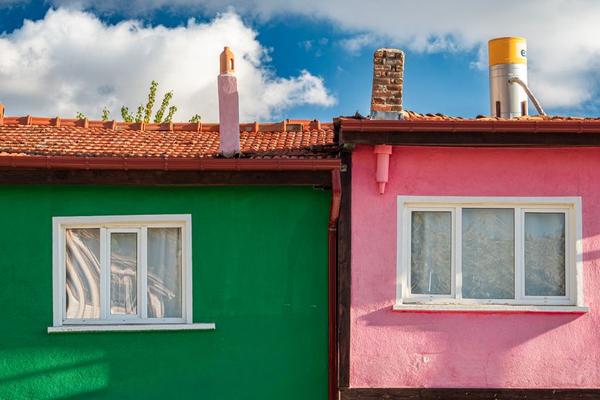
How should you choose green exterior paint colours?
Choose green to suit your existing roof, masonry, and the light each wall receives. Test large samples before buying, give the main siding most of the painted area, outline key details with lighter trim, and keep a deeper accent for the door. Review every sample in morning and afternoon light from the sidewalk.
Green exterior paint colours can look convincing on a chip and surprisingly bright across 800 square feet of siding. Use this checklist to narrow the choices before committing to an exterior paint order.
Which green families work best on house exteriors?
Sage-gray greens suit large painted elevations, deeper gray-greens define siding lines, and dark olives work well as concentrated accents. Choose the family that fits permanent roofing and masonry rather than a color seen in a listing photograph. The named US paints below give you an exact starting point.
Sage-gray for the main walls
Sherwin-Williams Evergreen Fog SW 9130, #95978A, is a useful siding candidate where the green should be visible without looking intensely saturated. Sample it against the roof and window frames, not against a blank indoor wall.
#95978A · Sherwin-Williams Evergreen Fog SW 9130
North-facing elevations can look grayer and cooler; southern sun brings forward the green. Allow about 70 percent of the painted facade for main siding in this color.
The physical sampling process also applies to sage green paint colours: make the final decision beside existing exterior materials.
Deeper gray-green for definition
Sherwin-Williams Pewter Green SW 6208, #5E6259, emphasizes clapboard edges and architectural recesses. On a heavily shaded house, check whether that extra depth makes the entire wall feel too dark.
#5E6259 · Sherwin-Williams Pewter Green SW 6208
North-facing siding can read nearly charcoal in deep shade, while south-facing walls reveal its green character. Use it for roughly 70 percent of the painted exterior if chosen for siding.
Deep olive for the entrance
Sherwin-Williams Ripe Olive SW 6209, #44483D, offers a small, definite accent at the front door. Its depth can help an entry look intentional, but large expanses require much more careful testing.
#44483D · Sherwin-Williams Ripe Olive SW 6209
In northern shade it can seem almost black; direct southern light reveals more olive. Reserve around 5 percent of the painted exterior for the door and small accents.
The wider green paint colours guide offers related directions, but exterior samples must be approved in outdoor light.
How does full sun change the appearance of green exterior paint?
Strong sun generally makes greens appear lighter and more colorful; shade may emphasize gray or blue undertones. A south-facing elevation often sees stronger direct sunlight than a north-facing one. Eaves, trees, reflective pavement, and nearby walls can alter that pattern, so never judge the house from one sample position.
Apply the same candidate to a bright area and a shaded area, preferably using the actual exterior product and finish. Check each panel in the morning, around midday, and late afternoon. A sample viewed from 25 feet away tells you more about the completed siding than a small brushstroke by a window.
For example, #95978A can look cooler on a north-facing wall and more green on a south-facing facade. The darker #5E6259 loses more visible detail in prolonged shade. If your preferred sample only looks attractive during a brief spell of evening sun, reject it or reconsider which elevation receives it.
Do not rely on a phone screen for final approval. Exterior texture, sheen, shadows under lap siding, and natural weathering all affect the actual appearance of paint.
Which roof and masonry colors pair well with green siding?
Start with the roof and masonry you already own. Charcoal shingles close to #41464A, reddish brick near #914E43, and tan stone around #B6A184 are useful visual reference points, not claims that those materials have one uniform color. Hold real samples beside several pieces of brick or stone before deciding.
Sherwin-Williams Alabaster SW 7008, #EDEAE0, provides a specific off-white trim choice for windows, fascia, and porch details. It helps keep openings legible when a green covers most of the house.
#EDEAE0 · Sherwin-Williams Alabaster SW 7008
Northern light may make it read cooler and grayer; on southern elevations it looks creamier. Budget roughly 20 to 25 percent of the painted facade for trim.
The table contrasts green as a dominant siding color with green restricted to a front-door accent. Percentages apply to painted surfaces only, excluding brick, roof, glazing, and landscaping.
| Existing roof or masonry | Green on main siding | Green on front door only |
|---|---|---|
| Charcoal roof near #41464A | Evergreen Fog #95978A makes a visibly lighter siding field. | Ripe Olive #44483D adds a contained dark accent. |
| Red brick near #914E43 | Pewter Green #5E6259 needs testing beside varied brick tones. | Ripe Olive #44483D keeps the color change small. |
| Tan stone near #B6A184 | Evergreen Fog #95978A allows the stone to remain prominent. | Ripe Olive #44483D defines the entrance. |
| Cool gray masonry near #92979A | Pewter Green #5E6259 adds depth; check north-facing shade. | Evergreen Fog #95978A gives a lighter entry. |
| Brown shingles near #55483B | Evergreen Fog #95978A creates visible separation. | Ripe Olive #44483D may look similar in darkness to the roof. |
These hex references help you compare color direction, not order replacement shingles by screen color. For actual masonry, inspect mortar and surface variations as well as the dominant brick or stone.
Where should you use green on siding, trim, or the front door?
Put green on the siding when you want it to define the whole house; reserve it for the front door if you want a smaller commitment. Use trim to outline architectural details rather than introduce another competing statement. On a siding-led scheme, a working split is 70 percent green siding, 25 percent lighter trim, and 5 percent door accents.
Checklist before ordering exterior paint
- Inventory fixed colors: Record the roof, brick, stone, gutters, and window frames first.
- Select the dominant surface: Decide whether the project is full siding or only an entry door.
- Make large test panels: Use the actual candidate paint and planned finish.
- Check every elevation: Review both north-facing shade and south-facing sun.
- Stand back: Confirm that trim outlines openings and the door remains visible.
- Confirm preparation: Check manufacturer requirements for primer, weather conditions, and your siding material.
Tiny brush marks cannot show how exterior green paint colours behave across textured siding. Use the same sample size for your leading choices, and take notes rather than trusting photographs.
- Main siding sample panel 24 x 36 in
- Front-door color sample 12 x 18 in
- Trim sample strip 4 to 6 in wide
- Street-view checking distance 25 ft
For a deeper direction, explore paint colour olive green while keeping the door test separate from the larger siding decision. Shopping for green paint colours exterior options is easier once those surfaces have defined roles.
When is painting a house green the wrong decision?
Green is a poor choice when the roof or existing masonry clashes with the chosen sample, the house stays deeply shaded, or the current coating is already failing. Dark olive over an entire north-facing facade can read nearly black for much of the day. If a recessed front door is already hard to find, making it equally dark may reduce definition instead of improving it.
The dramatic houses in photographs often benefit from spotless trim, coordinated landscaping, bright skies, and image editing. A real home still has worn gutters, mismatched repairs, brick variation, and heavy porch shadows. Paint will not erase those problems. If the budget covers only color but not cleaning, sound surface preparation, priming, and repairs, delay the project.
Never paint over active moisture intrusion or rotting boards to hide damage; arrange a qualified assessment first. On homes built before 1978, disturbing older coatings may introduce lead hazards, so consult EPA guidance and consider a lead-safe certified contractor. Renters and owners under an HOA must get required written approval before changing exterior colors. A beautiful sample does not override property rules.
Frequently asked questions
Should a green front door match the shutters?
Matching can work if you want a consistent accent, but repeating it on every shutter is optional. Test each surface because deep porch shade can make identical paint appear different.
How many exterior green samples should I try?
Start with two or three serious candidates selected for your fixed roof and masonry. Make the final decision from large outdoor samples rather than tiny chips.
Does exterior paint sheen change the color?
Yes, surface reflections can make a glossy finish appear different from a lower-sheen coating. Sample the intended exterior product and sheen, and follow manufacturer advice for the siding substrate.
Can green paint work next to unpainted red brick?
Yes, but sample it beside multiple bricks and the actual mortar. Red brick often contains orange, brown, and gray variation that a single reference photo hides.
Is a hex code enough to order the correct paint?
No; the hex is a digital reference, not a guarantee of the dried coating’s appearance. Use the named manufacturer color, a physical chip, and a real exterior sample for approval.
Choose the green that still works beside your roof and masonry through a full day of light. Once the siding, trim, and door have distinct roles, the paint order becomes much easier to defend—and far less likely to need redoing.