
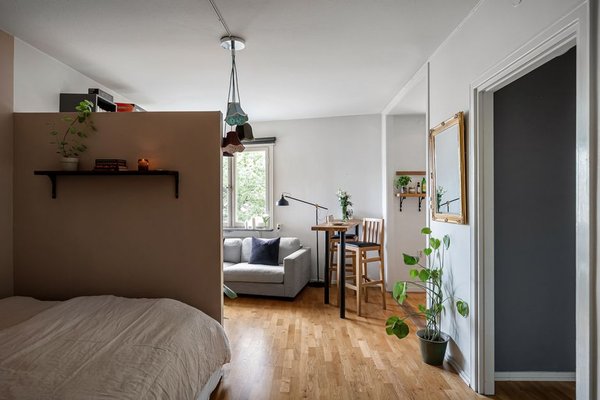
What is the best multi functional furniture for small spaces by room?
The best multi functional furniture for small spaces solves the room’s biggest daily problem without blocking the walking path. Choose a lift-top table for a living room, a storage bed for a bedroom, a fold-down desk for occasional work, and a slim bench with storage for an entryway. Measure each piece both closed and fully open.
A second function is useful only if you can actually use it in the space you have. Start with the activity that happens every day, then check the expanded footprint before buying anything labeled convertible.
Which multi functional furniture works best in a living room?
A lift-top coffee table usually earns its space in a living room that doubles as a work or dining zone. A storage ottoman helps when blankets and game controllers otherwise occupy the sofa, but its lid must open without moving another piece.
Prioritize reach and stability
For a sofa about 72 to 84 inches wide, begin with a coffee table 36 to 42 inches long and 18 to 24 inches deep. Check the manufacturer’s stated raised height, not just the closed height: a lifted surface near your seated elbow is more usable for a laptop or meal than one that stops at shin level. Test whether the top feels stable when someone leans on it.
What multi functional pieces make sense in a bedroom?
A bed with accessible drawers is practical when the room has limited closet space. A wall bed makes sense only when its full swing area stays empty and its mounting surface meets the manufacturer’s installation requirements.
Make the storage reachable
A queen mattress is 60 by 80 inches, before adding the bed frame. In a 10 by 11 ft bedroom, deep side drawers may collide with a dresser or wall. Check the drawer extension shown in the product specifications, and map it at full travel rather than assuming hidden storage has no footprint.
Lift-up platform beds can access an entire under-mattress cavity, but the mattress and bedding add weight. Try the lifting mechanism in person when possible, and inspect the safety stays and weight limits. Keep daily essentials in the easiest compartment; reserve harder-to-reach space for spare bedding.
A narrow drop-leaf desk can serve a bedroom workstation without permanently filling the room. Allow roughly 24 inches of work-surface depth when open and leave clearance for the chair. Do not place heavy equipment on a folding surface unless the manufacturer approves that load.
The guide to storage furniture for small spaces is useful when your biggest problem is belongings rather than seating. If the goal is a guest bed that disappears between visits, review folding furniture for small spaces and check its installed dimensions.
Room-by-room checklist: which piece earns its footprint?
Choose one job for each room. A piece that performs one additional task reliably beats a complicated design that cannot open in daily use.
- Living room, lift-top coffee table: Best for occasional laptop work or meals where a separate dining table will not fit.
- Bedroom, drawer storage bed: Best for bedding when there is enough side clearance to open every drawer.
- Home office, fold-down desk: Best for short sessions when wall fixing is allowed and the mount is suitable.
- Dining nook, drop-leaf table: Best for one or two daily diners who sometimes need more tabletop width.
- Entryway, storage bench: Best for shoes and a place to sit, provided the front door still swings freely.
- Kids’ room, low storage seat: Best for toys when the lid has suitable safety features and the unit cannot tip.
That is the distinction between multifunctional furniture for small spaces and merely compact furniture: the second task must replace an item or reduce clutter. Use the broader small spaces furniture guide to decide if one simpler piece would leave a better layout.
How do you compare fold-out, lift-top, and storage designs?
Compare mechanisms by the space they occupy while operating, not by their showroom footprint. Fold-out designs need a clear opening zone; lift-top and integrated-storage pieces need clear access above, beside, or in front of them.
| Daily room situation | Fold-out design | Lift-top or built-in storage design |
|---|---|---|
| Eating or working from a sofa | A folding desk needs a chair and opening zone. | A lift-top table raises the work surface within the seating area. |
| Hosting overnight guests | A sleeper or wall bed needs its full open footprint clear. | A storage sofa holds bedding but provides no extra mattress. |
| Putting away bulky linens | A fold-down item may offer no enclosed linen space. | An ottoman or lifting bed provides a storage cavity. |
| Using the room every day | Folding panels must open and close each time. | A drawer or lift-top opens while the main piece stays put. |
| Keeping the floor clear | Space returns when the piece folds away. | The closed footprint remains, even when storage is unused. |
What measurements prevent a multi functional piece from blocking circulation?
Measure the permanent walking route first, then add clearance for each moving part. Tape the closed and fully opened footprints on the floor, and walk the route with chairs pulled out and doors opened.
- Main route beside furniture 30 in minimum for a typical home layout
- Preferred clear passage 36 in where the plan allows
- Sofa to closed coffee table 16 to 18 in
- Dining chair pullback 36 in behind the table edge
- Compact desk work-surface depth 24 in when open
Measure the furniture twice
Record width, depth, and height when closed. Then record the farthest point reached by drawer fronts, reclining backs, drop leaves, lifted tabletops, and sleeper extensions. Include handles and the space needed for your fingers. If an opened drawer means moving the desk chair, it is not storage you will enjoy using.
A 30-inch route is a planning minimum for ordinary circulation, not an accessibility guarantee or a substitute for applicable codes. People using mobility aids may need wider routes and turning areas. Design for the actual person using the space and consult appropriate accessibility guidance if needed.
Keep the largest background surface consistent
Moving furniture can look crowded when every hinge and panel stands out. Benjamin Moore Pale Oak, shown here with an approximate digital reference of #D8CFC4, can cover about 60 percent of visible surfaces on walls and ceiling. Check a physical paint sample before purchasing because screens do not reproduce paint accurately.
#D8CFC4 · Benjamin Moore Pale Oak
Reads warmer and slightly pinker in south-facing light, while north-facing light makes it look grayer. Use it on walls and ceiling across roughly 60 percent of the visible room.
Let the existing floor, textiles, and furniture occupy the remaining visual area. The idea is to make moving parts visually quieter, not disguise the clearance they require.
When should you skip a convertible or storage piece altogether?
Skip it when using the second function requires you to rearrange the room every day. A pullout bed photographed in an empty studio looks convincing; in a furnished 10 by 11 ft room, it may block the door, dresser, and only walking route. A large lift-top coffee table also makes little sense if its raised lid stops you getting off the sofa.
Storage is not automatically a benefit. Deep bed drawers are frustrating beside a wall, and an ottoman filled with rarely used items still occupies floor space. Cheap hinges, weak lift supports, and difficult-to-replace fittings can turn an expensive purchase into a broken single-purpose object.
Renters should not install a wall bed or suspended desk without written permission and appropriate fixing advice. Poorly anchored units can tip or tear away from the wall; follow manufacturer instructions and use a qualified installer where required. In homes with small children or pets, pinch points, spring-loaded lids, climbing hazards, and unsecured tall furniture deserve more attention than the extra storage. Sometimes a plain sofa and one slim shelf work better.
Frequently asked questions
Is a storage bed worth buying for a studio apartment?
It is worthwhile when its compartments replace a dresser or bulky bins and remain easy to open. Measure drawer travel or lift clearance with the actual bedside layout before ordering.
Can a lift-top coffee table replace a dining table?
It can serve occasional meals for one or two people if the raised surface is stable and comfortable at sofa height. For regular meals, test legroom and posture rather than assuming the mechanism provides proper dining ergonomics.
What should renters check before choosing a wall-mounted desk?
Confirm the lease permits the proposed fixing and that the wall is suitable for the specified load. If drilling is not allowed, choose a stable freestanding folding desk instead.
Do convertible sofas need more floor space than ordinary sofas?
They can need substantially more space when the bed is extended. Use the manufacturer’s fully opened depth and map that outline, including the route to the door.
How can I tell whether a multifunctional piece is sturdy enough?
Check published weight limits, hardware warranties, replacement-part availability, and assembly instructions. Test the mechanism where possible, particularly if children will use the room.
The right piece is the one whose second function you can use without shifting other furniture. Measure its operating footprint, protect the walking route, and pay only for the extra function you need regularly.