
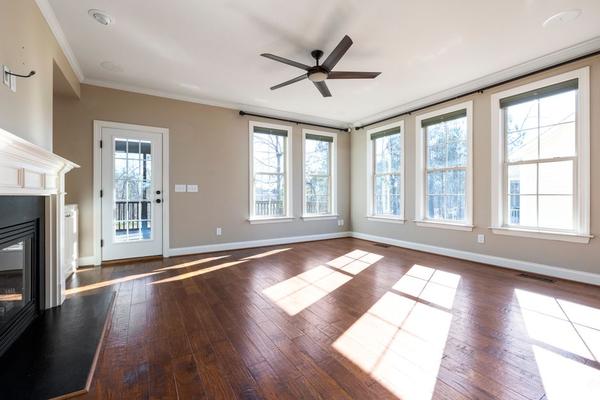
What is interior design craftsman style?
Interior design craftsman style emphasizes visible joinery, substantial wood trim, useful built-ins, honest materials, and sturdy furniture with uncomplicated lines. Keep existing woodwork as the focus, choose paint by the room’s daylight, and leave practical walking space around furnishings. The result should look constructed for daily life, not decorated to imitate a historic house.
Craftsman rooms make their construction part of the design: you can see the grain, the joints, and the purpose of a cabinet. You do not need a century-old bungalow to borrow that discipline, but you do need to distinguish architectural substance from accessories that merely suggest it.
Definition: Craftsman interior design is the American expression of the Arts and Crafts preference for straightforward construction, durable materials, human-scale rooms, and objects made to be used. Its recognizable details include exposed woodwork, squared profiles, integrated storage, and furniture that shows how its parts connect.
Which features define Craftsman interior design?
The defining features are wood casing, square-edged trim, practical built-ins, clearly expressed joints, and a layout organized around everyday use. An original home may also have a fireplace-centered living room, a window seat, or built-in bookcases, but none is mandatory in a newer house.
Start with the architecture you already have
Look at door and window trim before buying anything. Wide flat casing, simple baseboards, paneled doors, and bookcases aligned with openings create a convincing structure. A single excellent wood detail carries more weight than unrelated decorations.
In many Craftsman interiors, trim acts as a continuous frame. Keep its profile consistent from window to doorway. If adding woodwork, mock up its width with painter’s tape first; bulky casing can crowd a narrow wall.
Let construction, not ornament, do the work
The Arts and Crafts interior tradition values pieces that reveal how they were made. Look for visible joinery, solid rails, and useful shelves rather than fake pegs glued onto factory-made furniture. Texture comes from wood grain, tile, leather, and woven fibers, not clutter.
- Keep wood grain visible when the existing finish is sound.
- Repeat squared profiles in shelving, tables, and door frames.
- Use one substantial focal element, such as a fireplace surround, to anchor seating.
Choose finishes by the work they must do
Judge treatments by wear and the condition of the original material.
| Craftsman surface | Keep or restore existing material | Add a new painted treatment |
|---|---|---|
| Original door casing | Preserves grain and historic profile if sound | Useful when prior repairs cannot be blended |
| Built-in bookcase | Shows joinery and ties into old trim | Can unify a newly installed cabinet |
| Living room flooring | Retains existing boards and their patina | Usually unsuitable for intact wood floors |
| Fireplace surround | Maintains original tile or wood character | Reserve for nonhistoric replacement work |
What colors complement Craftsman woodwork?
Choose wall paint that lets wood grain remain visible instead of making every surface compete for attention. Build the palette around daylight and the amount of exposed trim; paint need not occupy every available surface.
For approximately 55 percent of visible room surfaces, including walls and perhaps the ceiling, consider Sherwin-Williams Alabaster SW 7008, #EDEAE0. It reflects light behind substantial bookcases.
#EDEAE0 · Sherwin-Williams Alabaster SW 7008
North-facing light makes this read cooler and flatter; south-facing light brings out its creaminess. Allow roughly 55 percent for walls and ceiling.
For about 15 percent of visible surfaces, Sherwin-Williams Evergreen Fog SW 9130, #95978A, works as a painted backdrop or single cabinet run. Sample it beside the wood.
#95978A · Sherwin-Williams Evergreen Fog SW 9130
It looks grayer in north-facing rooms and warmer in south-facing sun. Keep it to roughly 15 percent of surfaces so it does not overwhelm the wood.
For roughly 5 percent of the room, use Sherwin-Williams Urbane Bronze SW 7048, #54504A, on a small accent or compact piece of furniture. The remaining 25 percent can be visible wood and other unpainted materials.
#54504A · Sherwin-Williams Urbane Bronze SW 7048
North-facing light can make this look nearly black; south-facing light reveals more brown undertone. Reserve about 5 percent for accents.
These percentages are a starting point, not a requirement to repaint original trim. View samples in morning and afternoon; southern sun changes their depth, while north-facing light can flatten cabinet edges. Check against the actual wood, not a phone screen.
Which furniture shapes fit a Craftsman room?
Choose stable-looking furniture with broad rails, straight legs, exposed framework, and upholstery that supports comfortable sitting. Furniture should echo the room’s joinery without making every piece look like part of a matched collection.
Buy for proportion before historical accuracy
A sofa around 78 to 84 in wide suits many 12 x 15 ft living rooms; confirm door and stair clearances. A coffee table 42 to 48 in long and about 18 in high offers useful reach. Look for substantial arms and a usable seat depth.
One well-made armchair and a sturdy side table can establish the mood. Inspect secondhand pieces for wobble, cracks, stiff drawers, and uncertain old finishes before buying.
Keep the decor quieter than the structure
Craftsman decor works best as punctuation: a ceramic vase, a reading lamp, a woven basket that holds something, or a deliberately patterned textile. A shelf filled to the edge hides the joinery you were trying to celebrate.
For perspective, start with style interior design. The related craftsman style interior design approach offers room-specific ideas, while frank lloyd wright interior style and design provides another architectural perspective without requiring imitation.
How should built-ins and natural materials influence the layout?
Treat built-ins as fixed working furniture, not blank walls behind movable pieces. Arrange seating so cabinet fronts can open, people can walk through the room, and the architecture stays visible from the entry.
Measure pathways before placing a rug
Sketch the hearth, windows, doors, bookcase depth, and heating vents. Mark cabinet-door swings. A built-in projecting 12 in into a narrow room can make a sensible seating plan unworkable; plan before altering cabinetry.
- Sofa to coffee table 16 to 18 in
- Main walkway beside seating 36 in clear
- Cabinet doors in front of seating 30 in clear when closed
- Rug for a 12 x 15 ft sitting room 8 x 10 ft
- Reading table beside chair 18 to 24 in high
These are planning guides, not building-code guarantees. Open storage doors and pull out drawers while the tape is on the floor. Keep air grilles and heat sources unobstructed.
Make natural materials functional
Use wood where it will be touched, tile where surfaces need wiping, and a rug where footsteps need softening. Avoid drilling into unknown wiring. Built-ins requiring moved outlets, structural alterations, or hardwired fixtures call for qualified professionals.
Renters can use freestanding bookcases, properly sized furniture, and accessories with a purpose. Follow the lease rather than fastening cabinetry to walls without permission.
When does a Craftsman interior not work well?
Heavy wood furniture is a poor automatic choice for a 9 x 10 ft apartment living room. Photographs hide the space needed to pull out drawers, pass a seated person, and open a cabinet door. A room crammed with a matching sofa, armchairs, and oversized bookcases may look historically convincing in a catalog, but it will be unpleasant to use every day.
Low, north-facing daylight is another constraint. Deeply toned woodwork and dark painted surfaces can flatten into one indistinct mass, especially when the only window faces another building. Do not rely on a staged photograph lit by professional equipment; place full-size samples near the existing trim and check them under your actual lamps.
Authentic restoration is expensive. Stripping unknown old finishes, replacing original tile, or commissioning custom cabinetry may cost more than the room justifies. Do not remove serviceable historic woodwork to manufacture a tidier look. In a rental, permanent paneling and built-ins are generally the wrong project without written permission. With young children or pets, sharp exposed corners, unstable antiques, and delicate upholstery make the supposedly durable scheme surprisingly impractical. Choose secure furniture first and treat historical accuracy as optional.
Frequently asked questions
Can a modern house have a Craftsman-inspired interior?
Yes. Use squared trim, honest wood furniture, and practical storage rather than attaching fake historic details everywhere. Coherent rooms do not require an original bungalow floor plan.
Should original Craftsman trim always be stripped?
No. Existing finishes may be intact or historically significant, and aggressive stripping can damage wood. Seek professional advice if lead paint is possible.
Are leather sofas required in Craftsman rooms?
No. Sturdy upholstery with a straightforward shape fits, and removable covers may be more practical. Choose comfort and dimensions before material.
Can a Craftsman living room include modern lighting?
Yes. A simple reading lamp or understated ceiling fixture can support the woodwork without imitating an antique. Hire a qualified electrician for hardwired changes.
Do all built-ins need to match the floor?
No. Consistent construction details matter more than identical finishes. Keep related profiles and proportions, and assess any new finish against the flooring in daylight.
The strongest Craftsman rooms make everyday functions visible: a place to read, a shelf that holds books, and woodwork that earns its space. Measure and preserve what is sound, then add fewer, better-chosen pieces rather than buying an entire period look.