
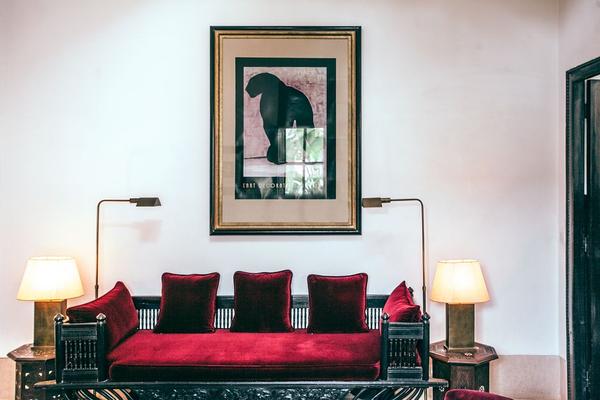
What makes spanish style interior design work in a real home?
Spanish style interior design pairs plaster-like walls, substantial wood, arches, iron details, and tactile tile with furniture that feels comfortable rather than ceremonial. Keep original architecture where possible, choose a restrained paint scheme, and give each decorative material room to stand out. The result should feel lived-in, not like a themed restaurant.
Spanish-inspired rooms succeed when the architecture leads and the accessories follow. You can borrow the character without owning a historic house, but the proportions, lighting, and materials have to make sense in the space you actually have.
Definition: Spanish-style interiors are rooms influenced by Spanish and Spanish Revival architecture, including plaster surfaces, rounded openings, wood beams, patterned tile, and wrought-iron details. The emphasis is on architectural texture and durable materials, not on collecting objects that advertise a theme.
What architectural details define Spanish-style interiors?
The strongest signatures are thick-looking plaster walls, arched openings, exposed or visually substantial wood, and tile used where it belongs. You do not need all of them: one convincing architectural detail usually carries more weight than several small imitations.
Let the building decide what stays
In an older home, preserve sound original doorways, trim, flooring, and built-ins before planning cosmetic changes. A shallow niche can hold a lamp or a single ceramic piece without becoming a display shelf for souvenirs. In a newer home, a simple plaster-effect finish on one uninterrupted wall may establish more character than attaching decorative beams to an ordinary 8 ft ceiling.
| Architectural location | Character-building treatment | Practical boundary |
|---|---|---|
| Existing doorway | Retain an original curved opening and its surrounding plaster | Do not cut a structural wall to make a new arch without a qualified professional |
| Fireplace wall | Use a simple textured surround and one focused tile area | Confirm material and clearance requirements for the actual fireplace |
| Entry floor | Choose slip-appropriate, easy-clean tile for the traffic level | Check subfloor condition and finished floor height before installation |
| Ceiling | Keep genuine exposed wood that belongs to the building | Skip heavy fake beams that crowd a low ceiling |
Which paint colors work with Spanish tile and dark wood?
Choose a main wall color that lets the tile and wood remain the strongest surfaces, then reserve a lighter paint for limited trim and a dark one for a small accent. Test every sample beside the actual floor during daylight and after the lamps are switched on; a digital hex is a useful reference, not a substitute for a physical sample.
A three-paint scheme with clear proportions
For approximately 55 percent of the room’s visible color, use Benjamin Moore Pale Oak OC-20, represented here as #D8CFC4, on the main walls. It gives decorative tile a quieter backdrop without requiring every surface to match.
#D8CFC4 · Benjamin Moore Pale Oak
Can look noticeably grayer in north-facing light and softer with a slight pink cast in strong south-facing light. Allocate roughly 55 percent of the room’s visible color to the main walls.
For about 15 percent, use Sherwin-Williams Alabaster SW 7008, #EDEAE0, on selected trim, ceilings, or built-in shelving. Keep the placement consistent so the room does not break into too many painted fragments.
#EDEAE0 · Sherwin-Williams Alabaster
North-facing light can make this paint seem cooler and flatter; south-facing sun emphasizes its creamy character. Use it for approximately 15 percent of visible surfaces.
Reserve roughly 5 percent for Sherwin-Williams Iron Ore SW 7069, #434341, on a small piece of built-in cabinetry or an appropriate painted metal accent. It should punctuate the room rather than dominate it.
#434341 · Sherwin-Williams Iron Ore
It appears almost black in a dim north-facing room but shows more charcoal character in strong south-facing light. Limit it to roughly 5 percent of the visible scheme.
Leave the remaining 25 percent for existing wood, tile, upholstery, and other unpainted materials. These percentages are a visual planning guide, not a formula for buying gallons. If your floor already has a busy pattern, count it as a major design element before adding any new patterned fabric.
Choose finishes for the surface, not the photograph
| Painted surface | Matte finish | Eggshell or suitable trim finish |
|---|---|---|
| Quiet living-room walls | Disguises minor surface unevenness | May be easier to wipe in frequently used areas |
| Hallway beside tile | Shows scuffs sooner in many products | Can make routine cleaning more manageable |
| Decorative plaster-look wall | Maintains a flatter, less reflective appearance | May reveal more highlights across texture |
| Cabinet or door | Can mark with repeated handling | Use a finish specifically rated for trim or cabinetry |
What furniture suits a Spanish-style room?
Look for a few pieces with believable weight: a solid-looking wood table, comfortable seating, and lighting with straightforward metal or ceramic forms. Furniture should support the room’s architecture, not compete with an arch, patterned floor, or textured fireplace.
Start with scale, then texture
In a 12 by 15 ft living room, a sofa around 78 to 84 in wide can leave usable space for one accent chair and a central table. A coffee table around 42 by 24 in gives the seating group a practical center. Measure from the sofa’s actual front edge instead of assuming showroom spacing will transfer to your floor plan.
- Sofa to coffee table 16 to 18 in
- Main walking route 36 in clear where possible
- Area rug in a 12 by 15 ft room 8 by 10 ft
- Dining chair pullback 36 in from table edge
- Artwork center above floor 57 in
- Seating: Favor cushions and upholstery you will actually use each day; a carved wood frame should not make the chair uncomfortable.
- Storage: One substantial cabinet with practical shelves is more useful than a row of tiny decorative chests.
- Lighting: Place a table or floor lamp near the reading seat instead of relying on one dramatic ceiling fixture.
- Textiles: Select durable covers and a rug that can be cleaned without a specialist for everyday family use.
For Spanish home decor, keep ceramics, woven pieces, and framed art in small, deliberate groups. Let the wood grain and tile do some of the work; blank wall space is part of the composition, too.
How do you make Spanish interiors feel current rather than themed?
Keep the permanent surfaces believable and simplify everything placed in front of them. The room feels more current when a real arch or tile floor is allowed to stand on its own, supported by comfortable furniture and uncluttered sightlines.
Use the broader style interior design guide when deciding how far to take a historic influence. The related spanish colonial style interior design and mediterranean style interior design guides can help you distinguish shared materials from the features specific to this look.
Make a small update without renovating
- Remove several competing decorative objects and keep one strong ceramic piece at eye level.
- Replace a flimsy side table with a properly scaled wood piece that provides useful surface area.
- Move a lamp close to the chair where it is needed, rather than buying another decorative fixture.
Stand at the room’s entrance and check what catches your eye first. If the visual center is an expensive-looking accessory rather than the opening, tile, or seating arrangement, simplify the accessories. Good Spanish interiors give the eye a place to rest.
When is a Spanish-style makeover the wrong choice?
It is a poor fit when the plan depends on architectural alterations you cannot afford or are not permitted to make. In a rental, attaching heavy beams, cutting wall openings, or replacing flooring without written permission is not a clever styling shortcut. Keep changes freestanding and reversible. A genuine arch can be beautiful; a shallow decorative arch glued onto a crowded wall often only looks convincing from the camera angle used to sell it.
Small rooms with low ceilings are especially unforgiving. Dark ceiling beams and oversized chandeliers may create atmosphere in a staged photograph, yet make an 8 ft room feel lower and interrupt sightlines. Patterned tile across multiple surfaces can also become visual noise when there is no uninterrupted plaster to separate it.
Budget carefully: proper tile installation, plaster repairs, and custom woodwork involve labor as well as materials. For children or pets, consider sharp furniture corners, fragile ceramics at floor level, and rugs that cannot be cleaned easily. Keep original architecture where it is sound; hire qualified trades for structural changes or work affecting electrical systems.
Frequently asked questions
Can you create this look in a house without arches?
Yes. Begin with a substantial wood table, one carefully placed textured surface, and a few practical ceramic or iron accents. An imitation doorway is not required.
Do Spanish-inspired rooms need patterned tile?
No. Existing wood or plain flooring can work if the furniture and finishes provide enough texture. Reserve decorative tile for a place where it is practical and visually meaningful.
What kind of lighting is useful in a Spanish-inspired living room?
Combine a ceiling fixture appropriate to the room height with table or floor lamps beside seats. Choose fixtures for useful light and safe installation before judging their decorative silhouette.
Can a small apartment use heavy wood furniture?
Yes, if the pieces are sized to the available floor area and doorways. Measure traffic clearances first and choose one substantial item instead of filling the room with several.
Start with what the building already offers, then spend on proportion and materials before decoration. A deliberate paint plan, comfortable furniture, and one strong architectural cue will outlast a room filled with borrowed motifs.