
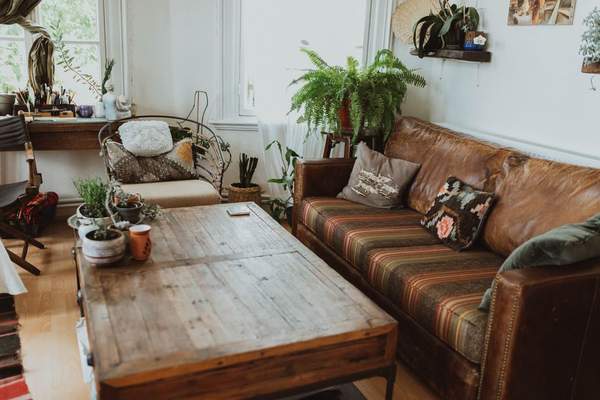
What is bohemian style interior design?
Bohemian style interior design combines collected furniture, layered textiles, personal objects, and natural materials without demanding matching sets. Start with a consistent wall color, repeat two or three patterns across cushions and rugs, and leave clear walking routes. The result should feel lived-in and expressive, not crowded or difficult to maintain.
A convincing bohemian room looks accumulated over time, yet its layout is deliberate. You can build that character with secondhand finds and practical proportions rather than buying an entire coordinated collection.
Definition: Bohemian design is an approach to decorating that mixes eras, handmade textures, patterned fabrics, and meaningful possessions in a usable space. It values individuality over symmetry or a showroom-perfect set.
What makes bohemian interiors different from boho chic?
Traditional bohemian interiors look collected, with pieces from several periods and visible signs of use. Boho chic is a more edited interpretation that usually repeats fewer materials and motifs. Neither requires expensive vintage furniture.
| Room detail | Collected bohemian room | Edited boho chic room |
|---|---|---|
| Furniture | Mixed secondhand shapes and ages | Fewer silhouettes with repeated finishes |
| Textiles | Several patterns linked by recurring colors | One dominant motif with quieter fabrics |
| Display | Books, travel finds, pottery, and family pieces | Smaller groups with more empty shelf space |
| Maintenance | More objects to dust and rearrange | Faster surfaces to clean and reset |
The difference becomes obvious on a bookshelf. A collected scheme can hold inherited ceramics beside paperbacks and a woven basket; an edited one might repeat the same vessel shape. Choose the degree of activity you enjoy living with, not what looks best in a photograph.
For a wider overview of style interior design, consider how furniture, lighting, and surfaces work together. If you favor breathing room, boho chic interior design style offers an adjacent direction.
Which colors and patterns suit bohemian rooms?
Choose a three-part palette before collecting fabrics, then vary pattern scale instead of adding unrelated shades. These proportions describe overall visible color area, including walls, upholstery, and accents; they guide planning rather than dictate paint quantities.
For approximately 60 percent of visible surfaces, begin with Benjamin Moore Pale Oak, represented here by #D8CFC4. Its restrained background helps artwork, wood grain, and printed textiles read clearly.
#D8CFC4 · Benjamin Moore Pale Oak
South-facing light brings out slight pink warmth; north-facing light makes it grayer. Aim for about 60 percent of the visible room, mainly the broad wall areas.
Assign roughly 25 percent to Sherwin-Williams Cavern Clay, shown as #AC6B53, through an accent wall or closely matched textiles. This gives the room a repeatable anchor instead of competing hues.
#AC6B53 · Sherwin-Williams Cavern Clay
North-facing light can flatten its warmth, while south-facing light makes it stronger and more orange. Keep this accent near 25 percent of visible color.
Reserve the remaining 15 percent for Sherwin-Williams Sea Salt, approximated by #CDD2CA, in smaller paintable furniture or removable accents. This third note gives printed fabrics another repeatable reference.
#CDD2CA · Sherwin-Williams Sea Salt
North-facing rooms may make it cooler and grayer; southern exposure can make it appear greener. Limit it to about 15 percent of visible surfaces.
Digital hex values are approximations, not guaranteed matches to dried paint. View manufacturer samples beside your actual flooring in morning and afternoon light before committing.
Give every pattern a job
| Pattern placement | Useful scale | How to keep it readable |
|---|---|---|
| Area rug | Large repeating motif | Establish the dominant pattern |
| Two throw pillows | Medium geometric repeat | Echo a color already in the rug |
| One lumbar cushion | Small stripe or stitched detail | Break up larger shapes |
| Window covering | Subtle weave | Preserve daylight and avoid a busy edge |
Move a fabric sample beside the rug before buying. If motifs become indistinguishable from 6 feet away, remove one and restore a calmer surface. Bohemian home decor works best when not every object demands attention.
What natural materials work well in bohemian decor?
Rattan, wood, cotton, linen, wool, and woven plant fibers add tactile variation without more wall decoration. Choose them according to cleaning demands and wear, especially if children or pets use the room.
| Material and use | Practical advantage | Trade-off at home |
|---|---|---|
| Solid wood side table | Stable surface for lamps and drinks | Needs protection from standing water |
| Rattan accent chair | Open weave keeps its outline light | Catches dust and can snag fabrics |
| Washable cotton throw | Easy to rotate and launder | May shrink without correct care |
| Wool area rug | Dense texture under furniture | Often needs careful spot cleaning |
| Woven storage basket | Conceals everyday items without a cabinet | Rough edges can snag clothing |
For boho decor, touch a basket’s interior before using it for blankets. Add a removable liner if fibers are abrasive, and keep heavy baskets on low shelves. A woven pendant may look appealing, but electrical wiring or fixture relocation belongs to a qualified electrician.
Materials carry more character when they have distinct jobs. Let a wood table handle drinks, a washable throw soften seating, and one basket gather remotes. Repeating their shapes is enough; matching every surface is unnecessary.
How do you layer collections without making the room feel chaotic?
Start with the largest furnishings and a single rug, then add objects in controlled groups. Keep circulation open and leave shelves intentionally unfilled; empty space is part of the composition.
Build around the furniture footprint
In a 12 x 15 ft living room, position the sofa before deciding where baskets, stools, and floor cushions belong. An 8 x 10 ft rug can catch the sofa’s front legs while defining seating; don’t let poufs consume the doorway path.
- Sofa to coffee table 16 to 18 in
- Main walking path 36 in clear
- Rug beneath sofa front legs 8 x 10 ft for a 12 x 15 ft living room
- Center of a framed artwork grouping 57 in above the floor
- Small-object group spacing on shelves 4 to 6 in between groups
Display objects in layers, not piles
- Choose one focal point: a textile, artwork, or rug, rather than three dominant statements on one wall.
- Group keepsakes: collect related objects on a tray or shelf so they are easier to dust.
- Vary heights: pair a taller vase with a low bowl and framed photograph.
- Protect usable surfaces: reserve coffee-table space for drinks, books, and remotes.
- Edit monthly: remove two items if a new object makes a shelf cramped.
These rules are helpful when exploring bohemian interior design style in an apartment. Freestanding shelves, washable covers, and movable lamps deliver character without permanent alterations. Use properly rated furniture and wall fixings only where permitted by the property owner.
When does a layered bohemian room stop working?
It fails when styling blocks ordinary life. A 90-square-foot room cannot comfortably hold a full-size sofa, several oversized floor pillows, a wide coffee table, and an extra lounge chair just because a photograph shows them together. The camera may hide the blocked doorway, tangled cords, and dusty corners. Floor cushions can also be uncomfortable for guests who need supportive seating.
Low or north-facing light makes dense hanging textiles and crowded tall shelving feel heavier. Don’t cover a useful window with layered fabric solely for a photograph. In a rental, drilling into walls, repainting without permission, or hanging heavy objects from unapproved fixings can create real costs. Use removable accessories and seek written permission for alterations instead.
Homes with young children or pets need further restraint: unstable displays, trailing plant stands, and tiny breakable objects on low tables are bad choices. So are scratchy baskets stored where children reach constantly. Bohemian interiors are not improved by every surface being decorated. If you cannot clean, walk through, or sit down easily, the room needs fewer things, not another layer.
Frequently asked questions
Can a bohemian room work with an existing modern sofa?
Yes. Keep the sofa and introduce texture through one substantial rug, washable throws, and artwork. Let the sofa remain the quiet foundation rather than disguising it.
How many patterns should a small living room have?
Begin with three pattern scales: one large rug motif, one medium textile print, and one small accent. Remove one if the room feels noisy from the entrance.
Do all bohemian pieces need to be vintage?
No. Mix an existing mass-market sofa, a secondhand table, and one handmade textile. Personal meaning, durability, and proportion matter more than age.
How can renters create this look without changing walls?
Use a freestanding bookshelf, baskets, a movable lamp, a rug, and pillow covers. Get permission before painting, drilling, or changing an electrical fixture.
What is the easiest place to start on a limited budget?
Work with your current furniture and choose one correctly sized rug or textile first. Rearrange books and art before buying decorative objects that need storage and cleaning.
A bohemian room earns its character through repetition, function, and pieces worth keeping. Choose one reliable palette, size the seating area first, and leave space for the collection to grow naturally.