
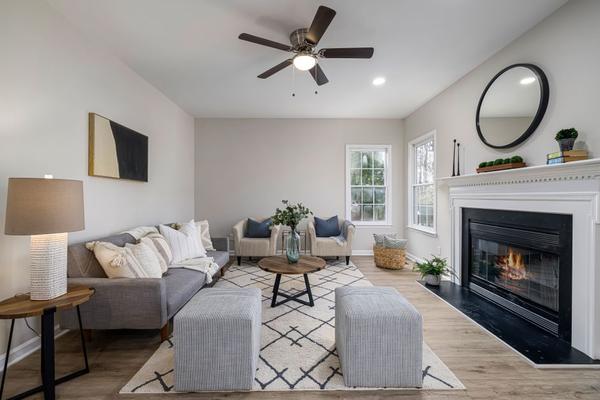
How do you choose houston home staging companies?
Choose houston home staging companies by matching the service to your property type, confirming what furniture and labor are included, and getting the full term, renewal, and removal costs in writing. Occupied homes usually need editing and layout help; vacant homes need stronger scrutiny of inventory, installation scope, and rental period.
A lived-in family house, an empty townhome, and a luxury vacant property create different work, furniture needs, and budgets.
How much do home staging companies in Houston charge?
Houston pricing depends on whether the home is occupied or vacant, how many rooms are included, the furniture level, labor, and the rental term. Current local examples range from consultations starting around $275 and occupied staging around $350 to vacant packages starting around $2,000 for 60 days, while some higher-end vacant services start above $4,000.
The National Association of REALTORS reported a $1,500 median cost for a staging service in its 2025 Profile of Home Staging. Treat that as national context, not a Houston quote: a vacant 2,200-square-foot house with living, dining, primary bedroom, office, art, lamps, delivery, setup, and removal can cost much more than a consultation in a furnished home.
Ask for the amount due at installation, days included, renewal rate, and pickup or rescheduling fees. If you are comparing home staging companies houston search results, ignore any headline price that does not explain what it includes.
What services do Houston home stagers usually include?
Most services fall into two tracks: occupied staging, which works with much of what you already own, and vacant staging, which brings in furniture, rugs, art, lighting, and accessories. Some firms also offer consultation-only plans, partial-room staging, or photo-prep visits.
| Service detail | Occupied home staging | Vacant home staging |
|---|---|---|
| Furniture | Uses the seller’s strongest pieces and removes excess | Brings rental furniture sized to the rooms |
| Best fit | Homes still lived in during the listing | Empty houses, condos, townhomes, and new construction |
| Labor | Editing, rearranging, styling, and limited accessories | Delivery, installation, styling, inventory handling, and pickup |
| Cost driver | Consultation time and supplemental pieces | Room count, furniture tier, movers, and rental term |
| Seller prep | Decluttering, packing, cleaning, and storing excess items | A clean, ready property with delivery access |
If repainting is genuinely needed before photos, Sherwin-Williams Alabaster SW 7008 at #EDEAE0 is a practical ceiling-and-trim choice because it stays bright without looking stark. Check a real sample before committing.
#EDEAE0 · Sherwin-Williams Alabaster SW 7008
South-facing light makes it warmer and creamier; north-facing light makes it cleaner and slightly grayer. Use it on ceilings and trim, roughly 20 percent of the visible room surfaces.
For walls that need repainting, Sherwin-Williams Agreeable Gray SW 7029 at #D1CBC1 can work when the fixed finishes suit its beige undertone. Do not repaint a sale-ready house merely because a stager prefers a different color.
#D1CBC1 · Sherwin-Williams Agreeable Gray SW 7029
South-facing light makes it warmer and more beige; north-facing light pulls it cooler and grayer. Use it on the main walls for about 60 to 70 percent of the room, with the remainder in trim, ceiling, flooring, furniture, and accents.
Furniture scale matters more than decorative quantity. A staged room should show where people sit, walk, open doors, and move through the space without oversized pieces blocking circulation.
- Sofa to coffee table 16 to 18 in
- Main living-room walkway 36 in minimum
- Walkway behind a sofa 30 in minimum
- Dining chair pull-back space 36 in from table edge
- Rug in a 12 x 15 ft living room 8 x 10 ft
- Art center height 57 in from the floor
Which staging approach fits different Houston property types?
The best choice is the lightest service that makes the property’s scale and function obvious in person and in listing photos. Use this checklist before asking houston home staging companies for quotes.
- Occupied family house: Choose consultation plus hands-on editing when the furniture is usable but rooms feel crowded or inconsistent.
- Vacant single-family home: Prioritize the living room, primary bedroom, dining area, and kitchen-adjacent spaces so buyers can read scale quickly.
- Condo or townhome: Use smaller furniture and clear circulation paths so the stage proves that compact rooms function well.
- Luxury property: Choose a company with enough inventory depth to match ceiling height, room volume, and architectural quality.
- Investor renovation or flip: Stage the rooms that explain the floor plan first, then add secondary spaces only when they solve a buyer question.
The same logic helps if you review austin home staging companies or dallas home staging companies. Inventory and delivery radius change by market, but every proposal should show scope, term, labor, and pickup clearly.
How should you compare home staging companies in Houston?
Compare the written scope before comparing the headline price. Two quotes that both say vacant staging may include different room counts, rental periods, furniture grades, delivery fees, accessories, art, and extension charges.
- Room scope: Confirm every included and excluded room.
- Initial term: Check whether the price covers 30, 45, 60, or 90 days.
- Renewals: Get the weekly or monthly extension amount in writing.
- Install quality: Review real rooms for furniture scaled to the architecture, not only close-up accessory photos.
- Damage terms: Clarify responsibility for furniture, floors, walls, and access.
- Separate trades: Painting, electrical, plumbing, mounting, and repair work may need qualified professionals outside the staging contract.
A search for local home staging companies is useful for building a shortlist, but your final decision should rest on the contract and the property’s needs. Use the home staging companies guide as the wider baseline before choosing a firm.
How long does staging usually take in Houston?
A consultation commonly takes about one to two hours, while an occupied styling visit or vacant installation may take part of a day or a full working day once the home is ready. Lead time can add several days or longer because furniture, movers, cleaning, painting, photography, and access all have to line up.
Set the photography appointment only after installation timing is confirmed. If a vacant package has a fixed 60-day term, also ask exactly when that clock starts.
What should you ask before hiring a Houston home stager?
Ask questions that expose the full cost, actual work, and handoff between you, the stager, your agent, and any trades. This prevents missing labor, rooms, or rental days from appearing after you sign.
- Which rooms are included and excluded?
- Are delivery, installation, pickup, and furniture rental included?
- How many days are included before renewal fees begin?
- What happens if the home sells quickly or stays listed longer?
- Will you work with my furniture or replace it?
- Who handles cleaning, painting, wall repair, mounting, and other prep?
- What proof of insurance can you provide?
For homes with pets, young children, or daily occupancy, ask how fragile accessories, floor lamps, cords, rugs, and borrowed furniture will be handled. A stage that cannot survive normal listing-period life is not practical.
When does professional staging not make financial sense?
Professional staging does not automatically make sense for every Houston listing. If the home is already clean, lightly furnished, well proportioned, and easy to understand in photos, a consultation and disciplined editing may be enough. Paying thousands for rental furniture can also be hard to justify on a low-margin sale, a renovation-target property, or a listing where the seller expects to move everything again within days.
Some choices work only in a photograph. A tiny chair squeezed into a corner, a coffee table pushed too close to a sofa, or accessories on every surface can create a polished wide-angle image while making the room worse to use. Vacant luxury staging can also fail when undersized furniture makes large rooms look cheaper rather than clearer. On a tight budget, spend first on cleaning, obvious repairs, decluttering, good lighting, and circulation. If the house has electrical, plumbing, structural, moisture, or safety problems, staging is not the fix; use the appropriate qualified trade before cosmetic presentation.
Frequently asked questions
Do stagers use the seller’s existing furniture?
Yes. Occupied-home services often begin with the seller’s furniture and then remove, rearrange, or supplement pieces where needed. Ask whether rented pieces are included or billed separately.
Is virtual staging enough for an empty Houston home?
Virtual staging can improve listing images, but it does not help buyers judge furniture scale during an in-person showing. If the layout is confusing, physical staging can answer questions edited photos cannot.
Can I stage only the main rooms?
Yes. If the budget is limited, focus first on the living room, primary bedroom, dining area, and spaces that explain the floor plan.
Who usually pays for home staging?
The arrangement varies. The seller may pay directly, the agent may contribute, or a company may offer a pay-at-close structure, so confirm responsibility and payment timing in writing.
Should I repaint before the stager arrives?
Only if the current paint is damaged, strongly personalized, or clearly hurting the photos and buyer perception. Identify the exact rooms first, then sample the proposed color in daylight and evening light.
The right Houston staging plan is not the one with the most furniture; it is the one that makes the property’s size, circulation, and purpose obvious without creating surprise costs. Compare scope, term, fit, and real room function first, then choose among houston home staging companies on the complete proposal rather than the lowest starting price.
1 thought on “Houston Home Staging Companies for Different Property Types”