
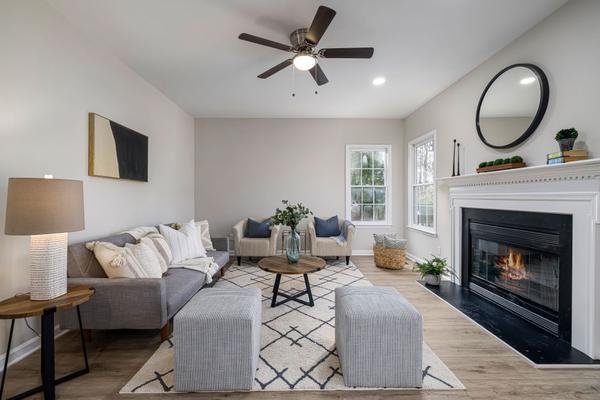
Which home staging companies atlanta should you compare?
Compare home staging companies atlanta by the same project scope: occupied or vacant staging, rooms included, furniture rental period, delivery and pickup, styling labor, and photo-ready deadline. The best fit is the company that gives a clear written scope, realistic timeline, and total cost you can compare line by line.
Atlanta sellers can get very different quotes for what sounds like the same job, so define the scope before comparing prices. Start with the main home staging companies guide, then use the checklist below to compare firms on the same rooms, same rental period, and same deadline.
How much do home staging companies in Atlanta charge?
There is no single Atlanta rate because an occupied consultation and a full vacant-home installation are different jobs. For planning, consult-only work is often in the hundreds, while full vacant staging can reach several thousand dollars once furniture rental, delivery, installation, styling, pickup, and the rental term are included.
Ask every company to separate one-time charges from recurring rental charges. A low installation fee can become expensive once renewal, delivery, pickup, and accessory fees are added.
- Consultation: confirm whether it includes a written room-by-room action list.
- Installation: check whether labor, delivery, styling, and pickup are bundled.
- Rental term: ask how many days are included before renewal begins.
- Room count: compare the same priority spaces in every quote.
- Extras: clarify charges for art, lamps, linens, rush scheduling, or return visits.
For home staging companies in atlanta ga, the useful number is the total cost for your actual selling window, not the smallest advertised starting price. Put each quote into the same 30-day or agreed rental period before deciding.
What services do Atlanta home stagers usually include?
Most staging projects fall into two broad service models: working with the furniture already in an occupied home or furnishing key rooms in a vacant property. Some firms do both, but the labor, inventory, disruption, and cost structure are different enough that you should compare them separately.
| Project situation | Occupied-home staging | Vacant-home staging |
|---|---|---|
| Furniture source | Primarily the seller’s existing pieces, edited and repositioned | Rental furniture, rugs, lighting, art, and accessories brought in |
| Typical preparation | Decluttering, furniture edits, room-purpose clarification, and styling | Space planning, inventory selection, delivery, installation, and styling |
| Disruption level | Lower, but the household must maintain the staged setup | Higher on install and pickup days, then minimal while the home is vacant |
| Cost structure | Consultation or styling labor, sometimes with limited accessory rental | Design and install fees plus furniture rental and possible renewal charges |
| Best fit | Homes with usable furniture and sellers still living there | Empty homes that need scale, function, and visual context for listing photos |
A good stager should correct layout problems before adding décor, preserving real circulation and furniture scale instead of arranging only for one camera angle.
- Sofa to coffee table 16 to 18 in
- Walkway behind a sofa 30 in minimum
- Rug under the front legs 8 x 10 ft in a 12 x 15 ft room
- Art center height 57 in from the floor
If a high-visibility room needs repainting before photos, Benjamin Moore Pale Oak #D8CFC4 is a practical color to test because it can sit quietly behind wood, metal, upholstery, and many common stone finishes. Do not approve it from a phone image; sample it on the actual wall and check it morning and afternoon.
#D8CFC4 · Benjamin Moore Pale Oak
Reads warmer and slightly pinker in south-facing light, while north-facing light can pull it noticeably grayer. Use it on walls and ceiling at roughly 60 percent of the visible room, with furnishings, flooring, and accents making up the rest.
How should you compare home staging companies in Atlanta?
Compare companies in a fixed order so every quote is judged against the same brief. For home staging companies atlanta, the strongest proposal is not automatically the cheapest; it is the one that shows exactly what will be staged, for how long, with what inventory, and by what date.
- Match the service model: keep occupied-staging quotes separate from vacant-staging quotes so you are not comparing unlike jobs.
- Fix the room list: require every bidder to price the same priority rooms and identify anything intentionally left unstaged.
- Normalize the rental period: compare the same number of days and the same renewal rules across all proposals.
- Check the install calendar: favor a company that can commit to the photography and listing schedule in writing.
- Review inventory fit: look for furniture scaled to the actual room rather than oversized pieces chosen only because they photograph dramatically.
- Read the exit terms: know who schedules pickup, how much notice is required, and what happens if the sale takes longer than planned.
Shortlist at least three local home staging companies if your schedule allows, and give each the same room list and target photography date. If the property is farther east of the city, it can also make sense to compare home staging companies stonecrest ga when their service area and travel fees are practical.
How long does staging usually take in Atlanta?
The hands-on work is usually faster than the booking process. An occupied consultation may be completed in one visit, while a vacant installation can often be staged in a day once the design, inventory, access, and delivery slot are confirmed; scheduling lead time may be longer during busy listing periods.
Build the schedule backward from photography. Confirm access, condo elevator reservations, loading constraints, the photographer’s date, and the earliest pickup date before booking.
Do not stack repairs, cleaning, moving, delivery, staging, and photography into one afternoon. Finish messy work first, then clean, stage, and photograph.
What should you ask before hiring an Atlanta home stager?
Ask questions that expose the full scope, not just style preference. A professional proposal should make it easy to see what you are paying for, who is responsible for access and prep, and what happens if the listing date or sale timeline changes.
- Which exact rooms are included, and which are not?
- How many rental days are included before renewal begins?
- Are delivery, installation, styling, pickup, and taxes included in the quoted total?
- Who moves or removes the seller’s existing furniture?
- What must be completed before the crew arrives?
- Can the install date be tied to the confirmed photography date?
- What happens if a piece of rental inventory is damaged?
- How much notice is required for pickup or extension?
Ask to see recent work in homes of a similar size and price position, not only dramatic portfolio images. A polished company can still be the wrong fit if it cannot meet your access, budget, or listing calendar.
When does professional staging not make sense on a tight budget or in a busy home?
Professional staging is not automatically the right spend for every property. If the home is already clean, lightly furnished, well proportioned, and photographed well, paying for a full furniture replacement may produce less benefit than fixing deferred maintenance, cleaning windows, improving lighting, or hiring a stronger real-estate photographer. In an occupied home with pets or young children, a delicate, accessory-heavy setup can also become a daily burden; a room that looks perfect for one photograph is not useful if the seller has to rebuild it before every showing.
Be cautious with oversized art, tiny accent chairs, trays placed on every surface, or furniture arranged so tightly that real walkways disappear. Those ideas can work in a single camera angle and fail immediately in person. If the budget is tight, ask for a consultation, keep the best existing furniture, remove obvious clutter, correct circulation, and stage the rooms that matter most for the listing rather than paying to decorate every corner.
Frequently asked questions
Do I need to stage every bedroom before listing?
No. Prioritize the rooms that establish value and scale, such as the main living area, kitchen or dining zone, primary bedroom, and entry. Secondary bedrooms can often be simplified rather than fully furnished if their purpose and size are already clear.
Can a condo be staged differently from a detached house?
Yes. Condo staging needs more attention to elevator booking, loading access, narrower circulation, and furniture depth. Measure doorways, elevator dimensions, and tight turns before rental pieces are scheduled for delivery.
Should family photos and personal collections come down?
Usually, reduce them rather than stripping the home of all personality. Keep surfaces visually calm, remove highly personal or distracting groupings, and leave enough character that the space still feels like a real home rather than an empty display.
Do staging companies usually coordinate listing photography?
Some do, while others stage only and hand the property back to the seller or agent. Confirm whether photography is included, referred out, or completely separate, and make sure the staging installation is finished before the photographer arrives.
Is repainting worth doing before staging?
It can be if a high-visibility room has damaged walls, patchy touch-ups, or a color that fights the fixed finishes. Test any new paint in the actual light first, because north-facing and south-facing rooms can shift the same color enough to change the final result.
The best staging decision is the one that fits the property, selling calendar, and budget without hiding costs behind a vague package name. Compare the same rooms, same rental term, and same deadline, then choose the company whose written scope is easiest to understand and maintain through the listing period.