
What are some practical light dessert ideas?
Good light dessert ideas include fruit-forward parfaits, small yogurt cups, mini cheesecakes, sorbet, baked fruit, mousse, and bite-size tarts. Keep servings modest, use individual cups or small plates, and choose desserts that can be prepared ahead when entertaining so the final course feels deliberate without becoming another heavy meal.
A lighter dessert does not have to look sparse or feel like an afterthought. The best choices use controlled portions, fresh ingredients, and a serving format that gives guests a satisfying finish without requiring a large slice of cake or an oversized bowl.
These easy light dessert ideas also work naturally alongside broader light ideas when you are planning a meal from the first course through dessert.
10 light dessert ideas that are easy to serve
- Berry and yogurt parfaits: Layer Greek yogurt with strawberries, blueberries, or raspberries in 4-oz glasses. A spoonful of granola or chopped nuts on top adds texture without turning the serving into a large breakfast-style bowl.
- Lemon mousse cups: Serve lemon mousse in small individual dishes rather than one large bowl. A 3- to 4-oz portion is enough to give each guest a creamy dessert while keeping the presentation neat and controlled.
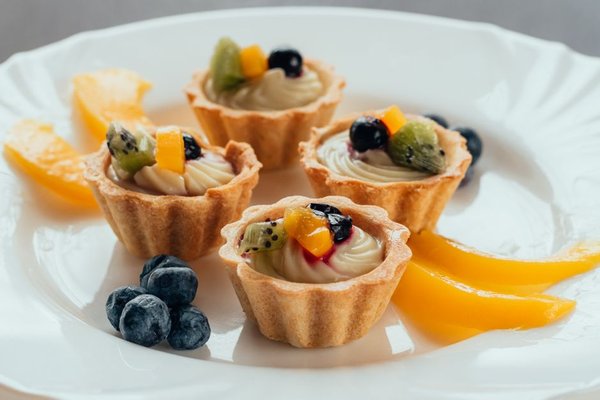
- Mini fruit tarts: Use tart shells about 2 1/2 to 3 inches across and fill them shortly before serving. A thin layer of pastry cream with sliced berries or stone fruit gives each tart enough richness without requiring a full-size pastry portion.
- Poached pears: A halved pear makes a simple plated dessert that can be prepared in advance and chilled. Serve it with a small spoonful of yogurt, mascarpone, or lightly whipped cream rather than covering the fruit with a heavy sauce.
- Individual panna cotta: Pour panna cotta into 4-oz ramekins or glasses so portion size is established before guests sit down. Add a small amount of fruit puree or fresh fruit immediately before serving.
- Sorbet with fresh fruit: One small scoop of sorbet served with sliced fruit works especially well after a filling dinner. Use a shallow dessert bowl so the portion looks complete instead of lost inside an oversized dish.
- Baked peaches or plums: Halved fruit can be baked until tender and served individually. Add a spoonful of yogurt and a small sprinkle of chopped nuts for texture while keeping the fruit as the main part of the dessert.
- Mini cheesecake cups: Make cheesecake filling in small jars or dessert glasses rather than cutting large wedges from a full cake. Keep the base thin, use a 3- to 4-oz serving, and finish each cup with a small spoonful of fruit.
- Chocolate-dipped strawberries: Serve two or three strawberries per person on a small plate. The chocolate provides enough richness to make the dessert feel finished while the individual pieces make portioning straightforward.
- Fruit and ricotta cups: Spoon lightly sweetened ricotta into small glasses and top it with sliced peaches, berries, or another seasonal fruit. This format also fits naturally with light food ideas for casual lunches, showers, and afternoon gatherings.
Which light desserts can be made ahead?
Parfaits, panna cotta, mousse cups, poached fruit, cheesecake cups, and many baked-fruit desserts can all be prepared partly or completely before guests arrive. The most useful approach is to finish anything crisp, delicate, or moisture-sensitive shortly before serving.
Panna cotta and cheesecake cups are particularly convenient because they can be portioned in their serving containers. That removes cutting and plating from the final minutes of a dinner.
For parfaits, prepare the yogurt or cream component and fruit separately, then assemble the glasses several hours before serving. Keep granola, crushed cookies, nuts, or other crisp toppings separate until the last moment so they do not soften in the refrigerator.
Poached pears are another practical make-ahead choice. Chill the fruit in its cooking liquid, then drain and plate it before dessert. Baked peaches and plums can also be cooked earlier and served chilled or brought closer to room temperature before the meal ends.
Fruit tarts need a little more timing. The shells can be baked ahead, but adding wet fillings too early can soften the pastry. Fill them closer to serving time if maintaining a crisp shell matters to you.
What light desserts work well after a rich meal?
After a rich main course, keep dessert portions small and make fruit, yogurt, citrus, or sorbet the main element rather than adding another large serving of pastry or dense cake. A dessert can still taste complete when it is only a few ounces if the portion is plated intentionally.
Sorbet is one of the simplest options because a single scoop can be served without additional preparation. Add fresh berries or sliced fruit if you want the plate to look more substantial.
Poached pears and baked stone fruit also work well because guests receive a recognizable individual portion rather than a large mixed dessert. A spoonful of yogurt or whipped cream provides richness without overwhelming the fruit.
Lemon mousse can work after a substantial meal when served in a small cup rather than a full bowl. The same idea applies to panna cotta and cheesecake: reducing the vessel size lets you serve a familiar dessert without making the final course disproportionately large.
If the rest of the menu already follows light refreshment ideas, a fruit-forward dessert keeps the meal consistent instead of ending it with a dramatically heavier course.
Which desserts use fruit without feeling plain?
Fruit feels more complete as dessert when you add one contrasting texture or one creamy component rather than piling on several toppings. A small amount of yogurt, ricotta, mousse, chopped nuts, pastry, or chocolate is often enough to turn simple fruit into a composed final course.
For strawberries, try serving two or three dipped partly in chocolate rather than presenting a plain bowl of fruit. Peaches and plums become more dessert-like when baked and paired with a spoonful of ricotta or yogurt.
Berries work well in individual parfaits because the layers make a simple combination look intentional. Keep each layer shallow so the glass still holds a sensible serving rather than becoming a large sundae-style dessert.
Pears are particularly useful for plated desserts because half a pear already gives you a natural individual portion. Add a spoonful of cream, yogurt, or mascarpone beside it rather than covering the whole plate with sauce.
A fruit tart is another option when you want the finished dessert to have more structure. Keep the pastry shell small and the filling thin enough that the fruit remains the largest visual and edible component.
How can you serve small desserts so the portions look intentional?
Use serving pieces that are close to the actual portion size. A 4-oz glass filled neatly looks generous, while the same amount of dessert at the bottom of a large bowl can appear unfinished.
Repeat the same vessel, portion, and garnish for every guest whenever possible. Consistency makes small desserts look planned rather than reduced.
- Parfait or mousse glass 4 oz
- Mini tart diameter 2 1/2 to 3 in
- Individual dessert plate 7 to 8 in
- Sorbet portion 2 to 3 oz
- Space between mini desserts on a platter 1 1/2 in
For a buffet or dessert table, leave about 1 1/2 inches between individual pieces so guests can pick them up without touching neighboring servings. A 7- to 8-inch plate is usually enough for a single tart, baked fruit half, or two to three chocolate-dipped strawberries.
Use garnishes with restraint. One small spoonful of fruit, a few chopped nuts, or a single crisp element can make a portion look finished. Filling empty plate space with unrelated decorations usually makes a simple dessert more complicated without improving the serving.
When do small light desserts not work well?
Small desserts are not automatically the right choice for every gathering. If dessert is the main event at a birthday, holiday dinner, or celebration where guests are expecting cake, pie, or another traditional centerpiece, a 3-oz mousse cup can feel noticeably undersized even when it is well presented.
Some ideas also work better in photographs than in a busy home. Tiny layered glasses look polished, but preparing 20 individual parfaits creates more refrigerator space, glassware, washing, and last-minute handling than serving one larger dessert. Mini fruit tarts are similar: they photograph beautifully, but filling many small shells individually can be tedious.
Outdoor events create another problem. Mousse, panna cotta, yogurt desserts, cheesecake cups, and whipped toppings need appropriate refrigeration, so they are poor choices when chilled storage cannot be maintained. For young children, fragile glasses and elaborate individual plating are usually unnecessary. In those situations, baked fruit, fruit skewers, simple cookies with fruit, or another easy-to-handle option is often more practical.
The key is to match the dessert format to the event rather than assuming smaller always means easier. For informal meals, light refreshment ideas that use familiar ingredients and straightforward serving pieces are usually more useful than elaborate miniatures.
Frequently asked questions
How many dessert choices should I serve at a dinner party?
One well-chosen dessert is enough for a seated dinner, particularly when it is portioned individually. For a casual buffet, two different options can give guests some choice without creating unnecessary preparation and leftovers.
How far in advance can individual desserts be assembled?
Chilled mousse, panna cotta, and cheesecake cups can often be assembled earlier in the day, while crisp toppings are best added shortly before serving. Keep perishable desserts refrigerated until they are ready to go to the table.
What size glass works best for a small dessert?
A 4-oz glass is a practical size for mousse, parfaits, panna cotta, and cheesecake-style desserts. It gives enough room for visible layers while naturally controlling the serving size.
Can I serve light desserts buffet-style?
Yes. Use individual cups, mini tarts, dipped fruit, or other portions that guests can take without cutting or scooping from a shared dish. Leave enough space between items for easy pickup and keep chilled desserts refrigerated until close to serving time.
What can I use instead of whipped cream on fruit desserts?
Greek yogurt, lightly sweetened ricotta, mascarpone in a small portion, or a spoonful of fruit puree can all provide a finished presentation. Choose one accompaniment rather than several so the fruit remains the main part of the dessert.
The most useful light dessert ideas are not simply smaller versions of heavy desserts. Start with a sensible individual portion, give it one or two complementary elements, and choose a serving format that you can prepare and store comfortably before guests arrive.