
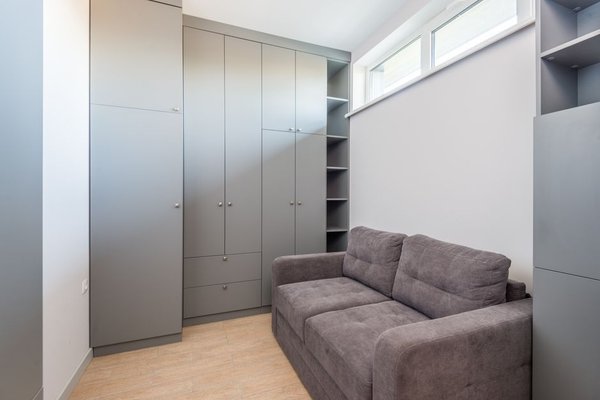
What should a diy home decor how to save space plan include?
A practical diy home decor how to save space plan uses walls for storage, keeps walkways clear, and chooses projects that project only a few inches into the room. Start with wall-mounted shelves, a shallow fold-down surface, vertical hooks, and one consistent high-light-reflectance paint so the room feels organized rather than packed.
Small rooms usually do not need more decorative objects; they need each object to earn its footprint. The best projects combine storage, display, and everyday function while protecting the open area you already have.
Which DIY decor projects save the most floor space?
The strongest floor-saving projects move useful functions onto walls or into furniture you already need. A slim picture ledge, wall-mounted nightstand, fold-down desk, peg rail, or narrow over-door organizer can add function without placing another cabinet or table on the floor.
Decide what currently causes the squeeze: a side table blocking a path, a desk left open all day, or small objects spread across several surfaces. That keeps diy home decor focused on solving a real space problem.
Build the space-saving projects in this order
- Map the open floor first: Mark the walking route with painter’s tape and protect that path before choosing any project.
- Move small storage upward: Add a shallow ledge, peg rail, or wall pocket for items that currently occupy a tabletop.
- Replace one bulky surface: Swap a deep bedside table or occasional desk for a wall-mounted or fold-down version sized to the task.
- Use the back of a door: Add a lightweight organizer for accessories, cleaning supplies, craft tools, or small linens if the door can still open fully.
- Keep the lower wall visually quiet: Avoid filling every available inch with baskets or hooks; open wall area makes the storage you do add easier to use.
- Recheck the room in motion: Walk through the space with doors, drawers, and the fold-down surface open before calling the layout finished.
For easy diy home decor, the best first project is usually the one that removes an existing piece of floor furniture. A 4-inch-deep picture ledge replacing a 14-inch-deep display table creates more usable floor area than adding several tiny organizers while keeping the table.
How can wall-mounted decor add storage without crowding a room?
Wall-mounted decor works when it stays shallow, serves a defined category of objects, and leaves clear wall around it. One long ledge is usually easier to live with than many small shelves scattered across the same wall because it gives the eye fewer edges to process.
Use wall storage for things you actually reach for: books beside a reading chair, keys near the entry, bedside essentials next to the bed, or craft tools above a work surface. If you are planning diy home decor for apartments, use only mounting methods permitted by the lease and skip any project that requires permanent alteration when the landlord has not approved it.
- Picture ledges: Keep display pieces in a single shallow line rather than on a floor cabinet.
- Peg rails: Reserve them for lightweight items with a regular purpose, not as a place to hang everything in the room.
- Wall pockets: Use them for mail, notebooks, or small accessories that otherwise spread across a counter.
- Fold-down surfaces: Choose these where the work surface can be closed completely after use.
- Mounted bedside shelves: Keep them narrow enough that they do not interfere with getting in and out of bed.
Secure load-bearing shelves to framing or use hardware rated for the wall and expected load. If the work involves electrical wiring, plumbing, or structural changes, use a qualified trade rather than improvising.
This is also where diy home decor how to save money can be practical: remove one redundant furniture piece before buying organizers. Reusing a sound board as a shallow shelf or converting an existing small tabletop into a permitted fold-down surface can cost less than purchasing another storage unit, provided the hardware and wall are suitable for the load.
What dimensions matter when planning small-space DIY decor?
Depth and clearance matter more than the number of pieces you install. A project can look compact in a photo but still create a bottleneck if it projects into the walking route, collides with a door, or sits at the wrong height for daily use.
- Main walking path 30 in minimum
- Picture ledge depth 4 to 6 in
- Wall-mounted nightstand depth 10 to 12 in
- Fold-down desk depth when open 18 to 24 in
- Peg rail mounting height 60 to 66 in from the floor
Measure with doors and drawers open. A 24-inch-deep fold-down desk may fit on paper, but it is a poor choice if opening it reduces the only passage below 30 inches. Beside a bed, a mounted shelf works only if knees, bedding, and the frame clear it comfortably.
Use painter’s tape to mark a project’s exact width and depth on the wall and floor. Leave it for a day and move through the room normally; this mock-up catches problems that product photos hide.
For affordable diy home decor, accurate measuring is one of the cheapest improvements you can make. It prevents buying boards that are too deep, brackets that force the shelf farther into the room, or a fold-down surface that cannot open where you planned it.
Which colors help a compact room feel more open?
Colors with higher light reflectance and low contrast between large surfaces can make boundaries feel less visually busy. One concrete starting point is Benjamin Moore Pale Oak OC-20, matched here to #D8CFC4, especially when you want one continuous wall-and-ceiling field instead of several competing finishes.
#D8CFC4 · Benjamin Moore Pale Oak
Reads warm and very slightly pink in south-facing light. In a north-facing room it drops noticeably grayer. Use it on walls and ceiling, roughly 60 percent of the room.
Keep the rest of the palette disciplined rather than adding several paint changes to create interest. Let roughly 30 percent of the room come from existing fixed finishes and larger furniture surfaces, then reserve about 10 percent for reflective or transparent materials such as a mirror, clear glass, or simple metal hardware. In a north-facing room, test the paint on two walls before committing because the cooler daylight can make the sample read grayer; south-facing light will make the same sample read warmer.
Color cannot compensate for cluttered circulation or oversized furniture, so handle layout first. The paint decision works best after the room has a clear path, shallow storage, and fewer competing objects at eye level.
When does space-saving DIY decor not work in a small room?
Some ideas only work in a photograph. A floating shelf packed directly above a bed may look efficient, but it can feel heavy over the sleeping area and is a poor place for hard objects that could fall. A fold-down desk is not space-saving if it blocks the room’s only 30-inch passage every time it is open. A peg wall covered edge to edge with baskets and tools also defeats the point; it moves clutter from a table to the wall without reducing it.
Rentals impose another hard limit. If the lease does not allow anchors, drilling, or painted alterations, do not assume a repair later will make the change acceptable. Homes with young children or active pets also need fewer low hooks, projecting corners, and unsecured wall pieces. Finally, if a wall cannot safely carry the intended load, use a narrow freestanding piece instead. Saving a few square feet is not worth unreliable hardware or a damaged wall.
Frequently asked questions
Can mirrors make a small room look larger?
A mirror can extend sightlines and bounce available light, but it does not create usable floor area. Place it where it reflects an open part of the room rather than a crowded storage wall, and keep its frame shallow so it does not become another projecting object.
Should every wall be used for storage in a small room?
No. Leaving some wall area open reduces visual competition and makes the storage you do install easier to find and use. Prioritize the wall closest to the activity it supports, then stop when the room functions well.
Are floating shelves better than bookcases for small rooms?
Floating shelves can preserve floor area when the stored items are light and the wall can support the load. A bookcase is still the better choice for heavy books, large collections, or rentals where secure wall mounting is not allowed.
How deep should small-room wall decor be?
Keep purely decorative ledges around 4 to 6 inches deep and reserve deeper projections for surfaces that perform a real task. Always check the remaining walkway before mounting anything at hip or shoulder height.
What is the cheapest way to make a small room feel less crowded?
Remove one unnecessary floor item before buying new storage, then group small objects by function instead of spreading them across several surfaces. Painter’s tape, reused sound materials, and one carefully placed shelf can improve the layout without turning the project into a shopping list.
Good small-room DIY is less about adding clever objects and more about protecting open floor area. Build upward, keep projections shallow, measure real clearances, and use one controlled paint field so the room works better before it tries to look more decorated.