
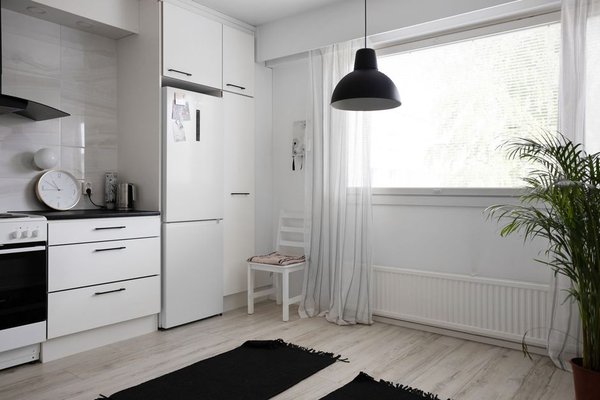
A well-planned Scandinavian kitchen feels bright without looking clinical, practical without becoming plain, and calm without sacrificing personality. That balance explains why Scandinavian kitchen design works so well in real homes: it is less about copying a showroom and more about making everyday cooking, cleaning, and gathering easier. The best spaces combine pale surfaces, natural materials, thoughtful storage, and enough warmth to feel welcoming.
Start With a Light, Quiet Foundation
White and soft neutral walls reflect daylight and make a kitchen feel more open. Pure white can work, but warmer shades such as ivory, oatmeal, pale greige, or misty grey often feel more comfortable, especially in rooms with cool natural light. The goal is not to remove all colour. It is to create a calm background that lets wood, ceramics, food, and everyday objects add life.
White kitchen cabinets are especially effective in a compact room, but their finish matters. Flat-front or simple Shaker-style doors keep visual noise low, while a matte or satin surface looks softer than gloss. For a layered effect, pair warm-white upper cabinets with light oak lower cabinets, or use one pale colour throughout and introduce contrast through handles, worktops, and flooring.
Use Wood to Prevent a Cold Look
Natural wood gives a nordic kitchen its warmth. Light oak, ash, birch, and beech are popular because their grain is visible without feeling heavy. Wood can appear in cabinet fronts, flooring, open shelves, stools, chopping boards, or a dining table. Two or three repeated details are usually enough to make the design feel connected.
Consider a narrow galley kitchen with white cabinets and limited daylight. Replacing dark wall units with two oak shelves, adding a pale wood-effect floor, and installing warm under-cabinet lighting can make the same footprint feel wider and more inviting. The layout has not changed, but the balance of light and texture has.
Choose Function Before Decoration
Scandinavian design is rooted in usefulness, so the layout should support the way the household actually cooks. Keep the sink, hob, refrigerator, and main preparation area within easy reach, while leaving enough uninterrupted worktop for chopping and serving. In an open-plan room, a peninsula can add storage and create a gentle boundary without blocking light.
Store mugs near the kettle, plates near the dishwasher, and oils or utensils close to the hob. A deep drawer for pots is often more convenient than a low cupboard. These small decisions turn a minimalist kitchen from an attractive concept into a genuinely efficient cook space.
Keep Storage Simple
Clutter quickly weakens the calm effect of Scandinavian kitchen design, but that does not mean every item must disappear. Full-height pantry cabinets, wide drawers, internal organisers, and pull-out bins help keep worktops open. Even a small kitchen benefits from grouping storage by activity, such as cooking, baking, breakfast, cleaning, and food preparation.
Open shelving works best when it is selective. Display everyday bowls, glasses, a few cookbooks, or handmade ceramics rather than filling every shelf. Leave breathing room around objects and repeat a limited palette of white, stone, wood, and muted colour. If shelves tend to collect clutter, use one short shelf for character and keep the rest behind closed doors.
Add Texture With Durable Materials
A scandi kitchen decor scheme becomes more interesting when smooth cabinetry is balanced with tactile surfaces. Consider softly veined quartz, handmade-look tiles, brushed metal, linen blinds, or woven seat pads. These materials add depth while keeping the palette restrained.
Durability should guide the choice. Timber worktops are warm but need regular care around sinks. Porcelain, quartz, and compact laminate are easier for busy households. Pale grout may suit the look, but a warmer mid-tone can be more forgiving in a heavily used cooking area. Scandinavian style works best when beauty and maintenance are considered together.
Plan Lighting in Layers
Daylight is central to the Scandinavian look, so avoid heavy window treatments and keep tall storage away from windows where possible. After dark, combine general ceiling lighting, focused task lighting beneath cabinets, and a softer pendant above an island or dining table.
Choose warm-white bulbs rather than icy blue light. A range around 2700K to 3000K usually creates a comfortable evening atmosphere while still providing useful illumination. Dimmers help an open-plan kitchen shift from a work zone during meal preparation to a relaxed social space later.
Introduce Colour With Restraint
Muted colour can make the room feel personal without disrupting its calm foundation. Soft sage, dusty blue, clay, charcoal, and muted ochre sit comfortably beside white and pale wood. Use one shade on an island, splashback, wall, or set of dining chairs rather than scattering many competing colours across the room.
Black accents can add definition through taps, handles, or pendant lights, but they are most effective in small doses. Too much black can make a compact room feel heavy. Brushed stainless steel, aged brass, or soft pewter offer gentler alternatives.
Make the Kitchen Feel Lived In
A successful Scandinavian kitchen is tidy, not empty. A bowl of fruit, a pot of herbs, a wooden board, or a textured runner can soften clean lines and show that the room is used. Choose fewer objects, but let them be useful and pleasing. Handmade mugs, simple glassware, and natural linen add character without unnecessary clutter.
Plants are another easy addition, particularly herbs near a bright window. Natural internal linking opportunities for this topic include minimalist living room ideas, small kitchen layout ideas, and warm neutral bedroom palettes.
Common Mistakes to Avoid
The most common mistake is treating Scandinavian style as an all-white formula. Without wood, texture, or warm lighting, the result can feel flat. Another mistake is prioritising open shelves over realistic storage needs. Finally, avoid choosing delicate materials purely for appearance. A cook space should still handle spills, heat, moisture, and daily cleaning.
Frequently asked questions
What colours work best in a Scandinavian kitchen?
Warm whites, pale greys, soft beige, light wood tones, muted green, and dusty blue work well. Start with a neutral base, then add one or two restrained accent colours.
Can Scandinavian kitchen design work in a small space?
Yes. Pale cabinets, efficient drawers, uncluttered worktops, reflected daylight, and a limited material palette can make a small kitchen feel calmer and more spacious.
Are open shelves essential in a nordic kitchen?
No. Open shelves are optional. One short shelf can add warmth and personality, while closed cabinets may be more practical for households that need generous storage.
How do I make a white Scandinavian kitchen feel warmer?
Add light wood, warm-white lighting, textured ceramics, linen, plants, and a few muted colour accents. These details soften white surfaces without losing the clean look.
A Bright Kitchen That Works Hard
The strongest Scandinavian kitchen design is not defined by a single cabinet colour or decorative trend. It comes from combining light, function, natural texture, and disciplined storage in a way that suits daily life. Begin with the layout, choose durable materials, and add warmth through wood, lighting, and useful objects. The result will feel bright and orderly, but also comfortable enough to cook, eat, and spend time in every day.